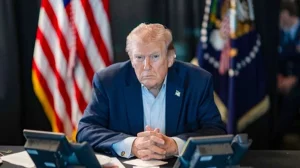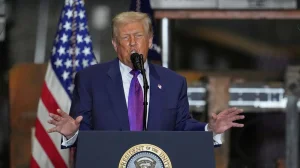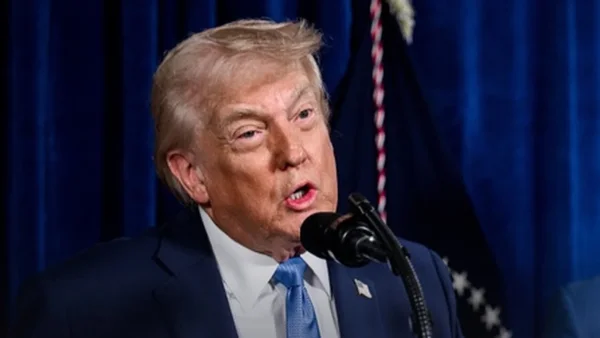
President Trump’s warnings about “total devastation” came after a long series of negotiations in Islamabad. In a TV interview, he said he “could take out Iran in one day,” and said the conflict is about showing who is stronger and who has more power.
Talks in Islamabad End Without a Deal
After 21 very long hours of talks in Pakistan (hosted by Pakistan), the negotiators from the U.S. and Iran left without reaching an agreement. These talks were to stop Iran from getting nuclear weapons and to calm down problems in the area, but they ended in a deadlock.
Vice President JD Vance said the failure of the talks was worse for Iran than for the U.S. He said Washington clearly stated what it wouldn’t allow Iran to do, and where it could be flexible with Iran.
Vance stressed that the U.S. wants a firm promise that Iran won’t create nuclear weapons or the parts needed to make them. He said the U.S. was “very flexible and accommodating”, but the negotiators couldn’t overcome the main disagreements.
He also said Washington left a "final and best offer” for Iran’s leaders to think about. This made it very clear: the U.S. is still willing to have a diplomatic conversation, but the U.S. isn’t going to wait around forever.
Trump’s Warning of ‘Total Devastation’
President Trump said the fact that the talks failed shows that putting a lot of pressure on Iran is working. He thinks “they’ll come back and give us everything we want,” and says Iran “has no cards” to play. He said his harsh statements are necessary to start the talks.
Trump repeated his previous threats and said he could quickly disable Iran by attacking important parts of its systems. He claimed he could destroy all of Iran’s power plants in “one hour,” and also target bridges. He warned that it would take ten years, or even longer, to rebuild.
The President also said he stands by his earlier statement that “a whole civilization will die tonight” if Iran makes him respond, explaining he was reacting to Iranian threats and slogans. His comments show he’s trying to keep a lot of pressure on Iran, but still leave a possibility for a negotiated solution.
What Happens Next: Paths to De-escalation or Conflict
It looks like the U.S. is doing two things: using its military and economic strength, while also saying a deal is still possible if Iran agrees to verifiable limits on its nuclear program. Iran has to choose between going back to the negotiating table, or getting ready for even more pressure.
Even as what is being said publicly gets more aggressive, there might still be secret conversations going on through other countries in the region. The U.S. saying this is its “best and final” offer suggests it won’t give in much more, but when both sides are afraid of what will happen if the talks totally break down, practical negotiations can change.
Military Options and Risks
If the U.S. were to attack Iran’s power plants, ports, or places for moving things, there would be significant dangers. Iran could respond with missile attacks, cyberattacks, or by using groups it supports in other countries in the area. Shipping in the Strait of Hormuz could be stopped, and this would quickly cause problems in the energy market.
A longer conflict could pull in other countries in the region and require urgent meetings with allies. What the U.S. is legally allowed to do, how well the U.S. and its allies work together, and political problems at home would all be factors in the U.S. making a decision before doing anything big.
Diplomatic Leverage and Sanctions
If things get worse, the U.S. might enforce its sanctions more strongly, target more of Iran’s economy, or work with other countries to make it harder for Iran to get money and technology. Any agreement about nuclear weapons would definitely include international inspectors to check on Iran.
Iran might try to take small steps to build trust and get some relief, while still keeping its main abilities. The points where they don’t agree are about how much Iran will limit its nuclear program and actions in the region, when they will do it, and how to prove they are doing it.
Regional and Market Implications
The financial markets are very sensitive to anything that suggests a conflict in the Gulf region. Even without fighting, the cost of insurance for oil tankers can go up, shipping schedules can change, and energy prices can go up and down with the news. A mistake in judgment could quickly cause energy prices to rise a lot and make the financial system unstable.
Countries in the area will be carefully watching for any signs of trouble for ships or fighting across borders. Aid groups say that attacking important buildings and infrastructure could cause lasting harm to ordinary people, and make it even harder to bring stability to the area after a crisis.
The Political Calculus on Both Sides
The White House thinks it’s important to appear strong during these negotiations. Trump’s message is meant to convince Iran that Washington has more time and power. Vance’s comments made it clear that the U.S. can stop talking and wait.
The leaders of Iran have to think about what people at home want, how much trouble the economy is in, and the risk of misunderstanding what the U.S. is going to do. It might be difficult to agree to strict limits, but being isolated for a long time or getting into a conflict could be even more costly.
The most important thing now is whether Iran will respond to the "final and best" offer, or test how far the U.S. will go. In the next few days, what comes from both Washington and Tehran will show whether the situation will lead to a more solid agreement, or a much more dangerous situation.