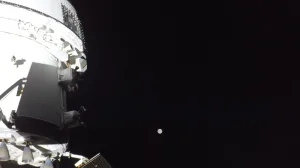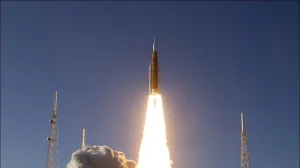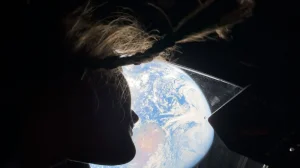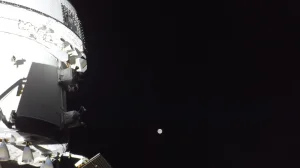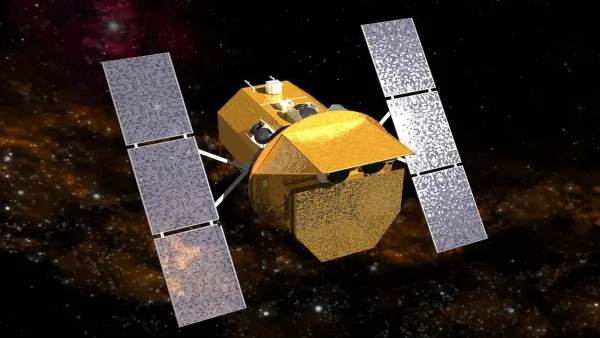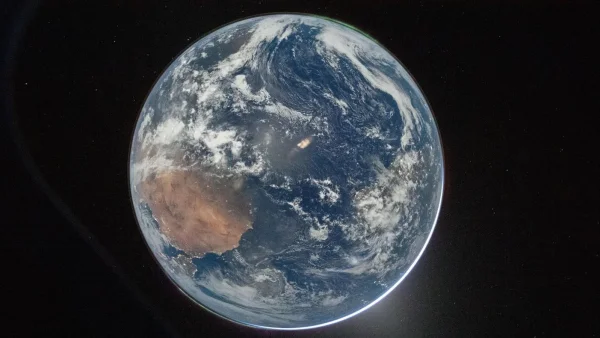
NASA has shared amazing, high-resolution pictures of Earth taken by Orion during its trip to the Moon. You can see our planet through the Orion window and from a camera on the solar panel section of Orion; these pictures are a pretty complete view of Earth from way out in space.
Stunning Earth views from the Orion capsule
The new pictures really make the blue of the oceans, the brown of the land, and a glowing green aurora in the atmosphere stand out. One picture shows Earth as a very thin curve against the black of space, while another shows coastlines and bright white clouds from over thirty thousand miles away.
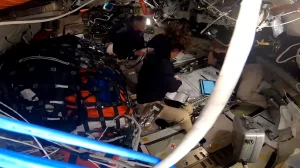
You can see the astronauts on Orion looking back at Earth, which makes you think about how big space is, and how easily our planet could be harmed. NASA said “Good morning, world! We have incredible new, detailed pictures of our home planet” and people on X (formerly Twitter) immediately said how clear the photos were and how strongly they made them feel.
Technical reasons behind capturing Earth images
Beyond just how they look, the photos are crucially important for the engineering side of the Artemis program. Sending detailed pictures from the Moon’s distance tests the cameras on the spacecraft, the way information is sent, and the communication systems that future missions will absolutely need.
Actually getting and sending these large image files tests the data systems and makes sure the equipment works as it should during a real mission. This type of testing makes the chances of problems on later missions attempting to land on the Moon and stay there for a while much lower.
Scientific value of high-resolution Earth photography
Getting high-resolution pictures from this far out in space is also good for science. Researchers can study patterns in the atmosphere, auroras, and large areas of the environment from a place modern equipment rarely gets to “see” from.
These images add to information from satellites, and provide a view of the whole Earth which is good for watching the climate and letting the public know what’s going on. Observations of auroras, bands of clouds, and the color of the oceans from Orion give more context to studies of how Earth works.
Artemis II within the broader moon program
Artemis II is the first mission with people on board of a series of missions designed to get humans onto the Moon again and to live there for a long time. It happened after the Artemis I mission (which had no people) that went around the Moon in may 2022 and prepares the way for actual landings planned for this program.
This mission will do important tests while orbiting the Moon, and provide data for choosing where to land and for working on the Moon for a long period. Whether this mission is successful is key to when we can expect to land people on the Moon in the next few years.
What the crew will do next
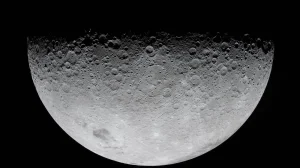
As Orion continues its trip, the people on board will start looking at the Moon and checking the spacecraft’s systems. A trip past the Moon, about 4,000 miles away, will let the spacecraft turn around and give people the best look ever of the far side of the Moon when the sun is shining on it.
Astronauts will take detailed pictures of the edges of craters, ridges, and other things on the Moon’s surface, which will help decide where to land in the future. They will also test the systems for keeping people alive, for figuring out where they are, and for moving the spacecraft, all of which are essential for future missions.
Public engagement and perspective from deep space
Lots of people paid attention to the photos on social media, and they reminded people that we all have a duty to take care of Earth. Many people who saw the planet as a bright, glowing ball felt a sense of togetherness and a feeling that we need to act now to protect the environment.
As the mission continues, NASA will probably share more pictures and updates, so people all over the world can follow the mission’s progress almost as it happens. These pictures will be valuable for science and also a strong way to get the public interested in humans exploring space.