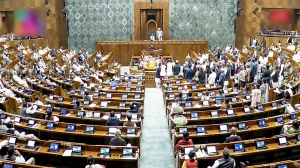
The two parties in the Lok Sabha engaged in a heated exchange after Rahul Gandhi said that “Prime Minister Narendra Modi had compromised the nation.” The Leader of Opposition accused the House that members of the Opposition were repeatedly stopped from speaking and said that there is no debate on issues of public interest, which he termed as being basic to the nation.
Rahul Gandhi’s statement and LOP complaint
Rahul Gandhi told the House, Parliament represents the whole nation, not any single party, and said his interventions were truncated several times. He also raised issues related to retired army chief M. M. Naravane, the Epstein matter, and business irregularities. He could remain within just that much and was practically forced to abide by it.
He called this pattern stifling democratic debate by highlighting the Leader of Opposition for the first time in history being denied the time to speak. It was crucial for people to ask these questions themselves, said Gandhi, accusing that silencing people corroded the climate of inquiry.
Pushback by the BJP and in defense of the Prime Minister
Responding, BJP team members have criticized Gandhi’s accusations and warned her against commenting about such a delicate issue pertinent to national security in those uncertain terms. Veteran BJP MP Ravi Shankar Prasad defended the faith against any apprehension of a compromise of the PM, declaring what Gandhi said in the House immature and irresponsible.
Leaders of the Parliamentary Affairs continued to reject the contention that the opposition was being gagged via procedure, vehemently insisting that it is the established rules which the Speaker and Chair were dutifully following, arguing that accusations of bias at the Speaker were harmful to Parliamentary decorum.
Intervention by Amit Shah and the tally of attendances
Union Home Minister, Amit Shah, launches a sharp attack on Rahul Gandhi by questioning his moral authority. Shah contradicted the Congress president, recollecting his attendance records in previous Lok Sabhas by pointing out that his absenteeism had been used against those now unfolding before the House by him.
Arguing further, Shah expressed utmost disgust at the opposition for introducing a no-confidence resolution against Speaker Om Birla, as such an act was unheard of for four decades ever since democracy brought the latter’s office into existence. Shah considered the Speaker to be like a neutral custodian whose office should not be impugned lightly.
Parliamentary Decorum, Unparliamentary Language, and Protests
The debate also heated up. Members of the opposition protested against the Home Minister by calling his statements unparliamentary, despite the Home Minister’s dismissal. The opposition was also heard saying that attributing of “an hour in any assembly” to the matter at hand would be taking the debate inadvisably in the wrong direction rather than seeing the issue as an attack on the institution of the Speaker.
In a noisy scene after the motion was moved by the opposition party, the Chair rejected an oral vote of No Confidence. The vote was lost by the opposition party, but not out loud. They now cannot immediately take out Speaker Om Birla.
What this signifies for parliamentary norms and political strategy
They further strained relations between the ruling party and the opposition during this session of the Budget. It presents the opposition with a strategic challenge wherein they are supposed to balance raising peculiarly contentious questions with the procedures necessary to sustain floor highlights of parliamentary time.
On the other hand, this was the moment for the government to use it as a defensive mechanism by arguing for the institution, attacking the opposition for its striking strategy to demoralize the Speaker. Both have tried to present reasons in constitutional terms, citing the dignity of the House on one side and on the other, pointing toward the role of the Speaker.
Towards the future:
This area is likely to become more charged with parliamentary debates and media discussions as March rolls on. Members from both parties will keep an eye on the role that the Speaker plays in balancing his time management with interventions of sensitivities where procedural choices between them either allow debates on the issues or bar them.
The question of reconciliation between the Legislature as the most visible form of accountability forum in democracy (somehow envisioned in the elite agenda, irrespective of this accord) and party leaders’ strategy vis-a-vis according time and debates seems to divide equilibrium. How gracefully that difference is bridged will act toward determining whether controversies become things that rise and wither or awaken the plant of metamorphosis with ideas of positive change.