Artemis II has been moving smoothly and accurately through the far reaches of space, but the Orion crew has run into an issue on the way back to Earth: the toilet is blocked. This isn’t a danger to the mission itself, but it’s the biggest problem right now inside the capsule which, up to now, has worked perfectly during its history-making trip around the Moon.
A smooth flight with a messy exception
Artemis II is nearly finishing a very important test of equipment for sending people into space beyond Earth’s orbit. The astronauts went past the Moon, took pictures of the side we don’t usually see, and sent back amazing images, including a pretty unusual solar eclipse seen from deep space. Their journey to splashdown in the ocean has been going steadily.
The one exception is Orion’s Universal Waste Management System – a $23 million toilet that cleans urine and sends the dirty water out into space. NASA says the part of the toilet for solid waste is working correctly. The problem is with the tank for wastewater, which isn’t emptying during the trip home.
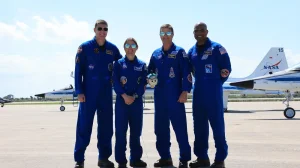
Astronaut Christina Koch said she smelled something burning near the toilet. Rick Henfling, the Flight Director, told the press on Tuesday that the toilet is still being used. However, the crew is trying to get the wastewater tank to drain and are talking about it a lot in updates about the mission.
Inside Orion’s Universal Waste Management System
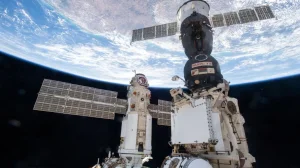
Orion’s toilet is based on the ones on the International Space Station, but this is the first time one has been used on a deep-space trip with people on board. It uses air flow to act like a vacuum in zero gravity and is loud enough that the astronauts have to wear ear protection. There’s not much privacy; the toilet is under the floor in the only somewhat private area of the capsule.
NASA people think a chemical reaction in the process of cleaning the urine is creating little bits of stuff. These pieces are stopping up a filter, and so the liquid waste can’t be sent out into space as it should. Early in the mission, people working at NASA also thought ice might be the problem and even turned the Orion to face the sun to warm up and melt any frozen urine.
But the blockage didn’t go away. This means that people are now looking at the chemistry, how the filter is shaped, and how the heater is working in the extreme temperatures of deep space. As for solid waste, it’s being put in bags and saved for scientists to study back on Earth, but right now the most important thing is to manage the liquid waste without putting too much pressure in the wastewater tank.
Crew improvisation and the rise of the ‘space plumber’
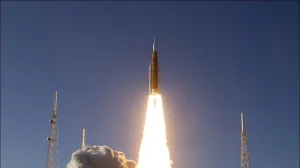
The problem first showed up a few hours after the rocket launched from Cape Canaveral on April 1st. Koch followed a set of steps, changed some settings, and restarted the system with help from mission control. She even joked about being a ‘space plumber’ during a chat with people on the ground.
‘Space plumbing’ isn’t easy! Dealing with waste in zero gravity has very specific procedures, limits on the air flow, and a very small space between something being comfortable and something causing contamination. The astronauts are watching for smells, how the heater is doing, and how full the tanks are, and the team on the ground are adjusting how the system works to make sure it’s safe and follows the rules for the flight.
But it’s more than just the jokes. Managing a loud, complicated toilet in a small space tests how well the astronauts work together and their spirits. It also tests the system with how it’s actually being used, with changing temperatures and sudden changes in how much it’s working – things that you can’t fully copy in a testing area on the ground. And that’s the whole reason for a test flight before longer trips around the Moon.
Why a clogged toilet matters in deep space
A toilet in space is part of what keeps people alive, not just something to make things more comfortable. Cleaning urine and sending wastewater out into space controls moisture in the air, germs, and smells. It also stops the electronics of the spacecraft from rusting and helps keep the air in the cabin healthy. When the tanks won’t drain, the astronauts have to balance how much time they have, how much electricity they’re using, and how much of other supplies they have to stay within safe limits.
Zero gravity makes everything more difficult. Liquids stick around, air bubbles don’t go up, and filters get blocked in strange ways. Ice can form in places where engineers never expected it to in tests on the ground. What keeps urine from going bad on the International Space Station with chemicals might act in a different way when it gets very cold and is hit with radiation in deep space, and each unexpected issue offers a lesson for future spaceflights.
Artemis is planning to create a lasting presence on and around the Moon as a step toward going to Mars. To do that, they need really good waste disposal systems that don’t clog easily, are simple to fix, and fail in a manageable way. Having backup systems is helpful, but making changes to the system that control the chemicals involved, reduce the amount of noise it makes, and make it easier to service will be the most rewarding improvements.
Mission science continues amid troubleshooting
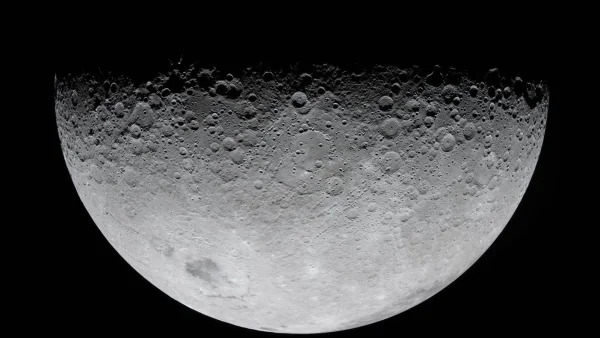
Even while the engineers were working on the clogging problem, the Artemis II astronauts continued with their planned scientific work. During their seven-hour trip past the far side of the Moon, the astronauts took thousands of pictures with cameras they held in their hands and those already on the ship. These pictures show the areas where things crashed into the Moon (impact craters), very old lava flows, and cracks that show the Moon’s geologic history. board.
The astronauts also filmed the Earth as it appeared over the Moon (earthrise), disappeared below the Moon (earthset), and a spectacular view of a complete solar eclipse – the Moon blocked the Sun for almost 54 minutes as seen from Orion. Scientists will use this information to improve their models of how light falls on the Moon, to study what the surface is like, and to compare with observations of the quick flashes of light from meteoroids hitting the dark side of the Moon.
The periods when they couldn’t communicate with Earth during the trip past the far side of the Moon went exactly as expected. Orion went behind the Moon and lost connection for approximately 40 minutes, then came back into view. Now that the trip past the Moon is done, the spacecraft is on its way back to Earth, and the pictures are still being sent down to the public and to scientists to study.
What NASA will investigate after splashdown
When Orion lands in the Pacific Ocean on Friday, the engineers will thoroughly investigate what caused the problems with the toilet. They will pay close attention to the mixture used to pre-treat the urine, how the pipes and heaters are kept at the right temperature, the filters that may have caught solid material, and how the sensors functioned in the conditions of deep space.
Possible solutions to the issue include filters that are more forgiving of blockages, a system to automatically wash the lines backwards, or a coating for the pipes that stops minerals from building up. The teams may also change the chemicals in the pre-treatment process to decrease solid material forming, increase the heating of the pipes to melt ice, and change the way fluids flow to avoid places where debris can gather.
How the astronauts use the toilet will also be considered. Reducing the noise it makes, easier access for repairs, and better control of smells will help the crew perform better on longer trips. The $23 million cost shows how much engineering work goes into safely dealing with waste in space, and the Artemis II mission is giving the information needed to make that money worthwhile.
The broader Artemis timeline and public interest
Artemis II is a very important step between unmanned testing and eventually landing on the Moon. It confirms that the navigation, communication, life support, and how the crew operates all work in deep space. Many people are interested in what’s happening, and the daily updates from Johnson Space Center haven’t hidden the problems with the toilet.
This honesty is similar to the Apollo program. Any problem, even a simple clog, is a chance to improve the entire plan for getting astronauts to the Moon’s surface and, in the end, to Mars. Being open with information builds people’s confidence in a program that depends on careful testing and steady improvements.
The Artemis II astronauts have shown the right combination of being able to laugh and being skilled, which is what space travel requires. Koch’s joke about being a space plumber captured that moment, but the real point is serious: making sure the crew is safe and can function while fixing problems as they go. That’s just as much a part of exploring as the scientific side of things.
As the landing gets closer, engineers will continue to balance getting the toilet to work with all the other things that need to be done for the return trip, and will make sure the tank for waste water stays at a safe level. The mission has already provided great pictures and useful science, and soon it will give valuable information about how to design things, all from a troublesome clog that wouldn’t go away.
Dealing with and fixing problems as they happen is a normal part of spaceflight. Artemis II showed a weakness in an otherwise strong system, and that’s exactly what a test flight is for. Once Orion is in the Pacific Ocean and the information is available, it will be clear how to create a more reliable toilet for deep space.