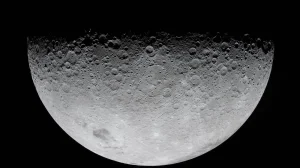
NASA has just shown a really impressive picture of the Moon, taken by the Artemis II astronauts as their Orion spacecraft approached the side of the Moon we never see from Earth. On the very right edge of the Moon in the photo is the Orientale Basin, and this is the first time people have seen the whole thing with their own eyes during a mission with a crew.
The historic image and why it matters
The Orientale Basin is a huge impact crater, around 590 miles wide, with many rings. Because it’s on the western edge of the Moon as we see it from Earth, it’s difficult to get a full view of it. This picture from Artemis II gives both scientists and the general public a view that no one has had before.
Having a complete view of the basin will allow scientists to check their information from space and improve their ideas about how impact craters form. The rings around it hold proof of massive crashes that happened when the solar system was young. Because of this, the Orientale Basin is a very important place to study and make maps of its geology.
Who is on Artemis II and their milestones
The Orion spacecraft, called Integrity, is carrying four astronauts: Jeremy Hansen from Canada, and Reid Wiseman, Victor Glover, and Christina Koch from the United States. They are the first people to go to the Moon since Apollo 17 in 1972.
This trip is also making history in other ways. Christina Koch will be the first woman to go to the Moon, and Victor Glover will be the first Black astronaut to do so. Although Artemis II won’t actually land on the Moon, it will help us with future trips with people, and will test the equipment needed for when we do land on the Moon.
Mission trajectory, duration, and records
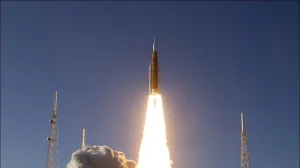
Artemis II launched from the Kennedy Space Center on April 1, 2026 and is following a path that will swing it around the far side of the Moon. It will go over 400,000 kilometers away from Earth, further than anyone has gone in space since Apollo 13.
The mission will last almost ten days and end with the Orion spacecraft landing in the Pacific Ocean on April 10, 2026. Engineers are checking the life support, navigation, and communications of the Orion to make sure it’s ready for Artemis III, which will put astronauts on the Moon’s surface.
Scientific value of the Orientale Basin imagery
The image of the Orientale Basin will help us understand the Moon’s layers and how impacts happen. It’s still fairly new looking, so it has layers of material thrown out by the impact and the ring shapes of the crater, all of which help date events in the Moon’s past. High quality pictures taken by people in the spacecraft add to information from satellites and other remote sensing.
Researchers will use the astronauts’ observations along with forty years of data from satellites to improve maps and plan future missions. Detailed pictures of the basin can help pick where to land, find resources, and study how large impacts affect planets.
Public reaction and mission operations update
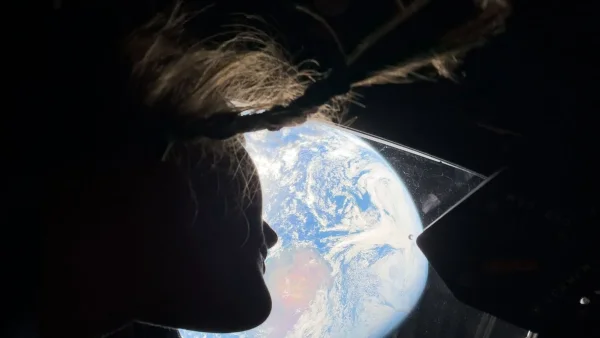
When NASA put the picture on X (formerly Twitter), people on social media were amazed, with a mix of being in awe and joking. One person wrote, “It’s so pretty to see. God’s creations are so beautiful!” Another said, “The Moon is releasing a new song. The Artemis II crew are living the dream.” The picture was also included with a collection of Earth pictures taken many years apart.
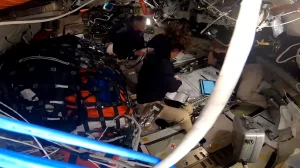
Most of the equipment on board is working as expected, though engineers have noticed a small problem with the system that flushes urine which might be from ice. The toilet is still working for solid waste and isn’t a safety concern. The crew are continuing with their regular science work and checking the systems as Artemis II gets closer to flying past the Moon.
The Artemis II picture of the Orientale Basin is a rare view from human eyes, combining exploring and science. As the mission tests the Orion and sets new distance records, the information and pictures it sends back will guide plans for regularly going back to the Moon and eventually working on the surface.