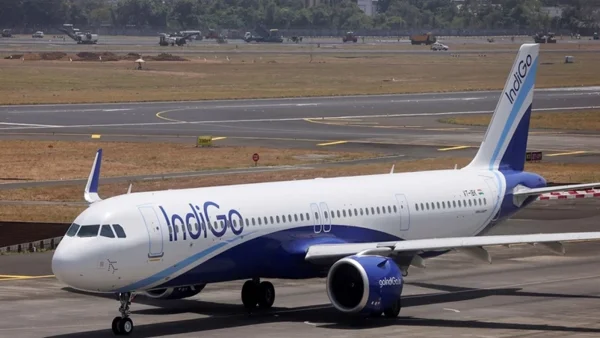
IndiGo has announced a huge improvement to its routes out of Navi Mumbai International Airport, and will be offering 30 new routes over the next month to make connections within the region much better. This means IndiGo will have more than 400 flights a week from Navi Mumbai, a big increase in domestic flights and how often they happen, for both large and smaller cities.
Expansion timeline and launch highlights
Between March 29th and April 23rd IndiGo started more than 30 routes, with some beginning right away and others being added slowly in early April. In fact, they already began having two flights a day directly between Bhavnagar and Navi Mumbai on March tenty-ninth, using ATR planes to easily serve the needs of smaller cities.
The times of the flights will vary, some will be daily and others will happen at certain times, depending on how much people want to fly to those places. Flights directly to Jamnagar will start on April 23rd, and many other cities will be connected in stages to make the best use of the planes and times available at the airport.
Destinations added from Navi Mumbai
These new routes will connect Navi Mumbai to a large area, including Agra, Ayodhya, Bagdogra, Belgaum, Chandigarh, Diu, Kannur, Kolkata, Patna, Rajkot, Srinagar, Varanasi, and Visakhapatnam. Jammu and Bareilly are also planned to be added in early April as the airline’s capacity increases.
This variety of routes will serve people traveling for fun, religious journeys, and for work, reflecting travel needs throughout North, East, West, and South India. By directly linking smaller (tier-2 and tier-3) cities, IndiGo will shorten travel times and reduce the need to change planes in the main cities. relying on flights that go through the biggest airports.
Gujarat focus and regional connectivity gains
This expansion will greatly strengthen connections to Gujarat; from Navi Mumbai IndiGo will fly to six places in Gujarat: Ahmedabad, Vadodara, Surat, Rajkot, Bhavnagar, and Jamnagar. With these additions, IndiGo says it will have over 1,400 flights a week to and from Gujarat, proving how important that state is to the airline.
The two-times-a-day ATR flights to Bhavnagar are a good example of how IndiGo is trying to make it easier for smaller towns to have access to flights and to increase money coming from tourism and business. Having routes go further into a region also helps with business travel between Gujarat and the Mumbai area.
Partnerships and passenger benefits
IndiGo has now officially partnered with the company that runs Navi Mumbai International Airport to offer rewards to its frequent flyers at all of the airports they manage. Members of IndiGo’s BluChip program will get five BluChips for every 100 rupees spent on duty-free items that they order ahead of time through the airport’s website.
This encourages people to buy things before they travel and increases how much extra money the airport makes, while also giving travelers a clear reward for their shopping. This partnership could also make traveling easier by more closely connecting the airline and airport services at many different airports.
Fleet, operations and capacity implications
IndiGo has more than 400 planes and flies over 2,200 flights a day to more than 95 places within India and about 40 places internationally. In 2025, they carried 124 million passengers, which shows they are the biggest airline in the country.
Adding these 30 routes from Navi Mumbai will need careful planning of flight schedules and making sure there’s space for the planes to land and take off at both Navi Mumbai and the destination airports. For people flying, this means more direct options and flights happening more often each week, and the airports will get more passengers and better connections.
Navi Mumbai International Airport is one of the largest completely new airports in the country, and it’s been developed and run by Adani Airports Holdings Limited. The airport getting bigger, along with IndiGo adding more routes, is meant to move some of the traffic away from the very busy main airports and to have air travel spread out more.