The Lok Sabha will have a relatively short discussion on March 30th to look at the government’s work on left-wing extremism, the day before the March 31st deadline from the government. This discussion, using parliamentary Rule 193, won’t end in a vote, but the government must officially respond.
Parliamentary procedure and debate initiators
Rule 193 lets members of Parliament bring up important issues for a focused discussion without a vote. Byreddy Shabari of the TDP and Shrikant Shinde of Shiv Sena will start the March 30th discussion and explain what the government needs to answer.
Because of the way this discussion is structured, members of Parliament can ask for more information, talk about what’s happening in their own areas, and ask for dates by which things will be done. It usually means the minister in charge will give a fairly short answer, and this can lead to further questions and closer examination by Parliament.
Government deadline and recent reviews
Amit Shah, the Union Home Minister, said they want to get rid of the Naxalite (or Naxal) problem by March 31st, 2026. Because of this deadline, they’ve been carefully looking at and reassessing left-wing extremism (often called LWE) in the areas where it exists.
Recently, the number of districts heavily affected by LWE has gone down from eight to seven, showing that efforts to control and fight against the extremists are working. Officials have also thoroughly reviewed the National Policy and Action Plan for dealing with LWE, so they can see how things are progressing and change their priorities.
This review included nine states and 38 districts, specifically Jharkhand, Bihar, Andhra Pradesh, Chhattisgarh, Madhya Pradesh, Maharashtra, Odisha, Telangana and West Bengal. Even though the problem is still focused in these areas, it’s spread out across them in different ways.
Security operations and a post-deadline blueprint
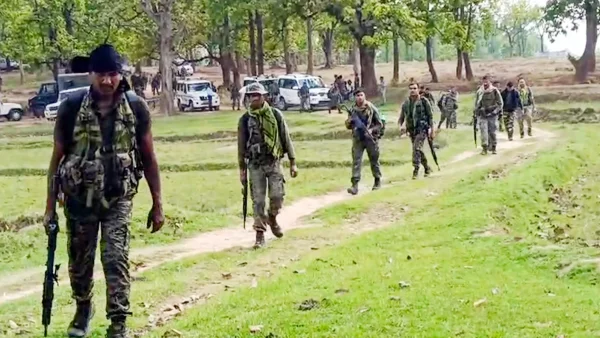
As the deadline approaches, security forces working together in anti-Naxal operations have increased their efforts, and are pushing to eliminate the remaining armed extremists. These operations combine intelligence gathering, regular police work, and the use of paramilitary forces to go after active extremist groups and break up their supply lines.
Officials are making a plan for both operations and development to use after the deadline. This plan apparently includes taking about five battalions (groups) of Central Armed Police Forces out of areas that are now considered safe, and instead putting more effort into public projects and development programs. The goal is to reduce the power of the insurgents.
The plan intends to balance a reduction in a large security presence with more support for people’s well-being and improvements to infrastructure. Officials say they want to gradually give security responsibility to the police forces of the states and to community policing, while continuing to benefit from the development work that has been done.
Surrenders, rehabilitation and local initiatives
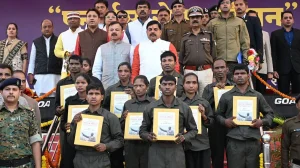
According to official figures up to March tth, 16,496 insurgents have given themselves up to the authorities since 2004. Last year saw the highest number in a single year, with 2,337 people putting down their weapons, which shows that the programs to help people return to a normal life are attractive.
Helping people after they give themselves up now goes beyond just getting rid of their weapons; it offers job training, education, and ways to earn a living in many of the affected districts. Authorities link giving yourself up with learning a skill and getting some money, to get former extremists to become part of the regular economy.
These are meant to deal with the social and economic problems that lead people to join LWE groups. Continuing to provide jobs, land rights, and basic services is very important to make sure people don’t go back to being insurgents.
Policy implications and oversight after the debate
The Lok Sabha discussion will show how prepared the government is to move from military operations to development, and still keep the security improvements. Members of Parliament will likely ask for dates, ways to measure progress, and specific standards for when central forces will be withdrawn.
Long-term success will depend on the central government and the states working together consistently, strong local police, and improvements in development that can be measured. The debate on March 30th is a chance to make the plans for after the deadline clear, and to make sure the authorities are held responsible for following them.