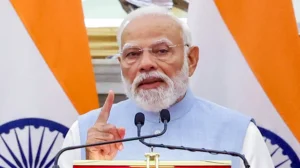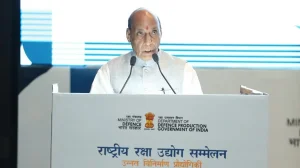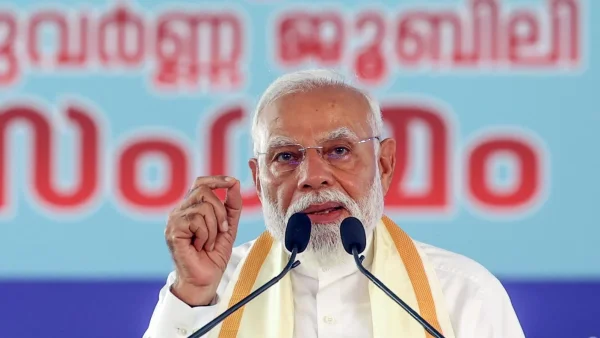
“Let me tell you categorically that we have faced like situations in the past, where the ground realities and feedback were real, and we solved numerous problems,” said Prime Minister Narendra Modi during his talk at Polo Ground. He said what was most needed was verified information.
Other issues fed by a panicking psyche must be kept under control.
Acknowledgment amid international fuel disruption crisis
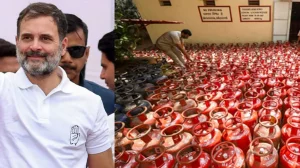
Recognizing the global adverse effects of the West Asian crisis on the energy supply chain and thereby testing supply, particularly shortages of LPG, the Prime Minister appealed to all to keep calm under dangerous and hoax circumstances, relying on accurate information from official sources.
He set out the Indian response, which thereby means an independent choice of action from the rest of the world. Modi said that preparedness for contingencies and diversification of energy supplies are what reaffirm our resolve in order to maintain continuity of domestic energy access and price stability, focusing on global fuel flows and domestic distribution visibility.
Integrate the energy response with the Covid experience
In the coronavirus reference, Modi spoke about how 1.4 billion Indians gave collective resilience and discipline during an unprecedented emergency. He claimed that such collective maturity will sail India through the ongoing energy shocks without much disruption.
This comparison instilled an attitudinal reassurance and public policy signalling: coordinated government moves, supply chain responses, and public cooperation all serve as methods of crisis management. Not only meant to reassure the markets and society, the gesture served as proof of this administration’s sheer performance in a crisis.
Stakes shot outward against the political rousing and alleged state governance
Modi himself stepped directly into a political critique against the ruling state party, blaming it for the relationship where the state resources changed hands into an “ATM for one family” through what he called a ‘scientific corruption model.’ He characterized the upcoming assembly election as a battle between entrenched dynasty politics that had fed at the fountain of wealth and development under his coalition.
For the larger development in Gilagai, she contested the allegations made against the civil structures, taking appeasement to discredit due process.
Central Investments and Infrastructureally Commitments
Recently, Modi highlights the central projects and bunching grants to Tamil Nadu, and the last time about RS. 20,000 crores worth of investments were declared; other projects in Tiruchirappalli and Madurai were worth Rs. 5,600 crores and Rs. 4,400 crores respectively. He added that they bring employment and development for local areas from the total.
The honorable prime minister added that the Centre has allocated about Rs 3 lakh crore to this state since 2014, while the majority of the amount goes to the national highways and rural roads. The development of Madurai airport to turn into an international airport was pointed as emphasizing growth of tourism and agricultural exports, with particular focus on local consumables.
Local issues: law and order, agriculture, and the environment
Modi criticized the state government for law and order, citing an increasing number of crimes against women and assaults following reluctance of the criminals under the promise of eradicating fear for women under the National Front government, making defense out as one of the governance deliverables.
The PM further accused the state leadership of betraying the farmers within the Cauvery delta areas by going back on promised minimum support prices, storage infrastructure, and irrigation inputs. Furthermore, Modi has emphasized the threat of illegal sand mining and depletion of environments that have been in the news, demanding urgent solutions as these continued with political protection, affecting the rivers and livelihoods.
Modi merged crisis management with campaign rhetoric arguing for the latter as he claimed hope to the voters. His dual focus aimed to assure the populace on energy while highlighting the role of governance, development, and corruption in the state polls.
The message suggested two emphases: a gentle but sincerely robust energy conservation plan, and a blatant claim for accountability, infrastructure, and overdue state support. With this reliance on such an exceptional crisis management priority on top of the election stakes, all the voters and market analysts were casually watching Tamil Nadu.