Thirteen years, there was no progression in Harish Rana’s case of an incurable vegetative state. For 13 years, the civil engineering student failed to move or speak, tucked away in a corner of his own room, mentally and physically handicapped as a result of a sudden, wholly curable incident that had befallen him in the year 2013. Now, the Supreme Court has strongly thrown its weight behind passive euthanasia in this case, thereby allowing the termination of any ongoing life-supporting treatment.
Who Harish Rana Is and How the Tragedy Unfolded
On August 20, 2013, Harish, then a Panjab University student, fell off to the ground from the fourth floor of his paying guest on a day when he had just come back to Chandigarh after the summer vacation.
He suffered severe brain trauma and underwent emergency surgery even before his parents reached the hospital. However, from the beginning, the best of doctors told the family that his nervous system had been completely ruined; he was doomed from the start. Which is why, despite being shifted from the best hospitals and months of intensive care, no improvement in his terms could have been registered. The patient remained bedbound with a tracheostomy for breathing assistance and feeding through surgically inserted tubes.
His parents sold off their house over the years and moved in close proximity to the hospital in order to be with him. They learned to watch medical charts electronically, adapted to round-the-clock care, and kept the ray of hope burning on when its entrance appeared bare.
The Legal Trial to Euthanasia by Omission
As his chances of recovery vanished, Harish’s relatives petitioned the High Court of Delhi for passive euthanasia in July 2024. Passive euthanasia is the term used when the possibility of recovery is obviously not there, but artificial support to sustain life continues.
The High Court refused to pass any such plea, holding that Harish was neither supported by any artificial mechanical ventilation nor terminally ill in the conventional sense. It declared that they did not meet the criteria for passive euthanasia. Supporting the Supreme Court on account of their request to convene a medical board, they found out that the matter was taken up by the apex court.
After its required procedural steps, before the court in December 2025, the family members claimed Harish was being kept ‘artificially alive.’ The bench also heard from the family and at the same time consulted the doctors. Besides meeting the parents and the siblings of the patient, the Hon’ble judges also agreed on the petition due to the family’s unwavering care and the decision’s moral force.
What the Supreme Court Decided
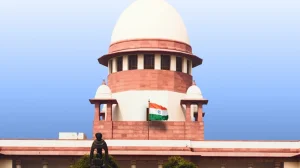
A bench comprising Justices JB Pardiwala and KV Viswanathan allowed passive euthanasia for Harish Rana, said to be in his early thirties, marking a first time in the present Supreme Court’s records that an application for withdrawal of life-sustaining measures has been entertained.
The bench directed termination of life support-taking him off life support in a palliative care setting-considered the move in Harish’s best interest and dignity. Among the firm and final factors detailed was his still remaining in a persistent vegetative state, with complete quadriplegia, and no other rehabilitation after 13 years. The patient-who could not do without the Clinically Administered Nutrition in any way-survived on it through PEG tubes alone
[sup 11]
.
AIMS was directed by the court to admit Harish to its palliative care center for safe transfer, ensuring his processes be withdrawn humanely and with dignity. Such a choice was bestowed upon Harish by God.
This begs the natural question as to why CAN is a medical treatment
In this decision, the court has identified CAN as a form of medical treatment, not a mere expression of care and support. This distinction is very critical. If CAN is medical treatment, the said treatment can be withdrawn from a patient who no longer needs or wants it, provided it does not serve a higher good.
The medical board’s opinions were underground upon, resulting in a consensus that withdrawal of CAN when survival chances are reduced to minimum in cases of a patient being kept alive’ by inanimate substances for an inordinate number of years, in this case, even withdrawing CAN leads to telling the reason for a dignified Death.
How the Decision Fits Into the Jurisprudence of Euthanasia in India
Within the preceding decade and a half, India has relatively advanced in its discourse concerning end-of-life decisions. In 2011, the Supreme Court established some very limited exceptions in allowing for passive euthanasia where conditions numerous and strict qualifications must be met, exemplifying sufficient judicial overview.
In 2018, a Constitution Bench ruling upheld the right to die with dignity as part of the right to life. This accepted passive euthanasia and the creation of living wills or advance directives with an array of stringent checks from medical and legal fields to protect disadvantaged patients.
The Harish Rana case clearly applies these principles. It exhibits the court’s ability to move beyond its system to address an individual case, with medical boards, palliative reaffirmance, and open judicial pronouncements steering the case.
Living Wills, Consent, and Safe Guards
.
The ruling also underscores the importance of advance directives. A living will allows a person who is competent to make clear his/her choices concerning life-sustaining care should the person later become incompetent. Even though there was a lacking living will from Harish, the process described was basically a methodical walk-through of checks and balances in this regard.
Multiple doctrinaire decisions, family’s talk, and court scrutiny ensured patient-centric knowledge for withdrawal of care and protection against any contaminated consent. Under the shadow of palliative care comes the understanding that ceasing the treatment certainly does not imply ceasing care.
What Happens Next and Why It Matters
Following the order, AIIMS will transfer Harish to its palliative care ward, where CAN will be drawn out by reps in a reasonable and sensitive way. The last steps in the treatment will be anchored in pain reduction, comfort, and family backing.
This ruling has opened the door to passive euthanasia in this country, and affirmatively stated that the provision of nutrition from a clinical setting amounts to medical treatment, capable of being lawfully withdrawn when there is no further hope for recovery. This is encouragement and rationality: just because medicine can be burdensome does not mean we have to abandon rational hope.
It does offer hope for those agonized families who may face further such questions, delineating a course of action impelled by well-earned dignity, compassion, and medical science. Hospitals are reminded in this judgment that capacities for palliative care, formation of ethics committees, and protocols for clear, unambiguous decisions about terminally ill patients are sorely needed.
The court’s language carried the moral weight of the occasion, invoking the spirit of literature and empathy. The core of the judicial decision, though, was unequivocally straightforward: the right to die with dignity (and the safeguards necessary to ensure that inside the judicial process) is implicit within the larger right to live.
This standard ruling is a cornerstone in passive euthanasia, the role of medical boards, and the primacy of patient dignity while Indian laws allow more refinement of the end-of-life framework. It is seen as an elbow bump to families and clinicians to treat withdrawal of life support not as an end to care but as a shift toward comfort and respect.