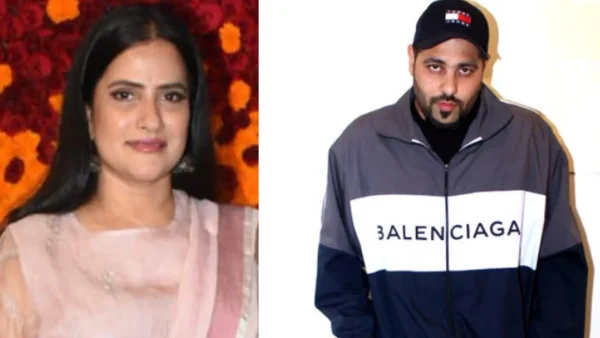
Mohapatra has not taken the bait after having her account removed from Instagram in protest against Badshah for his latest song Tateeree over misogyny in pop music. Sona attacked the artists, saying “One concerns self set morals to an age group which shapes their world. You have the power to literally choose light, to define the values you would want youth to imbibe as you break the ancient document of pop music.”
Mohapatra’s Take on Tateeree
Mohapatra held Tateeree guilty of following an overworked hyper-masculine template. She cited the video and lyrics in glorifying a hero presented with a muscled chest while women performed like props in the background, fainting on cue. She said no, that is not creativity, but setting a commitment to reward such conduct with a party full of bravado while most ethicists of substance stand outside the doors wishing they were equally successful.
She also talked about the swagger of the tracks being mostly an act to create an illusion of being desirable rather than any actual story telling. The singer pleaded with the other kin-folk in the industry to give up the idea and glamorization of massivity and objectification and produce at least the kind of work where thoughtful and equitable narratives find a place.
Her explanation was strightfoward: artists either confront misogyny or gain from it. All in all, according to her, there is no halfway mark if the mass culture becomes strong enough to define the “normal” and the “heroic” to audiences generally and particularly to the young advocates.
The Haryana Questionnaire and the Ultimate Burden
Mohapatra also spoke out against the shield that takes the support of regional identity. She flatly declared that self-claiming egoism of “being sons of Haryana” just could not cover up the unnecessary display. She explained that as a state, Haryana already faces lots of real issues – skewed gender ratios, issues of violence against women, and the curse of honor killings.
She opined that cultural interventions, in this light, entail a special obligation: When artists celebrate place and pride, then entities have to add respect for the community they represent and not simply reinforce their attitudes, leading to greater divides in society.
Her call focusses on the dichotomy: pride in tinged identity must lead to an enhancement in moral values. Anything less than that makes artistry a mere provocation devoid of substance.
Visuals, School Dresses, and Audience Concerns
The presentatin of schoolgirls in school uniforms in the video was questioned by Mohapatra. Mohapatra suggested termination to anything that could lead to the rotting and decaying of the mind and the spirit-let us elevate such men of honor and integrity and uphold narratives of responsibility over shock value.
With that same sense of the problem, other viewers disagreed that all the visuals proved to be inappropriate in some sections. For quite a few, the juxtaposition of provocative themes with school imagery showed a concerning habit the entertainment industry seemed to be embarking on.
Backlash, FIRs, and the Withdrawal of the Song
There was a huge controversy over “Tattad Tatt,” which had come out on the 1st of March, 2026. The viewers and the critics both raised opposition to the words and scenes that apparently contained explicit material and were unsuitable for the general public. People were particularly shocked at the portions of the song that show girls dancing…in school uniforms inside a Haryana Roadways bus with objectionable gestures.
Therefore, it was only a matter of time before an FIR was filed in the matter by Haryana Police, the process of which was expedited by the upset comments that kept coming in from the music industry and fans alike.
Responding and Apology from Badshah
Shortly after a spree of wide criticism, Badshah released a video from his Instagram page with his tender apology. He begged for forgiveness, stressing that he meant no harm to anyone’s feelings, adding he was proud of his Haryanvi roots. In other words, those controversial lyricals were part of hyper-competitive hip-hop-style bragging and were not directed at women or kids.
Badshah added that he has always made attempts to bring Haryanvi culture into mainstream music and also sought forgiveness if the song has caused any hurt. His captioned post about having Tateeree taken off all platforms communicates that he is receptive to public concerns for positive action to be taken.
The Pop Star and Hip-Hop Star Question
The uproar concerning “Tateeree” must be seen in context of the broader discussion of gender representation in Indian pop and hip-hop music. Advocates and artists have warned for years that glamorizing power and objectification only encourages disrespect. They still sold, but at the cost of a culture which was becoming more difficult to ignore.
The algorithms of the streaming world, the short-lived dance challenges and other serialised forms of video communication all hang on outstanding visuals and enduring hooks-the spectacle rewarding creators for these slightly outrageous acts. Furthermore, the market pressures often promote braver and riskier choices…but there still remains accountability. Each time you watch or speak someone’s name in the public arena, the greater emphasis is placed on it, and the visual public grow tougher about the content guidelines such platforms need to comply with.
Industry experts maintain that a future devoid of misogyny-affirming tunes beckons. Musicians have the sought-for salsa in an art style with neither insults nor demoralization. They are capable of spiking hooks tied to decent agency. These twin concepts of glamour and consent, pride, not to mention respect, are neither mutually exclusive; they spell a better fan connection.
The systems lay bare the role of record labels and management in this endeavor. An attempt from behind the curtain to undo harm can come by exercising sharp content oversight, dependable sensitivity reviews, and cultural diversity in the creative group. Such stories, when told in earnest, suspend the culture of controversy fatigue and build brands that will gracefully traverse the years.
The Takeaway: Artists Craft Our Imaginations
What Mohapatra had to say and Badshah’s pitfall and later retract by management billows a major truth: pop culture sets tones, deals, divides, and packages. What one dances to today might inadvertently be setting up folks to start accepting what other gateways to come up to, but the potential artist’s shape imagination transcends one example.
The episode, therefore, may function as a turning point if and when the industry actually thinks of shedding its cliched long-yarn mystique in favor of responsible storytelling. The creators have been lectured for failed storytelling, and if not so, they will walk away as heroes and set the mark upon Indian pop-music history.