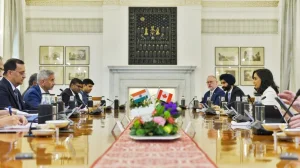
The TEPA is between India and the European Free Trade Association – Switzerland, Norway, Iceland, and Liechtenstein. The deal guarantees a $100 billion investment that has to be followed through on, which is not usual in trade deals between countries, and is good news for Indian people who plan and invest.
The agreement allows almost total access to the markets in EFTA countries for a lot of different areas. It has a clause that lets India remove trade advantages if the investment promises aren’t kept. These things give investors certainty, while still protecting what India needs for its economy.
There are already some early signs of the agreement being put into practice: Iceland has put around $30 million into the fishing industry in Maharashtra, which shows how aimed FDI can help local industries. The government has also made an FTA help desk in the west of India, to help companies find partners and projects in the EFTA market.
What the deal means for industry and services
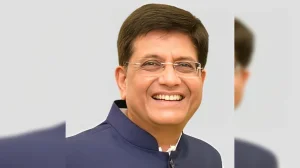
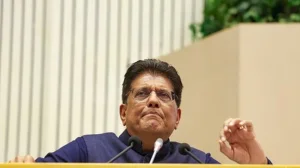
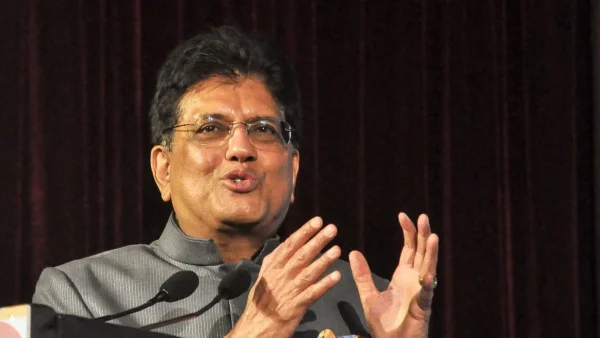
Goyal told businesses to move from ‘agreement to action’ – to turn what the deal says into exports, investments, and work with technology companies. The TEPA lets Indian manufacturing, services, and technology companies grow in the rich EFTA markets, and get bigger roles in world supply chains.
Services and innovative industries will get a lot more access to markets. Professionals, new companies, and MSMEs can get new contracts and work together, especially in areas like software services, engineering, and green technologies. Connecting business people with EFTA partners could speed up the sharing of knowledge, and improve what we can do at home.
Value chains linked to farming and manufacturing groups can get investment which is aimed at making more jobs. With the aim of a million jobs, companies should work out what chances there are in each area, and make projects that are ready for investment. Working together – public and private – will be very important to turn what could happen into things we can measure.
What the government is doing to protect and help businesses
During talks, the government has said again it will protect areas which are sensitive. Dairy, farming, and other protected industries did not give anything up that would harm producers in this country. Genetically changed products are not included in market access under the trade conditions at the moment.
The investment promise which must be kept has ways to make sure people are responsible. If the EFTA countries do not deliver the FDI they promised, India can take action under the agreement. This reduces the risk for people in the country, while keeping the ways open for working together.
Practical help is there to help businesses make the most of the deal. The FTA help desk, advice on policy, and links between institutions will help MSMEs and companies in the regions. Industry groups and chambers are expected to be a bridge between Indian companies and those in EFTA.
The deal in the bigger picture, and what’s next
The India-EFTA TEPA is after other big trade efforts, including deals with the United Kingdom and the European Union. People who work on these things see the EFTA deal as a step forward which adds to wider work with European markets, and makes India’s position in talks around the world stronger.
Goyal pointed to the chance of quick agreement for the India-UK deal, which would give even more access to markets and investment. For businesses, the practical job is to follow up on real projects, make partnerships, and use the tools to help trade, to turn diplomatic successes into economic growth.
Industry leaders should give priority to plans they can take action on, from being ready to export, to joint ventures and building up ability. With the right policy framework to support it, and a clear pipeline of investment, the TEPA can become a platform which drives manufacturing growth, the expansion of services, and the making of real jobs across India.