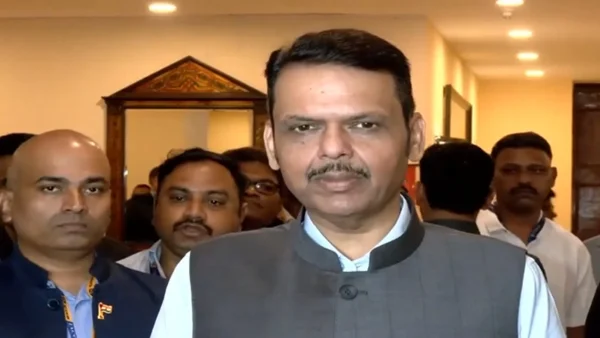
A fresh political controversy has erupted in Maharashtra after Chief Minister Devendra Fadnavis intervened in the state Food and Drug Administration’s crackdown on the sale of loose edible oil—with critics alleging that the government is putting business interests ahead of public health.
That framing, however, needs some qualification: Fadnavis has not said that food-safety standards should be abandoned. His stated position is that the government wants to prevent adulteration while also protecting traditional oil traders and small retailers.
What triggered the controversy?
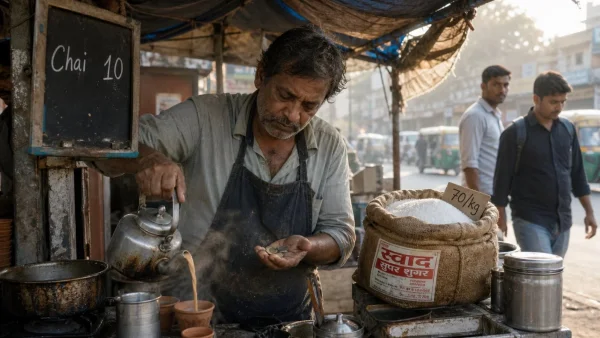
Maharashtra FDA Commissioner Tukaram Mundhe issued a statewide compliance order on August 21 concerning the sale of loose or unpackaged edible oil. The order covered the supply chain from oil-processing and refining units to retailers and other sellers.
The FDA’s position was rooted in food-safety and adulteration concerns.
But trader groups opposed the move, arguing that an immediate blanket restriction could hurt businesses and consumers, particularly those dependent on traditional oil-selling practices.
Then came Fadnavis’ intervention
On August 24, Fadnavis said the FDA would be asked to prepare standard operating procedures (SOPs) instead of proceeding with an immediate blanket approach.
The Chief Minister said the objective was to find a balance between strict food-safety standards and the livelihood of traditional oil traders and small retailers. He also explicitly said that food-safety standards could not be compromised.
The intervention nevertheless triggered a political debate because it came after the FDA had taken a much harder regulatory position.
Why is the controversy significant?
The question is not simply whether businesses should be protected.
The real question is:
When food-safety enforcement clashes with the interests of a regulated industry, whose interests should come first?
Consumers have a legitimate interest in knowing that the edible oil they purchase is safe, properly labelled and free from adulteration.
At the same time, thousands of small traders depend on traditional oil businesses for their livelihoods. A regulatory system that suddenly makes legitimate businesses unviable without a practical transition mechanism can also create problems.
That is precisely the balance the government says it is trying to achieve.
Mundhe’s wider crackdown
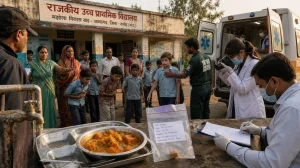
The dispute comes amid an unusually aggressive food-safety campaign by the Maharashtra FDA.
Since taking charge in May 2026, Mundhe has carried out thousands of inspections and targeted restaurants, food businesses and large quick-commerce operations. Reuters reported that the campaign had included major chains and resulted in suspensions and notices over hygiene violations.
The FDA has also recently suspended the licences of four food establishments in Mumbai over serious food-safety and hygiene violations.
Interestingly, Fadnavis had previously praised the FDA crackdown, saying food adulteration is dangerous because it threatens people’s health and lives.
That makes the current dispute more complicated than the simple claim that the Chief Minister is “protecting businessmen.”
The latest twist
On August 26, reports said Mundhe initially reaffirmed that the loose-oil restrictions should be enforced strictly, before the administration withdrew the statement and compliance order roughly an hour later. The rapid reversal has added to the confusion surrounding the government’s final policy.
The episode has therefore raised legitimate questions about regulatory independence, political intervention and the consistency of food-safety policy.
Health vs livelihood — can both be protected?
There is a reasonable argument on both sides.
Consumer-protection argument:
If loose edible oil creates greater opportunities for adulteration or contamination, stronger controls are justified.
Trader-protection argument:
Small businesses need workable rules, reasonable transition periods and clear compliance procedures rather than sudden restrictions that could threaten their livelihoods.
The ideal solution should not be to choose between the two.
It should be to create clear, enforceable standards that protect consumers while giving legitimate businesses a practical way to comply.
The question Maharashtra deserves answered
The controversy ultimately comes down to one issue:
Will the government’s proposed SOPs make food safety stronger—or merely make enforcement weaker?
If the new system genuinely prevents adulteration while allowing compliant traders to continue operating, it could represent a sensible regulatory compromise.
But if regulatory intervention results in weaker enforcement against unsafe practices, consumers would have every reason to demand accountability.
Protecting businesses is legitimate. Protecting public health is non-negotiable. The government’s test now is to prove that it can do both.