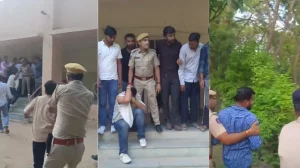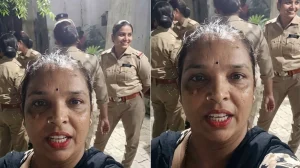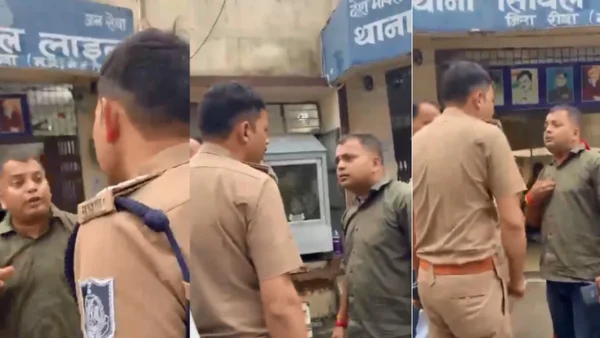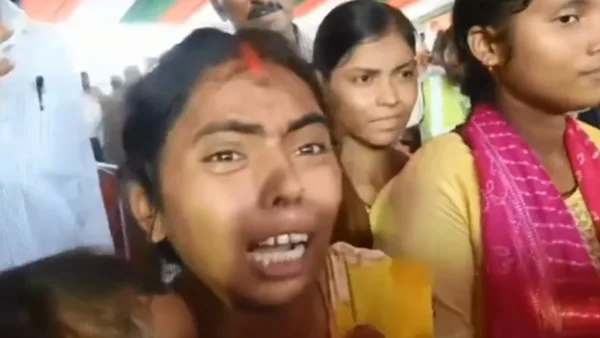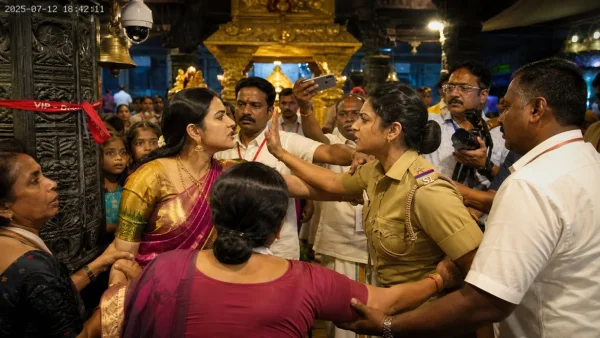
A confrontation at a temple in Karnataka has sparked controversy after Aishwarya, daughter of Tumakuru Rural BJP MLA B. Suresh Gowda, and police Sub-Inspector Savita B. Patil were involved in a physical altercation during a dispute over entry into the temple’s sanctum sanctorum.
The incident reportedly took place on August 12 at the Arathi Ukkada temple in Srirangapatna taluk of Mandya district, during Bheemana Amavasya celebrations, when the temple was witnessing a heavy rush of devotees.
Dispute reportedly began over temple entry
According to the police complaint, Aishwarya had arrived at the temple with her children and sought entry into the sanctum sanctorum.
Sub-Inspector Savita Patil, who was deployed for crowd-control duty from the Mandya Women’s Police Station, reportedly told her that the temple was crowded and that allowing her through immediately could cause resentment among devotees waiting in line.
The police version says Aishwarya objected to being stopped, leading to a heated argument. The complaint alleges that she abused the officer and subsequently slapped her while the officer was performing her official duties.
CCTV footage surfaces
The controversy intensified after CCTV footage from the temple surfaced online.
The footage reportedly shows the two women arguing before Aishwarya appears to slap Savita Patil. The police officer then appears to retaliate by striking Aishwarya. People nearby subsequently intervene and separate the two.
The emergence of the footage has renewed public discussion over what happened inside the temple and whether anyone attempted to use political influence to obtain preferential access.
MLA apologises but disputes police version
B. Suresh Gowda has expressed regret over the incident and apologised for his daughter’s conduct.
At the same time, however, the MLA has alleged that the police officer abused his daughter first, and said that the argument escalated from there. He also stated that he had not initially seen the video showing his daughter allegedly striking the officer.
That allegation forms part of the counter-version and will have to be examined by investigators.
Police case and counter-complaint
A case was registered following Savita Patil’s complaint, with allegations including assault or use of criminal force against a public servant, causing hurt, intentional insult and criminal intimidation.
Aishwarya has subsequently submitted a counter-complaint alleging misconduct by the police officer. Mandya Superintendent of Police Mallikarjun Baladandi has confirmed that both sides have approached the police and that the allegations are being investigated. (The Credible News)
Reports published on August 25 said that further videos of the confrontation had surfaced and that the matter was again attracting public attention.
The VIP-access question
At the centre of the controversy is a larger question: Should political connections determine access to a crowded place of worship?
During major religious events, police personnel are routinely deployed to manage crowds and maintain order. If a special-access arrangement exists, it should ideally be clearly defined and applied consistently.
At the same time, any allegation that a police officer behaved improperly toward a visitor also deserves investigation.
The appropriate answer should therefore be neither political privilege nor unchecked police authority, but evidence and due process.
What investigators need to establish
Authorities will need to examine:
Complete CCTV footage rather than isolated clips.
Statements from devotees and other witnesses.
Whether VIP or special-entry arrangements existed that day.
Whether Aishwarya was authorised for such entry.
The circumstances leading to the physical confrontation.
The allegations made in both complaints.
Whether either party obstructed the lawful discharge of official duties.
Why the incident matters
The controversy has gone beyond one temple dispute because it touches upon a basic principle of public administration:
Rules should not change simply because someone is connected to a powerful person.
But the same principle applies to the police as well: being a police officer does not place anyone above scrutiny or accountability.
The investigation must therefore establish the facts without political pressure or institutional bias.
The temple was supposed to be a place of worship. Instead, a dispute over who could enter first escalated into an alleged assault between a politician’s daughter and a police officer. The real test now is whether the law treats both sides equally.