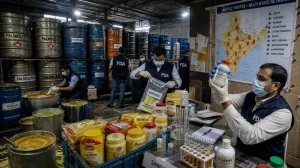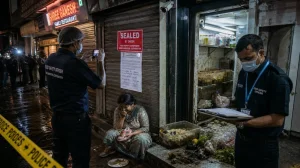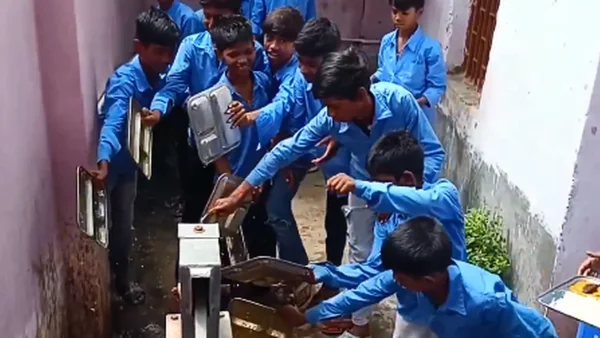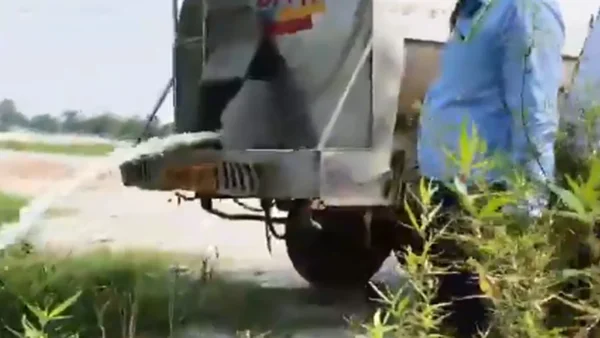
In a major food-safety enforcement action, officials from the Food Safety and Drug Administration (FSDA) reportedly intercepted a tanker carrying around 2,000 litres of milk in Mathura after receiving information about suspected adulteration.
According to the details available, the tanker was stopped while transporting the milk and the FSDA team conducted an inspection. Officials allegedly found that the consignment contained impurities/adulterants, raising concerns about its suitability for human consumption.
The entire consignment was subsequently disposed of rather than being allowed to enter the market.
₹1.2 Lakh Worth of Milk Destroyed
The seized tanker reportedly contained approximately 2,000 litres of milk, estimated to be worth around ₹1.20 lakh.
Following the inspection, authorities reportedly drained the adulterated milk into a sewer to prevent it from being distributed or sold to consumers.
The action resulted in the complete loss of the consignment.
While the immediate financial loss falls on the transporter or supplier, officials’ primary concern in such an action is preventing potentially unsafe food from reaching consumers.
Driver Taken Into Custody
The tanker driver was reportedly taken into custody by the authorities and is being questioned as part of the investigation.
Officials are expected to establish:
Where the milk originated
Where it was being transported
Who owned the consignment
What substances were allegedly found in the milk
Whether the milk was intended for commercial sale
Whether other consignments from the same source were already in circulation
These questions will be important in determining whether the incident represents an isolated case or part of a larger adulteration network.
Why Milk Adulteration Is a Serious Public-Health Issue
Milk is consumed daily by millions of Indian households and is particularly important in children’s diets.
Adulteration can involve the addition of substances intended to increase volume, alter appearance or artificially modify the product.
Depending on the substance involved and the quantity consumed, contaminated or adulterated food can potentially create health risks.
That is why food-safety authorities routinely conduct sampling and enforcement operations against suspected adulteration.
From Inspection to Enforcement
The Mathura operation highlights an important part of food-safety enforcement: intercepting suspect food before it reaches consumers.
Had the tanker reached its destination and the milk entered the supply chain, tracing the product could have become considerably more difficult.
By stopping the vehicle and disposing of the allegedly adulterated consignment, officials prevented the reported 2,000 litres from being distributed further.
However, destruction of the product addresses only the immediate risk.
The bigger question is where the adulterated milk came from and who was responsible for putting it into the supply chain.
What Happens Next?
Authorities will need to establish the precise nature of the alleged adulteration through the applicable inspection and laboratory procedures.
If violations are confirmed, action can follow under India’s food-safety laws, depending on the nature and severity of the offence.
The investigation could also help identify whether additional suppliers, transporters or distributors are connected to the consignment.
A ₹1.2-Lakh Loss, but Potentially a Much Larger Warning
The destruction of 2,000 litres of milk worth approximately ₹1.20 lakh may appear to be a substantial loss for the transporter.
But from a public-health perspective, the intervention was intended to prevent a potentially unsafe product from reaching consumers.
The incident also underlines a broader challenge facing food regulators:
Adulteration cannot be addressed only after contaminated products reach shops and households.
Regular inspections, laboratory testing, supply-chain tracing and strict action against repeat offenders are essential to deter the practice.
In Mathura, the tanker may have been stopped in time—but the investigation now needs to go beyond the driver and establish who put allegedly adulterated milk on the road in the first place.