There is an old joke about bureaucracy: the system works perfectly until someone actually tries to make it work.
The controversy surrounding Maharashtra Food Commissioner Tukaram Mundhe has revived that uncomfortable question.
Claims circulating about his tenure point to a series of enforcement actions against food-safety violations, illegal food outlets and unhygienic establishments. Supporters portray him as an officer finally doing what citizens expect from regulators: enforcing the law without worrying about whose interests might be affected.
But the larger story is not about one officer.
It is about what happens when regulation starts hurting people who have become comfortable ignoring regulations.
From School Junk Food to Fake Milk
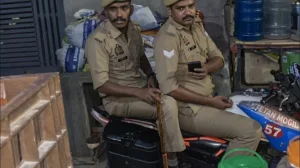
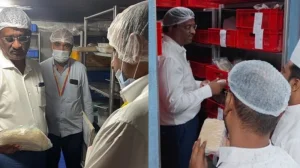
According to claims being circulated about the enforcement drive, authorities under Mundhe have taken action on several fronts.
Among the reported measures are:
Junk-food carts operating around schools being shut down.
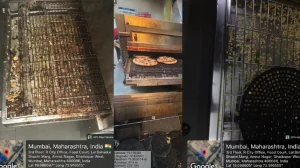
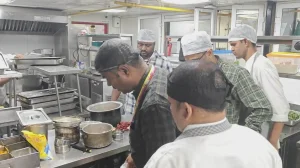
Restaurants being pushed to improve kitchen hygiene.
Action against establishments allegedly involved in producing or selling adulterated milk.
Seizure of food products allegedly worth around ₹50 crore.
Closure of dozens of allegedly illegal food outlets.
Action against food businesses found violating licensing or safety requirements.
Each individual action may sound administrative.
Together, they represent something much more significant:
A regulator actually regulating.
The Bombay High Court Canteen Controversy
One of the claims attracting particular attention concerns the cancellation of a food-business licence associated with the Bombay High Court canteen.
If confirmed through official records, this would send a powerful message:
Food-safety rules cannot depend on the prestige of the address. Whether the establishment belongs to a powerful institution, a major business or an ordinary roadside vendor, the same safety standards should apply.
That is precisely what regulatory independence is supposed to mean.
Then Comes the Political Question
The controversy becomes more serious with claims that a letter was written to the government seeking Mundhe’s removal or transfer, while officers from his department allegedly travelled to Delhi in connection with his transfer.
These are serious allegations and should not be presented as established fact without documentary confirmation.
But if an officer is genuinely being targeted because enforcement is inconveniencing politically connected or commercially influential interests, that would raise a much bigger institutional question:
Who is the regulator ultimately accountable to—the law or the people who dislike enforcement?
That question deserves an answer.
And Then There Is the MLA Restaurant Claim
Another allegation circulating is that an allegedly illegal restaurant linked to a BJP MLA was locked after enforcement action.
Again, this should be independently verified before being treated as proven wrongdoing by the politician.
But the principle is straightforward:
If a restaurant violates the law, political affiliation should provide no immunity. And equally:
If the restaurant is actually compliant, political affiliation should not make it a target. The only acceptable standard is evidence.
Why Would Honesty Cause “High Blood Pressure”?
This is where the story becomes almost darkly humorous.
A government department is created to enforce rules.
An officer enforces the rules.
Businesses complain.
Politicians complain.
Officials allegedly seek his transfer.
And suddenly the officer becomes the problem.
What exactly changed?
The law didn’t change.
The regulations didn’t change.
The food-safety standards didn’t change.
Perhaps what changed was simply this:
Someone started enforcing them.
21 Transfers in 25 Years: Experience or Warning Sign?
Mundhe’s supporters frequently point to his reportedly high number of transfers during his career.
The claim that he has been transferred 21 times in 25 years has become central to the public narrative surrounding him.
Frequent transfers by themselves do not prove victimisation. Officers can be transferred for legitimate administrative reasons.
But when an officer develops a reputation for repeated transfers, an important institutional question arises:
Are transfers being used as routine administration—or as a mechanism for managing inconvenient officers? That is a question worth examining through official service records rather than political narratives.
The FSSAI Comparison Needs Perspective
Supporters have also suggested that Mundhe’s enforcement has achieved what the Food Safety and Standards Authority of India (FSSAI) could not.
That comparison needs some caution.
FSSAI and state food-safety departments have different statutory roles, structures and enforcement responsibilities. A state commissioner cannot simply be compared with the national regulator as though they perform identical functions.
But there is still a legitimate point underneath the rhetoric:
Regulations are meaningless if enforcement is weak. India doesn’t necessarily suffer from a shortage of laws.
It often suffers from inconsistent implementation.
Why Food Safety Is Not a Minor Issue
This isn’t about bureaucratic paperwork.
Food adulteration and poor hygiene can directly affect public health.
Unsafe food can mean:
Food poisoning
Contamination
Allergic reactions
Long-term health consequences
Financial losses for consumers
Children are particularly vulnerable, which makes enforcement around schools and educational institutions especially important.
If authorities are shutting down unsafe food businesses around schools, that should be viewed primarily through the lens of child safety, not political rivalry.
But Enforcement Must Also Be Fair
There is another side that shouldn’t be ignored.
An aggressive regulator is not automatically a good regulator.
Enforcement must be:
Evidence-based.
Legally defensible.
Consistent.
Transparent.
Free from political targeting.
Businesses must have due process and appropriate avenues of appeal.
An officer should not receive praise simply because he is tough.
]The real test is whether he is tough, fair and accountable.
What Should the Government Do?
If Mundhe’s actions are lawful and effective, the government should strengthen—not weaken—the institutional environment around food-safety enforcement.
That means:
Protect regulatory independence
Officers should be able to enforce regulations without fear of political retaliation.
Publish enforcement data
How many inspections? How many violations? How many closures? How many prosecutions? How much adulterated food seized?
Transparency would settle many arguments.
Use the same standards for everyone
Political connections, wealth and institutional status should not affect enforcement.
Protect due process
Businesses must have the right to challenge incorrect or excessive enforcement.
Audit the regulator itself
Independent oversight should ensure that enforcement powers are not abused.
And About That Congress Question…
The original political claim asks:
“According to you, which department should he get if a Congress government comes to power?”
That’s the wrong question.
If an officer is genuinely honest and effective, the better question is:
Why should his value depend on which political party is in power? An honest officer shouldn’t need a Congress government, BJP government, or any other government to protect him.
The institution should protect him. Because governments change.
Political parties change.
Ministers change.
But the civil service is supposed to remain governed by rules and institutions.
The Real “Tukaram Test”
The most interesting lesson from this controversy isn’t whether Tukaram Mundhe is a hero or whether his critics are villains.
It is whether India’s administrative system can tolerate an officer who enforces unpopular rules.
Because if doing your job properly makes you politically inconvenient, the message received by every other officer is dangerous:
Don’t enforce too much. Don’t upset the powerful. Don’t create trouble.
And that is precisely how regulatory systems become weak.
Final Word
The claims surrounding Tukaram Mundhe’s enforcement record paint a striking picture: illegal food outlets being targeted, alleged adulteration being seized, hygiene standards being enforced and powerful establishments reportedly facing regulatory scrutiny.
Some of these specific claims require confirmation from official records, and allegations of political pressure or attempts to secure his transfer should likewise be independently established.
But the principle is simple.
An officer should neither be rewarded for targeting the powerful nor punished for enforcing the law against them. If Mundhe has acted within the law, the government should let the results speak.
If he has exceeded his authority, an independent process should establish that.
And if attempts are being made to transfer him merely because his enforcement has become inconvenient to influential interests, that is the controversy that deserves the closest scrutiny.
Because perhaps the most uncomfortable question isn’t:
“Why is Tukaram Mundhe causing so many problems?”
It is: “Why does doing the job sometimes become the problem?”