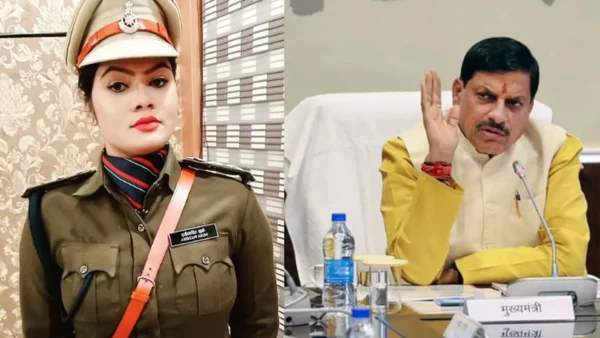
Delhi’s political landscape has undergone a major transformation. The BJP now controls several key layers of governance in the capital: Prime Minister Narendra Modi leads the Union government, Rekha Gupta heads the Delhi government, Taranjit Singh Sandhu is the Lieutenant Governor, and Pravesh Wahi is the BJP Mayor of the Municipal Corporation of Delhi (MCD). (Delhi Government)
This concentration of political power has given rise to the BJP's much-discussed “double-engine” or “four-engine” governance narrative.
But it has also created a political challenge for the party:
When the same political organisation controls so many levels of government, who gets the blame when Delhi’s basic civic problems remain unresolved?
The BJP Now Controls the MCD Too
The BJP’s control over Delhi’s civic administration became stronger after Pravesh Wahi was elected MCD Mayor in April 2026, defeating the Congress candidate by a large margin. He received 156 of the 165 votes cast.
The party’s position subsequently strengthened further after the Indraprastha Vikas Party merged with the BJP, taking the BJP’s strength in the 250-member civic House to 139 councillors, according to reports.
That means the BJP now has substantial political control over the body responsible for many everyday municipal services.
Yet Delhi’s Civic Problems Have Not Disappeared
Recent reports illustrate the continuing challenges.
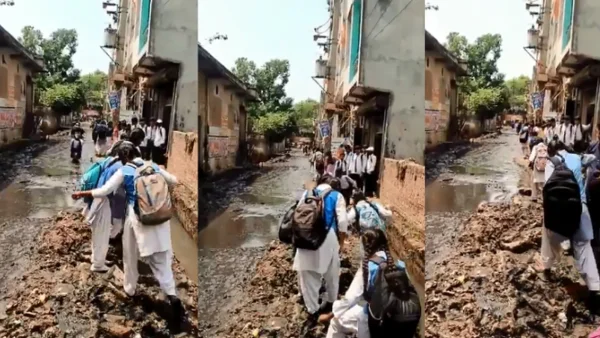
In West Vinod Nagar, residents have complained about large quantities of garbage accumulating on roads, with residents describing the area as increasingly difficult to walk through, drive through and even live in because of the smell and pollution.
Such complaints are especially politically significant now because sanitation and waste management are among the responsibilities associated with municipal administration.
The question being asked by critics is therefore straightforward:
If political control has been consolidated, why are residents still dealing with basic civic failures?
The “Many Engines” Argument
Critics have turned the BJP’s governance narrative against it.
The argument is essentially:
Prime Minister — BJP
Delhi Government — BJP
Lieutenant Governor — BJP-appointed
Delhi Mayor — BJP
MPs — BJP
MLAs — BJP
Councillors — BJP
So, if Delhi’s roads, garbage collection, drainage, pollution and other civic services remain problematic, political blame can no longer automatically be shifted from one party-controlled institution to another.
That is the political significance of the current arrangement.
However, it would be inaccurate to suggest that every civic issue in Delhi falls under the direct control of one office. Responsibilities remain divided among the Union government, Delhi government, MCD, DDA, PWD, police and other agencies, depending on the issue.
“Double Engine” Is a Political Promise, Not a Magic Formula
The concept behind double-engine governance is that governments controlled by the same political party can supposedly coordinate more efficiently.
In theory, that can mean:
Faster decision-making
Better coordination
Fewer political disputes
Easier implementation of infrastructure projects
Greater accountability
But there is another side.
If coordination improves, citizens can reasonably expect measurable improvements in public services.
Otherwise, political alignment becomes difficult to distinguish from political branding.
AAP Had Already Raised the “Four-Engine” Question
Interestingly, this criticism did not emerge only after the BJP secured the mayor’s post.
Ahead of the MCD mayoral election, the Aam Aadmi Party had itself framed the BJP’s control over the Centre, L-G’s office and MCD as a test of its “four-engine” governance model. AAP said it would stay in opposition and hold the BJP accountable for civic issues.
Now that the BJP has strengthened its position in the MCD, the accountability argument has become even more politically potent.
But Blaming One Party for Everything Would Also Be Too Simple
Delhi’s governance structure is unusually complicated.
The national capital has multiple powerful authorities with overlapping responsibilities.
For example, municipal sanitation is not the same thing as policing, road construction is not always the responsibility of the MCD, and pollution involves several agencies and neighbouring states.
Therefore, a serious assessment should ask:
Which agency is responsible for which failure?
What budget was allocated?
What work was sanctioned?
Was the work completed?
If not, who was responsible?
That is a much stronger accountability framework than simply blaming or praising whichever party is in power.
The Real Test Begins Now
With the BJP controlling the Delhi government and MCD, citizens have a legitimate basis to demand measurable results.
Delhi residents should be able to judge the government through outcomes:
Cleaner streets.
Better waste management.
Functional drains.
Improved roads and footpaths.
Reliable civic services.
Faster grievance resolution.
Political slogans cannot substitute for these things.
The “Double-Engine” Promise Comes With Double Accountability
The BJP’s political alignment across different levels of government can potentially make coordination easier.
But that same alignment also makes accountability harder to deflect.
If different agencies are controlled by different political parties, governments can blame each other.
When political control is concentrated, citizens can reasonably ask:
If everyone is supposedly on the same team, why isn’t the capital working like one? That is ultimately the test of the “double-engine” model.
Not how many BJP leaders occupy offices—but whether an ordinary Delhi resident can actually see the difference on the street.