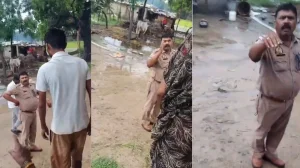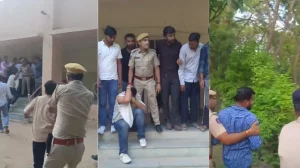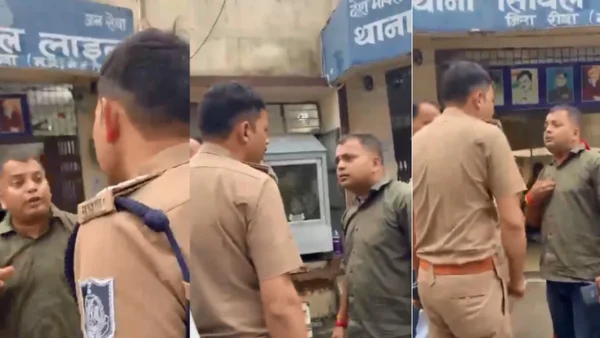
A heated confrontation at Rewa’s Civil Lines police station has sparked controversy after BJP leader Bansilal Sahu reached the station with supporters over an NDPS case involving allegedly illicit cough syrup.
According to multiple reports, Sahu and members of the Sahu community went to the police station demanding a fair investigation into the arrest of a man in the case. The dispute escalated when Sahu reportedly sat at the main gate of the police station, leading to a heated exchange with Civil Lines police station in-charge Vijay Singh.
What triggered the confrontation?
The controversy began after Civil Lines police reportedly took action against the operator of an ice-cream stall near Sai Temple, alleging recovery of narcotic cough syrup (Corex) and registering a case under the NDPS Act.
The accused person’s family and local traders, however, reportedly disputed the police version. They alleged that the stall had been locked and questioned how the cough-syrup bottles were recovered from its roof. They demanded an impartial investigation into the circumstances of the seizure. These claims remain allegations and have not been independently established.
BJP leader sits at police station gate
Amid the dispute, BJP leader Bansilal Sahu reportedly arrived with supporters and sat at the station’s main gate.
A video of the confrontation subsequently circulated on social media.
In the footage, TI Vijay Singh can reportedly be seen asking Sahu to get up and warning him against creating a disturbance. Reports quote the officer as saying, “Nautanki mat kar, warna FIR thok dunga”—roughly, “Don’t create a drama, otherwise I’ll register an FIR against you.”
The exchange became increasingly heated, with reports describing an argument and physical jostling between the two sides. Some reports also allege that the officer struck Sahu on the head, although that allegation should be independently verified.
Police: No work will happen under crowd pressure
The police officer reportedly maintained that the police would not act under pressure from a crowd and that anyone violating the law could face action.
On the other side, Sahu and supporters demanded an impartial investigation into the narcotic cough-syrup case and questioned the circumstances surrounding the alleged seizure.
The incident has therefore created two separate questions: whether the original NDPS case was correctly registered and whether the conduct at the police station was appropriate.
A larger question about political influence
The episode has also reignited a familiar debate: Can political leaders intervene in police investigations involving their supporters or community members?
A citizen has every right to demand a fair investigation. But the same principle must apply to everyone—whether the person seeking intervention is a politician, community leader or an ordinary citizen.
Likewise, police officers are expected to enforce the law without fear or favour, while maintaining professional conduct even when confronted with protests or political pressure.
The answer cannot be political influence replacing due process, nor can it be police authority replacing accountability.
What should happen next?
The most constructive way forward would be an impartial examination of both aspects of the controversy:
Verify the seizure of the alleged narcotic cough syrup.
Examine CCTV footage and seizure documentation.
Establish how and where the substances were recovered.
Determine whether the NDPS case meets the required legal standards.
Review the conduct of everyone involved in the police-station confrontation.
Make the findings of any inquiry transparent.
The real test is the rule of law
The Rewa episode is bigger than one BJP leader, one police officer or one cough-syrup case.
If the accused is innocent, the investigation should establish that through evidence. If the accused is guilty, political connections should not protect him.
And if police action was improper, police authority should not shield it from scrutiny.
In a functioning rule-of-law system, neither political power nor police power should determine the outcome. Evidence and due process should.