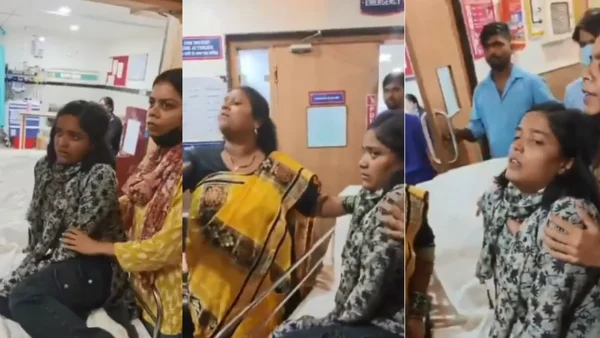
A controversy has emerged over the alleged handling of a minor girl by the police, with questions being raised about the circumstances in which she was reportedly kept at a police station for several hours and subsequently taken from one place to another in connection with a medical examination.
The allegations have prompted criticism of the police administration and demands for greater transparency about what happened and why.
Why Was the Girl Kept at the Police Station?
According to the claims circulating about the incident, the young girl was reportedly kept at a police station for an extended period.
That has raised immediate questions about the procedure followed by the authorities, particularly because the matter concerns a minor.
Child-protection laws in India provide specific safeguards for children who come into contact with the police or criminal-justice system. Consequently, authorities are expected to handle such cases with particular care and sensitivity.
However, the precise circumstances—including how long the girl remained at the station, who was present and why she was brought there—need to be established through an official inquiry.
Medical Examination Becomes Another Point of Controversy
The situation reportedly became more contentious when the girl was subsequently taken to different locations for a medical examination.
Critics have questioned why the process allegedly involved moving the child from place to place and whether the examination was conducted according to the appropriate medical and legal protocols.
A medical examination can be an important part of an investigation, particularly where allegations involve possible physical or sexual harm. But such examinations must be conducted with the child’s safety, dignity, privacy and legal rights in mind.
The exact medical procedure followed in this case should therefore be clarified by the authorities.
Where Is the Official Explanation?
Much of the controversy stems from what critics describe as a lack of clear information.
Several basic questions remain:
Why was the minor brought to the police station?
For how long was she kept there?
Who was responsible for her during that period?
Were her parents or guardians informed?
Why was she reportedly taken to multiple locations?
Which medical facility conducted or was asked to conduct the examination?
Was a female police officer or appropriate child-protection personnel present?
What legal provisions were being followed?
Until these questions are answered, speculation is likely to continue.
The Government Faces a Transparency Test
Political criticism has intensified, with opponents alleging that the police administration is acting under government pressure.
Those are serious allegations and cannot be treated as established facts without evidence.
The administration, however, can address much of the controversy simply by providing a clear factual account of the sequence of events.
If every action was carried out according to law, explaining the procedure would help establish that.
If procedural lapses occurred, an independent inquiry should identify those responsible.
Child Safety Must Come Before Political Arguments
Whatever the political circumstances surrounding the case, the central concern should remain the welfare of the minor.
A child involved in a police or medical investigation should not become the centre of a political spectacle.
The authorities must ensure:
Privacy.
Dignity.
Protection from intimidation.
Appropriate adult support.
Proper medical care.
Strict adherence to child-protection procedures.
The Bigger Question: Can the Public Trust the Process?
When a minor is allegedly kept at a police station for hours and subsequently moved around for medical procedures, people naturally want to know whether established safeguards were followed.
That is not merely a political question.
It is a question of institutional accountability.
The government should therefore address the allegations with facts rather than allowing competing political narratives to fill the information gap.
If the police followed every required procedure, they should explain it clearly. If they did not, those responsible should be held accountable. The welfare and dignity of the child must remain the priority—not political optics, accusations or counter-accusations.