A patriotic march meant to celebrate the national flag has raised an uncomfortable question about how far organisers should go in the name of political or public events when children are involved.
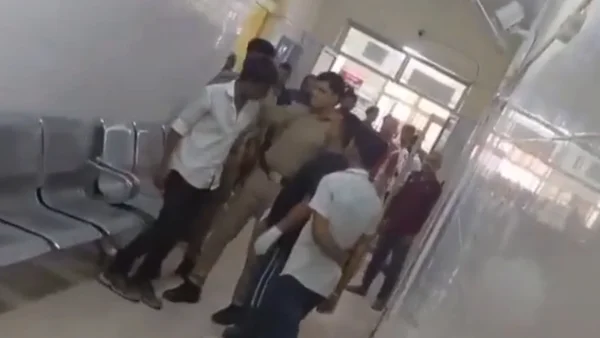
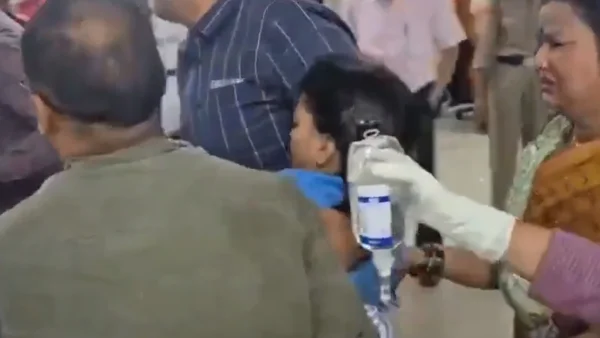
Reports from Chitrangi in Singrauli district, Madhya Pradesh, say that 12 schoolchildren fell ill after participating in a Tiranga Yatra, with the children reportedly walking several kilometres and then waiting in the heat for the arrival of state Panchayat and Rural Development Minister Radha Singh. The Times of India reported that the children became unwell after the walk and a wait of nearly an hour for the minister.
One important correction: the incident I could verify is in Singrauli, Madhya Pradesh—not Deoria, Uttar Pradesh. I could not independently verify the separate claim that 40 girls fell ill in Deoria.
That distinction matters when reporting the story.
Six Kilometres for a Flag, Then a Wait for a Minister
According to the reported account, students took part in the Tiranga Yatra and walked several kilometres before being made to wait for the minister’s arrival.
The concern isn’t about the Tiranga Yatra itself.
Patriotism, civic participation and respect for the national flag are perfectly legitimate.
The question is much simpler:
Why were schoolchildren expected to undertake a physically demanding march and then remain waiting in hot conditions for a political dignitary? Children are not campaign props.
If an event involves minors, organisers have a heightened responsibility to ensure adequate:
drinking water;
shade;
rest periods;
transportation;
crowd management;
emergency arrangements.
When the VIP Is Late, Why Should Children Pay the Price?
This is perhaps the most troubling aspect of the reported incident.
A minister can arrive late.
A programme can be delayed.
A speech can be shortened.
But children standing outdoors in scorching weather cannot simply be treated as an adjustable item on an event schedule.
The reported illness of 12 students should therefore prompt an examination of event planning and duty of care, rather than merely a political blame game.
The Question Nobody Wants to Ask: How Far Did the Leaders Walk?
And here’s where the political sarcasm almost writes itself.
Students: Walk several kilometres.
Students: Wait in the heat.
Students: Fall ill.
Students: Get hospitalised.
Meanwhile:
VIP: Wait for the VIP arrival protocol.
So the obvious question is:
How many kilometres did the leaders themselves walk? And if the answer is considerably less than the distance imposed on the children, another question follows:
Why wasn’t the event designed around the children’s safety rather than the VIP’s arrival? That’s not anti-national.
That’s basic event management.
Patriotism Shouldn’t Require a Medical Bill
A Tiranga Yatra is supposed to generate pride.
It should not end with parents asking:
“Why was my child taken to hospital after attending a government-sponsored event?”
There’s an important difference between participation and physical endurance being imposed on children.
If organisers wanted students to participate, there were plenty of safer alternatives:
shorter walking routes;
buses for part of the journey;
shaded assembly points;
staggered participation;
hydration stations;
indoor waiting arrangements;
clear maximum exposure times.
None of these would make the event less patriotic.
And This Isn’t About One Political Party
The standard should apply to every government.
If a BJP-led government organises an event, children must be protected.
If a Congress-led government does it, the same rule applies.
If an opposition party organises it, the same rule applies.
Children's health should not have a party symbol. The political affiliation of the organiser shouldn’t determine whether the incident receives scrutiny.
What Happened to Basic Risk Assessment?
Any large public event involving schoolchildren should have a basic risk assessment.
Organisers should know:
How far will children walk?
How long will they be outside?
What is the temperature?
Where are water points?
Where are ambulances?
How quickly can a child reach medical care?
What happens if a VIP is delayed?
That last question is particularly important.
A VIP’s schedule should never become a child’s medical emergency.
The Government Must Investigate—Not Just Explain
If reports of children falling ill are accurate, authorities should establish:
Who organised the march?
How many students participated?
What was the actual walking distance?
How long were students required to wait?
What were the weather conditions?
How many water and medical facilities were available?
Were parents informed about the event arrangements?
Why were students not allowed to leave or rest when they became unwell?
Who was responsible for medical preparedness?
What safeguards will apply to future government events involving children?
These are reasonable administrative questions.
Don’t Turn the Children Into Political Ammunition
There is another side that deserves attention.
It would be equally irresponsible to exploit sick children for partisan propaganda without establishing what actually happened.
The verified reporting currently available establishes that 12 schoolchildren reportedly fell ill in Chitrangi, Singrauli, after a Tiranga Yatra and waiting period for the minister’s arrival.
It does not, by itself, establish deliberate negligence, political coercion or wrongdoing by the minister personally.
Those questions require investigation.
Accountability requires facts—not exaggeration.
The Irony of a Patriotic Event
There is something deeply ironic about a programme celebrating the nation leaving children exhausted and unwell.
The national flag represents a country whose citizens should be protected—not merely assembled.
If a schoolchild collapses during a public event, the first priority should be:
water → shade → medical attention → safe transport.
Not:
“Wait, the minister hasn’t arrived yet.”
A Better Model for Future Tiranga Yatras
Government departments and political organisations should adopt basic child-safety protocols for such events.
Shorter routes
Children shouldn’t be made to walk unnecessarily long distances.
Mandatory hydration
Water should be continuously available.
Heat precautions
Outdoor events should be adjusted according to weather conditions.
No prolonged VIP waiting
Children should not be kept waiting merely because a dignitary is late.
Medical teams
Ambulances and first-aid stations should be present.
Parental consent
Parents should know the route, duration and arrangements.
Immediate exit option
Any child feeling unwell should be allowed to leave immediately.
Final Question: Who Was the Event For?
The purpose of a Tiranga Yatra should be to bring people together in celebration of the country.
If children are walking kilometres in the heat while waiting for a minister, and some end up requiring medical attention, then the event organisers need to answer a very basic question:
Was the programme designed for the children—or were the children arranged for the programme? And perhaps the sharpest question of all:
If patriotism requires children to walk six kilometres and wait in scorching heat, how many kilometres were the VIPs prepared to walk themselves? The Tiranga deserves respect. So do the children carrying it.