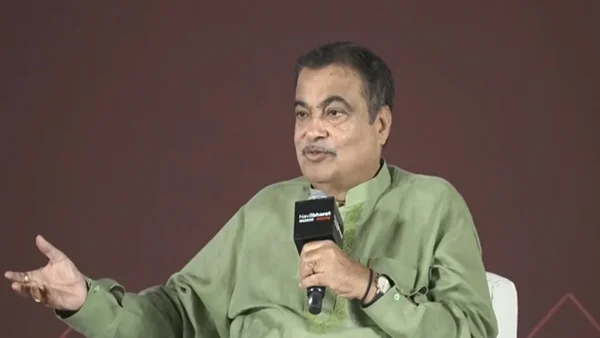
A controversy surrounding Union Minister Nitin Gadkari has raised a question that goes beyond the merits of any particular government policy:
How much independent judgment should citizens expect from a Union minister? Gadkari has faced criticism over remarks suggesting that his officials were instructed to study policies adopted in the United States, remove references to the American system and implement suitable versions in India.
Studying international policy is hardly unusual. Governments around the world routinely examine what works elsewhere and adapt it to local circumstances.
The controversy begins when “learning from another country” is portrayed as simply removing the country’s name and adopting the policy here.
That raises legitimate questions about policy design, institutional capacity and accountability.
Copying a Policy Isn’t Automatically Wrong
There is an important distinction that should not be lost in the political debate.
Governments regularly borrow ideas from one another.
India has adopted or adapted policies influenced by international experience in areas ranging from infrastructure and taxation to technology and public administration.
The real test is whether a policy is:
independently evaluated;
legally compatible with India;
economically viable;
suited to Indian conditions;
beneficial to citizens;
transparent about its origins and assumptions.
The problem isn’t inspiration. The problem would be uncritical imitation. If a minister’s statement is interpreted literally as “remove the US name and implement it in India,” citizens are entitled to ask whether sufficient domestic analysis preceded the decision.
Why Does Ministerial Judgment Matter?
A Union minister doesn’t merely supervise a department.
Ministers exercise enormous influence over public expenditure, regulations, infrastructure and policy decisions affecting millions of people.
That means the standard expected from them should be exceptionally high.
A reasonable citizen can therefore ask:
Was the policy independently assessed for Indian conditions?
Who examined its economic consequences?
Were Indian stakeholders consulted?
Were alternative approaches considered?
Was there an independent impact assessment?
These aren’t partisan questions.
They’re governance questions.
And Then There Is the Conflict-of-Interest Question
The controversy becomes more sensitive when allegations of conflicts of interest are also circulating.
But allegations must remain allegations unless supported by evidence.
It would be irresponsible to conclude that Gadkari acted improperly merely because accusations have been made.
At the same time, the existence of credible conflict-of-interest allegations makes transparency more—not less—important.
If a minister is responsible for policies that could affect particular industries or businesses with which he or his associates have connections, citizens deserve clear disclosure and appropriate institutional safeguards.
Public office demands not only actual impartiality, but confidence in impartiality.
Whose Interests Does a Policy Serve?
This is perhaps the most important question.
Suppose India adopts a policy originally designed for the United States.
The obvious question is:
Who benefits from its implementation in India?
A policy created for one economy may have assumptions about:
income levels;
infrastructure;
taxation;
labour markets;
regulation;
consumer behaviour;
corporate structures;
environmental standards.
Those assumptions may not translate directly to India.
A policy that works in Washington or California isn’t automatically suitable for Uttar Pradesh, Maharashtra or Bihar.
India needs Indian policy outcomes—not imported policy labels.
Independent Inquiry: Overreaction or Good Governance?
Calling for an independent examination does not necessarily mean declaring a minister guilty.
In fact, an inquiry can protect both the public and the minister.
If the allegations are baseless, an independent review can establish that.
If there were serious procedural failures, the same inquiry can identify them.
A credible inquiry should examine:
What exactly did the minister instruct officials to do?
Which foreign policies were studied?
Were they substantially adapted for Indian conditions?
Who approved the final policy?
What consultations took place?
Were conflicts of interest disclosed?
Did any private entities stand to benefit disproportionately?
Were proper procurement and regulatory procedures followed?
Those questions are answerable.
But Is That Enough to Remove a Minister?
This is where political rhetoric needs to meet constitutional reality.
A controversial remark, by itself, does not automatically establish that a minister is unfit for office.
Nor does an allegation of conflict of interest establish wrongdoing.
There needs to be evidence of misconduct, serious negligence, undisclosed conflicts, abuse of office or another substantial violation of public trust before demanding removal as though guilt has already been established.
Until then, the stronger and more defensible demand is:
Investigate first. Establish facts. Then determine accountability.
The Bigger Problem: “Good Enough for America” Isn’t a Policy Framework
India is a complex country with its own economic realities.
A policy cannot become good simply because it worked somewhere else.
Nor does a policy become bad simply because it originated abroad.
The real question is:
Does it work for India?
That requires evidence.
It requires pilots.
It requires consultation.
It requires independent evaluation.
And above all, it requires policymakers who can explain why a particular policy is appropriate for Indian citizens.
The Government Should Welcome Scrutiny
If the policy process is clean, there should be little reason to fear an independent review.
The government can publish:
the original foreign policy documents;
the Indian adaptation;
expert assessments;
consultation records;
cost-benefit analysis;
conflict-of-interest disclosures;
implementation outcomes.
That would turn a political controversy into an evidence-based public debate.
The Question Citizens Should Ask
The debate should not be reduced to:
“Is Gadkari a good minister or a bad minister?”
That’s too simplistic.
The better question is:
“Are India’s policies being designed through transparent, evidence-based processes that put public interest ahead of private or political interests?” If the answer is yes, publish the evidence.
If the answer is unclear, investigate.
If wrongdoing is established, act.
Conclusion: Accountability Before Political Loyalty
Nitin Gadkari has held major ministerial responsibilities for years, and evaluating his performance should ultimately involve evidence of his record rather than one controversial statement.
But ministers should also understand that public office comes with a higher burden of explanation.
Studying foreign policies is normal.
Adapting successful international ideas is normal.
Blindly copying policies without considering Indian conditions would not be.
And credible conflict-of-interest concerns, if supported by evidence, would make transparency even more important.
So the strongest demand isn’t:
“Remove him because he said this.”
It is:
“Explain exactly what happened, disclose the policy process, investigate any credible conflict-of-interest allegations, and let the evidence determine whether ministerial accountability is warranted.”
Because in a democracy, a minister should not be above scrutiny—and neither should the government that appointed him.