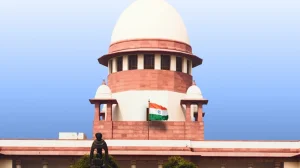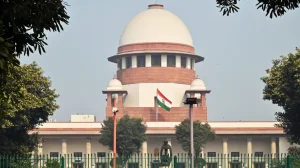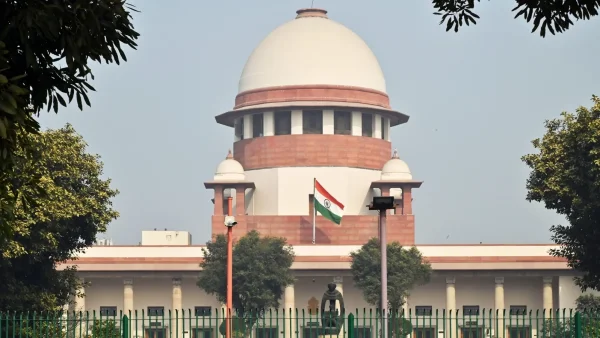
The Supreme Court of India has unveiled its high-level interpretation of the creamy layer in order not to be solely based upon the income standard but rather to hover the applicant’s post and status in on-going legal parameters and guidelines.
Observation of the Supreme Court
A two-judge bench consisting of Justices PS Narasimha and R Mahadevan stated that it cannot be only an income criterion for deciding the creamy layer status of candidates belonging to the OBC. The judgment suggests that a purely income-based measure is therefore, without the necessary reference to post and status, not sustainable in law.
The objective of the creamy layer provision is twofold: on the one hand, to check the forward and conservative parts of OBC groups from cornering the benefits reserved for the genuinely backward; conversely, removing the creamy layer shall focus reservations within the community group itself in a glaring way and avoid unwarranted splits within the same group.
It is an utter performance that flowered only too vividly to the attention of this Investigatory Ruling, terming it is plained that a discrimination between children of PSU officers and Children of Private employees is a lot of unavailability of zeal or sanction of logic and sanity in as much as it treats equals on a higher pedestal against the others.
History of creamy layer:
A creamy layer doctrine has its genesis in Indra Sawhney Judgment, People’s Union for Civil Liberties v. Union of India, and today stands to remind society that OBC reservation, especially that for those who have had a better-off background in social upbringing, shall completely forsake the precious spot of their deserving brothers and sisters who should ideally reap the first seeds of reservation.
The Court of Appeal has got a hold of it becoming an educative constitution per se, as it had been trying, in its own possible manner, to equalize the disparities-having favorrd increment in the importing of scientific techniques with the restrictions: Wisdom is not to use a cream comprising technically able people with resources.
The following is the approach of the 1993 office memo and the statements issued in 2004
:
The office memorandum of the Central Government, dated September 8, 1993, instituted the system of income and wealth test to identify the creamy layer. It remitted also that salary income and agricultural income should not be clubbed with incomes from other sources for the purpose of calculating total annual income.
Another office memorandum on October 14, 2004, was issued to clarify its applicability in Public Sector Undertakings (PSUs). Where no clear equivalence exists between a PSU or private office post and a government post, the applicability of the income and wealth test should be found. It was envisaged that salary income and income from other sources would be assessed separately, and only when a person’s income crosses the stipulated limit in either of them for three continuous years will that designate the person as belonging to the creamy layer.
The Supreme Court reaffirmed the holism in interpreting these documents. The level of income makes a difference but cannot be dissociated from the post and status elements that the 1993 memorandum has encapsulated to identify socially advanced sections.
Different standards-blogs and status indicators
The court noted the significance of analyzing the type of employment, ranking, and status as opposed to merely income. The 1993 scheme had contemplated that a relevant parental employment consists of a rank or status equivalent to higher civil services or positions of a comparable managerial or professional cadre.
When comparing statuses directly, the creamy layer test would be guided by that comparison. Only if no such equivalence in grade is admissible, should income and wealth be the fallback; when the income and wealth test must be applied, policy guidelines require the employment of separate figures for earnings from salary and those from other sources.
Standardization for all estates – the government, PSUs, and private entities
And then, the charter of uniformity was set forth. The court stated its aversion to any form of differentiation based on elaborate presumptions-high income to clearly separate the government personnel from the PSU and the private sector.
Equal treatment is called for especially in the event of mere economic differences. There are claims to equal applications of the same criteria across employment sectors.
This equal application checks prejudice and engages identification of the creamy layer in alignment with the superior promise of the Constitution, especially as in single backward class.
Practical implications: For OBC candidate and authorities
In asking for a non-creamy-layer certificate by a candidate, income details together with the employment of the parents should be informed. In the absence of a conclusive judgment to render a creamy layer, authorities should consider the parent’s cadre or position, management seniority, and if higher civil services are like status posting before focusing on income income.
While a glance at the test shows that salary income, including the tutoring of pay, and agriculture must be listed as sources only in column (4) and must not be included with either “salary” or “other sources”. Salary and other income streams must be calculated individually. Candidate falls under the high along the lines of his source crossing beyond the specified limit for 3 consecutive years..
In practice, the ideal view is that if a PSU post is salaried for a parent, or for nongovernmental employers, the parent’s income, and hence, the income and wealth test, this has paramount importance. Again it is charged that the computation followed must be in strict compliance with the 1993 and 2004 guidelines and must never penalize one set of members-in the same social class-on the calculation of income.
This order keeps emphasis on verifying their status at proper levels, religiously sticking to income procedures, or payment methodologies in order to maintain uniform rapid criteria. Aspirants must therefore remember that merely the level of parental income can be, on its own, neither a path towards being regarded as belonging nor a barrier towards membership for division in the creamy layer.
The Supreme Court’s verdict on the creamy layer criterion for OBCs establishes it as a structured, two-pronged inquiry. This ruling intends to effectuate reservation benefits for the abominably disadvantaged groups, while not yielding on the very idea of equality under the Constitution.