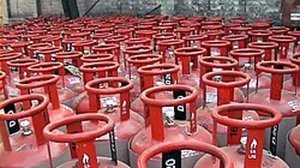
Over those two days of trading, Adani Total Gas shares went up almost 39% as investors responded to the government’s attempt to protect the gas supply for people in the country. This increase was notable because the general stock market wasn’t doing well, and it brought renewed attention to energy policy and the dangers of supply problems.
Market reaction and price action
The stock price went up as much as 14.2% during a single day, reaching 650 rupees before coming down a little. At one point it was around 620 rupees, a nearly 39% increase over two days and a 33% increase over three days, and a lot more shares were bought and sold and the speed of the changes increased.
Traders said lots of people were eager to buy and those who’d bet against the stock were rushing to buy shares to limit their losses. People who look at charts said the price will likely meet resistance and potentially see more selling at around 650 to 700 rupees. Because of this quick change, the stock is now likely to have much more up and down movement in the short term.
Government order and supply prioritization
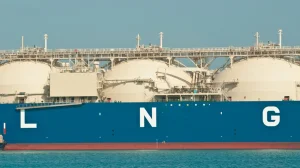
The government’s Natural Gas (Supply Regulation) Order, 2026, was the direct cause of this. It prioritizes how gas is given out because of interruptions to supply. It says gas producers, the places where LNG (liquified natural gas) is unloaded, and companies that deliver gas to people need to work together to make sure homes and vehicles have a constant supply.
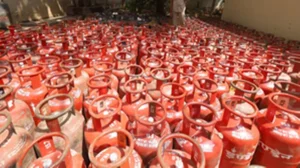
According to the order, piped natural gas (PNG) for homes and compressed natural gas (CNG) for vehicles should get up to 100% of what they’ve used on average in the last six months, as long as it’s actually possible to get them that much. The point of this is to prevent shortages for homes and transportation when gas isn’t flowing easily around the world.
Geopolitical drivers affecting LNG flows
Government officials mentioned that trouble in the Middle East and problems with ships going through the Strait of Hormuz are getting worse. Several companies that sell LNG have used “force majeure” (a clause in a contract that lets them stop doing something because of an unexpected event) and have changed or reduced deliveries to businesses. This reduction is what originally caused the government to step in.
The order also says central government bodies will organize and schedule the gas distribution to make the most of the limited amount there is. For a gas company that delivers to both regular customers and businesses, this new plan means giving priority for gas to people’s homes and vehicles in the near future.
Company response and industrial impact
Adani Total Gas said they are happy with the government’s focus on PNG and CNG for people’s homes. They also said some of their suppliers have cut back on gas, and this has caused problems delivering to businesses in some areas.
The company’s leadership says they are figuring out how this will affect things and are working with the government to manage how much gas goes where. They pointed out that the government is helping the parts of the business that serve regular customers, but some contracts with businesses and industries will be interrupted.
Analyst views and technical outlook
Experts are split on whether the price going up means the stock will continue to improve, or if it’s just people who’d bet against the stock buying shares to reduce their losses. One expert who looks at the market said people who already own the stock should hold onto it, because people are now paying more attention to how much gas is available in the country because of the conflict in Western Asia. Another expert said the price is still below a long-term downward trend, showing the stock is fundamentally weak.
According to technical analysis, the price is supported near 570 rupees and will meet resistance around 651 rupees. If the price goes above 651 rupees, it could go up to 685 rupees in the short term. But if it can’t get past that resistance, selling might start again. As of December 2025, the people who control the company (the promoters) owned around 14.80%.
Implications for investors and market context
This situation shows how quickly government actions and global political problems can change which companies in an industry do well and which do poorly. Investors should pay attention to what the government says next, what the suppliers say, and if LNG starts to flow normally. These things will show if the price change is a lasting adjustment in value or just a temporary one.
Traders who want to avoid risk might want to look at the stock’s technical levels, what’s happening with the gas supply chain, and the overall stock market before buying more shares. This is a reminder that energy policy and international happenings can quickly and significantly affect companies that provide and distribute energy.