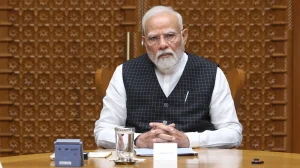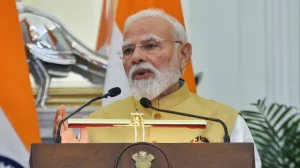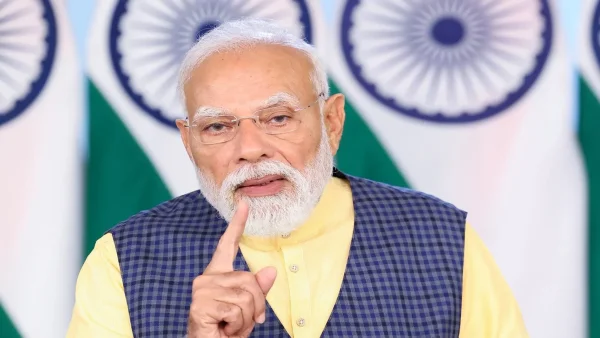
Because of the LPG shortage in the news, Prime Minister Modi has said people shouldn’t worry, and has blamed a few people for trying to cause a fright. At a meeting in New Delhi, he said the government was doing everything it could to protect India’s energy supply, while dealing with a world market that’s unstable and problems with getting things delivered.
PM Modi Asks for Calm and Joint Responsibility
The Prime Minister said the world energy problem – caused by the war – has affected every country, and that India was doing all it could to deal with it. He said that talks with leaders of other countries were going on, and that work was going on all the time to remove problems in getting energy and delivering it.
Modi also said that trying to make people afraid about LPG being available was not helpful. He said that people in politics, the press, and the general public must act properly – and that if everyone showed restraint, supplies would remain steady.
A Request to States to Stop Black Marketing and Hoarding
The Prime Minister asked state governments to watch things more carefully and to stop people from storing up LPG and selling it illegally. He warned that anyone who unfairly took advantage of short-term problems or rises in demand caused by rumours would be dealt with severely.
He said that better watching of what was going on would put off those who did wrong, and would make sure that homes got their cylinder refills on time, and at the proper price, and that there wasn’t an artificial shortage.
A Two-Part Plan for Energy Security
Modi set out a plan with two parts: to make the energy system bigger to give more people access to energy, and to make the country able to manage on its own to depend less on imports. He said this was both a short-term answer to the world being unstable, and a long-term change to make the country stronger.
The government’s plan means putting money into storage, refining, pipelines, stations, and getting things to people’s doors, while at the same time quickly increasing what the country makes itself, and finding more sources.
What Has Been Achieved Since 2014: LPG, LNG and Strategic Stocks
The Prime Minister said that India’s stores of oil for emergencies were now more than 5 million tonnes – up from almost nothing ten years ago. He said that the number of homes with LPG connections had more than doubled, going from about 140 million in 2014 to about 330 million now.
He added that the number of LNG stations had doubled from four to eight, making it easier to import and giving better access to areas around the country. He said that these increases had strengthened energy security and made energy available in both towns and the countryside.
Promises of Supply and Price from the Petroleum Ministry
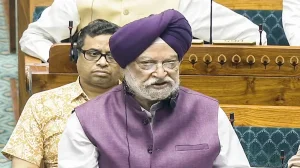
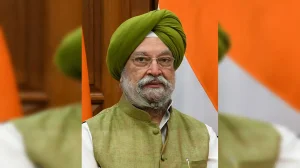
Hardeep Puri, the Petroleum Minister, told Parliament that there was no shortage of petrol, diesel, kerosene, or fuel for planes, even though things were difficult in West Asia. He said that the supply of LPG in the country was safe, and that deliveries were happening as usual, and asked people not to believe rumours or wrong information.
Puri said that oil works were working at full strength, and in some cases, over 100 percent, to meet demand. He said that LPG production had been increased by 28 percent, and that gas was being given to homes and farms first.
The minister said that the present time was one of the worst times in modern history for world energy problems. Even so, he said that oil was still coming into the country, and that the government was still trying to keep people’s stoves lit – especially the poor and those who were at risk.
The World Situation: War, Supply Lines, and Price Shocks
Wars around the world have put energy markets under strain, made shipping lanes dangerous, and made getting things from where they’re made to the people who use them more difficult. This has caused prices to go up and down, and shortages in places around the world.
Officials said that India had used special actions to lessen the effects of these shocks. As an example of helping people, the Prime Minister said that in the past, the government had kept the cost of fertilizer in the country at about a tenth of the world price during the Russia-Ukraine crisis.
What Better Watching Means for People Who Buy and for Suppliers
States have been asked to send out quick response teams, run control rooms, and look closely at suppliers and places where things are moved. The aim is to find people storing things up, to punish those who sell illegally, and to keep refill cycles predictable.
Suppliers might have more audits, be told to report stocks in real time, and be made to keep to clear times for delivery. Tools like eKYC, digital books of accounts, and GPS tracking of petrol tankers can help to stop things being sent somewhere else and stocks being changed unfairly.
People who buy should not buy in a panic, should use channels that can be trusted to take orders, and should quickly tell local authorities or official help lines about anything wrong. Regular, written orders help those who control things to see what’s happening, to show up bad practices, and to make delivery times stable.
What’s Expected: Dealing with Today’s Problems While Planning for Tomorrow
The government’s message is a mix of giving people hope and being careful: there’s enough supply, what the country has is strong, and those who try to cheat the system will be dealt with firmly. At the same time, officials say that the world energy problem is unlike anything seen before, and that quick, joined-up action is needed.
In the short term, saying things clearly and acting firmly against those who store up LPG can keep cylinders going to homes. In the long term, putting money into storage, refining, stations, and changing to clean energy is meant to make India’s energy supply stronger.
As the situation changes, being clear and working together between the central and state governments, industry, and people who buy will be the difference between things being broken and the country being able to deal with them. For now, the government is clear: there is no shortage of fuel, LPG production is up, and panicking is neither needed nor helpful.