A fresh controversy over corporate debt resolution has brought an old and uncomfortable question back into focus: Does India’s financial system treat large corporate borrowers differently from ordinary citizens?
Fugitive businessman Vijay Mallya has reportedly raised precisely this question while comparing the recovery proceedings against him with the reported debt resolution involving businessman Subhash Chandra.
In a statement attributed to Mallya, he expressed disappointment that, despite more than ₹14,000 crore allegedly being recovered from him against liabilities of around ₹6,203 crore, the media had not subjected what he described as a massive concession to another prominent businessman to the same level of scrutiny.
The numbers at the centre of the controversy
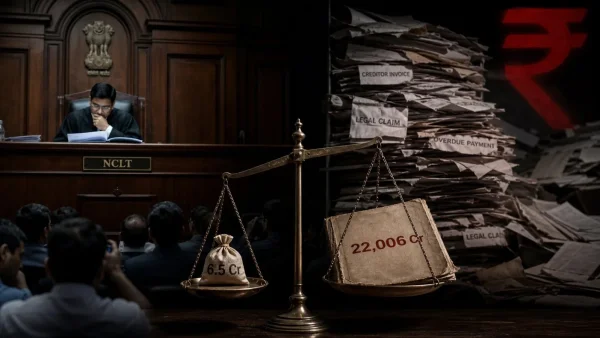
According to the figures cited by Mallya, Subhash Chandra had total debt of approximately ₹22,006 crore, while the amount to be repaid under the reported arrangement would be only around ₹6.5 crore.
Of this, approximately ₹6.25 crore would reportedly go to lenders, while ₹25 lakh would be spent on the resolution process.
If the ₹22,006 crore figure represents the same debt against which the ₹6.25 crore lender recovery is being measured, the recovery works out to approximately 0.028%—or roughly 3 paise for every ₹100 of debt.
That would represent an extraordinary 99.97% haircut.
And that is where the controversy begins.
‘What about the other cases?’
Mallya’s argument is essentially one of consistency.
Why, he asks, is there intense scrutiny when authorities pursue recovery from one high-profile businessman, while another case involving an extraordinarily large reduction in debt does not attract comparable public questioning?
The question is particularly provocative because Mallya himself has been at the centre of one of India’s most prominent banking-debt controversies and has been declared a fugitive economic offender.
But the comparison also needs to be examined carefully.
A corporate insolvency resolution is not necessarily equivalent to an individual’s outstanding loan. Recoveries can depend on the value of available assets, competing claims, guarantees, litigation, the condition of the company and the legal framework under which a settlement or resolution takes place.
Therefore, a large haircut by itself does not prove wrongdoing.
But neither does the existence of a legal resolution mean that the public should not ask questions about how such a result was reached.
The common borrower’s very different reality
The controversy becomes more politically and socially sensitive when compared with the experience of an ordinary borrower.
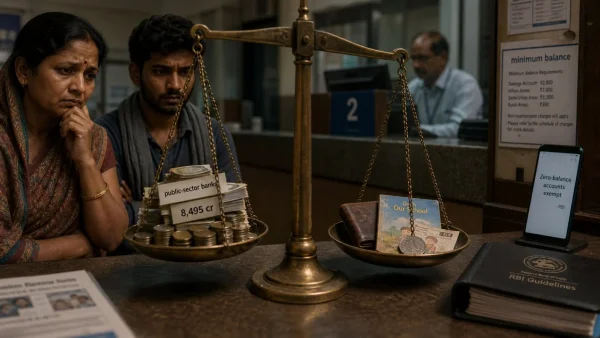
For a person struggling to repay a relatively small loan, even one missed EMI can trigger penalties, collection efforts and deterioration of their credit profile. In some cases, borrowers can face aggressive recovery proceedings when they fall behind.
This creates a perception that the financial system has two very different faces.
For the small borrower, a few thousand rupees can become a crisis.
For a large corporate borrower, billions of rupees can become the subject of prolonged restructuring, insolvency proceedings or negotiated resolution.
The question is not whether every corporate borrower should be forced to repay every rupee regardless of circumstances. That would ignore the realities of insolvency and bad debt.
The real question is whether the same principles of accountability, transparency and fairness are being applied consistently.
The media scrutiny question
Mallya’s comments also target the role of the media.
High-profile corporate defaults frequently become national headlines, particularly when public-sector banks are involved. But the intensity of coverage can vary significantly from one case to another.
That raises another legitimate question:
When an enormous debt is written down or settled for a tiny fraction of the original amount, should the public not be given a clear explanation of why lenders accepted the deal?
Taxpayers ultimately have an interest in the health of public-sector banks, particularly where large bad loans affect their balance sheets.
A transparent explanation of the process—what assets were available, what alternatives lenders considered, how much was recovered, and why the final settlement was considered economically preferable—would help distinguish a legitimate commercial resolution from a sweetheart deal.
A debate bigger than Mallya or Chandra
The controversy should not be reduced to a personal battle between two businessmen.
It goes to the heart of India’s approach to bad loans and corporate insolvency.
India’s insolvency framework was designed in part to provide a structured mechanism for dealing with companies that cannot meet their obligations. In many cases, creditors may accept a substantial haircut because recovering a smaller amount quickly can be preferable to waiting years for uncertain litigation and asset sales.
But the larger the haircut, the greater the need for transparency.
If the reported numbers are correct, a debt exposure of ₹22,006 crore resulting in a lender recovery of only ₹6.25 crore deserves careful public and regulatory examination—not necessarily because a huge haircut is automatically illegal, but because citizens deserve to understand how and why such a dramatic outcome occurred.
The uncomfortable question
An ordinary borrower may ask a simple question:
If banks can be flexible with thousands of crores owed by powerful borrowers, why does a relatively small default by an ordinary citizen carry such severe consequences?
The answer cannot simply be that corporate insolvency and personal loans are governed by different rules.
The larger issue is whether the system, despite having different legal mechanisms, ultimately produces a fair and transparent outcome for everyone.
Vijay Mallya’s intervention has therefore reopened a debate that extends far beyond his own case.
When ₹10,000 can threaten an ordinary person’s financial stability, but thousands of crores can potentially disappear through a debt-resolution process, the public has every reason to ask: who really bears the cost of India’s bad debt?
The answer should come not through political statements or selective media coverage, but through documents, court records, lender disclosures and complete transparency about where the money went—and who ultimately paid the price.