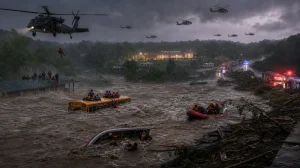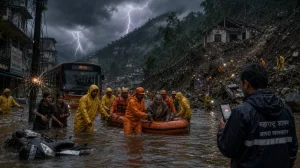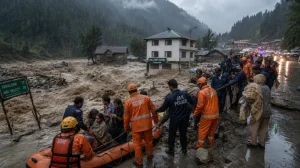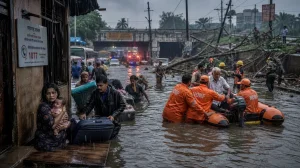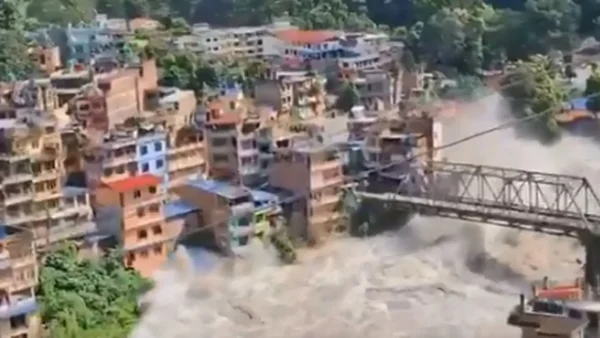
A devastating flash flood surged through Nepal’s Bhote Koshi River valley in Rasuwa district, near the Tibet border, on Wednesday, August 26, causing catastrophic damage to settlements, roads, bridges and hydropower infrastructure.
Videos emerging from the region show torrents of muddy water rushing through communities and sweeping away buildings, vehicles and other structures within moments. Authorities have launched large-scale search-and-rescue operations as the full extent of the disaster continues to emerge.
A sudden wall of water
The flood struck the mountainous Rasuwa region with extraordinary speed. The Bhote Koshi River rose dramatically, sending a powerful surge downstream toward areas including Timure and Syabrubesi.
Early reports initially suggested that an earthquake may have triggered the event. Subsequent assessments pointed toward a large ice-and-rock collapse/landslide in the Himalayan region, which generated the devastating flood surge. The exact chain of events remains under investigation.
The sudden nature of the event left people with very little time to escape.
Villages and infrastructure swept away
The destruction has been extensive.
Homes, commercial buildings, roads and bridges have been damaged or destroyed. Several hydropower projects and power-related facilities in the region have also been affected, while communications and electricity infrastructure have suffered major disruption.
The disaster has also severely affected a strategically important corridor connecting Nepal with Tibet.
Reports indicate that bridges and sections of road have been washed away, making access to affected communities extremely difficult and complicating rescue operations.
Human toll continues to rise
The casualty figures have changed rapidly as rescue teams reach previously inaccessible areas.
By August 26, Nepalese authorities had reported 157 deaths, while hundreds of people remained unaccounted for. Among those missing were local residents, security personnel and foreign travellers.
The number of missing people is expected to remain uncertain until authorities can establish contact with communities cut off by the destruction.
The disaster has also affected foreign nationals, including people travelling toward the Mount Kailash region.
Army and security forces mobilised
Nepal has deployed its security forces for search-and-rescue operations.
The Nepalese Army, Nepal Police and Armed Police Force are involved in rescue and relief efforts, with helicopters being used where weather and terrain permit. Hundreds of rescuers are working through debris and damaged settlements.
However, destroyed roads, collapsed bridges, damaged communications and difficult Himalayan terrain are making rescue operations exceptionally challenging.
A region already hit by disaster
The Bhote Koshi corridor has suffered a similar catastrophe before.
In July 2025, a flood originating on the Tibetan side surged into the Bhote Koshi, killing at least nine people and leaving others missing. That event also damaged bridges, the Rasuwagadhi dry port, roads and hydropower infrastructure.
The recurrence has raised concerns about the vulnerability of communities and infrastructure along the Himalayan river corridor.
More than a flood—it is a warning
The latest disaster highlights the extreme vulnerability of Himalayan settlements to flash floods, landslides, glacial hazards and sudden river surges.
Mountain communities can face a particularly dangerous combination: steep terrain, rapidly changing river conditions and limited evacuation routes. When roads and bridges are destroyed, rescue teams themselves can struggle to reach survivors.
Experts and authorities will now have to examine whether existing early-warning systems, evacuation plans and infrastructure standards are adequate for increasingly unpredictable Himalayan hazards.
Rescue first, questions later
For now, the priority remains finding survivors and providing emergency assistance to people who have lost homes, livelihoods and family members.
But once the immediate crisis passes, Nepal will face difficult questions about disaster preparedness, infrastructure resilience and early-warning mechanisms in high-risk mountain valleys.
The terrifying images from the Bhote Koshi are a reminder of how quickly a Himalayan river can transform from a lifeline into a devastating force—and how little time communities may have to respond.