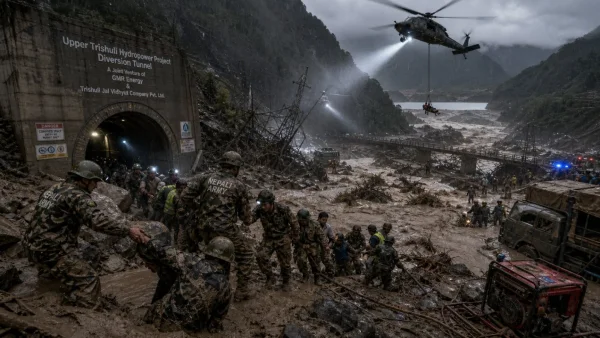
A major rescue operation is underway in flood-hit Rasuwa district of Nepal, where the Nepali Army has successfully rescued 350 workers and local residents who had become trapped inside a tunnel at the Upper Trishuli Hydropower Project following devastating flash floods.
However, the emergency is far from over. More than 100 people are still believed to be trapped inside the same tunnel, with rescue teams continuing efforts to reach them despite dangerous weather and rapidly changing flood conditions.
350 people brought out alive
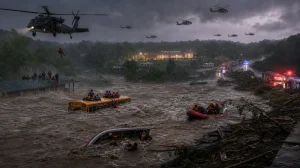
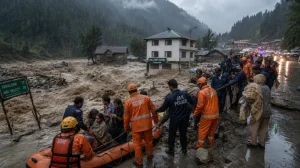
According to the Nepali Army, its teams carried out a high-risk operation to evacuate the people trapped inside the hydropower tunnel.
The rescue was conducted under extremely difficult conditions, with floodwaters, debris and damaged infrastructure making access hazardous. The army used helicopter-supported rescue operations as part of the effort.
The successful evacuation of 350 people has provided a major breakthrough in an otherwise devastating disaster.
Race against time to save those still inside
Rescuers are now focusing on the remaining people believed to be trapped inside the tunnel.
Army officials have said that more than 100 people remain inside, and teams are working to evacuate them safely. The operation is particularly challenging because the disaster has damaged roads and bridges, while continuing flood risks make movement around the site dangerous.
Every hour is critical as rescue teams attempt to establish access and ensure that those still inside have a safe route out.
Part of a much larger Himalayan disaster
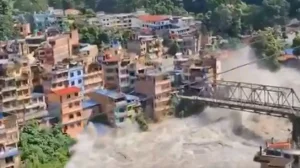
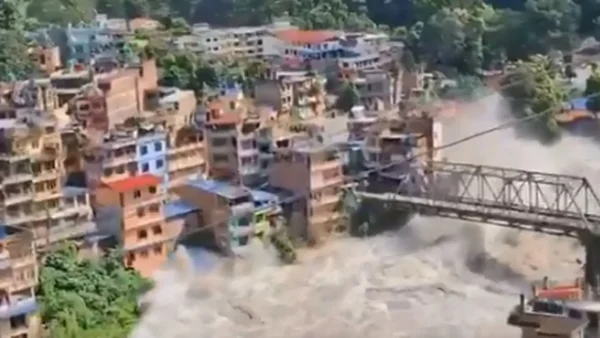
The tunnel emergency is unfolding amid a catastrophic flash-flood disaster along Nepal’s border with Tibet.
The flooding has devastated parts of Rasuwa and the Bhote Koshi–Trishuli corridor, destroying homes, roads, bridges and power infrastructure. Hundreds of people have died and more than a thousand remain missing across the wider disaster zone, according to the latest reports.
The disaster has also severely disrupted transportation and communications, making conventional ground-based rescue operations extremely difficult.
New flood risks complicate rescue
Rescue operations have faced another serious challenge: warnings of additional flooding caused by a barrier lake formed by debris in the disaster zone.
Authorities have had to monitor the situation closely because any sudden release of water could create another dangerous surge and put rescuers and survivors at risk. Rescue operations in some areas have already been temporarily affected by the additional threat.
A remarkable rescue amid devastation
The rescue of 350 people offers a rare moment of hope amid one of Nepal’s worst recent flood disasters.
For the families waiting for news of loved ones, however, the operation remains unfinished.
More than 100 people are still believed to be trapped inside the hydropower tunnel. Nepali Army personnel and other emergency teams continue to work against time to bring them out safely.
The immediate priority is clear: reach the remaining survivors, evacuate them from the tunnel and prevent further loss of life.
As rescue and relief operations continue, the disaster is also raising renewed questions about early-warning systems, Himalayan infrastructure resilience and preparedness for increasingly dangerous flash floods and glacier-related hazards.