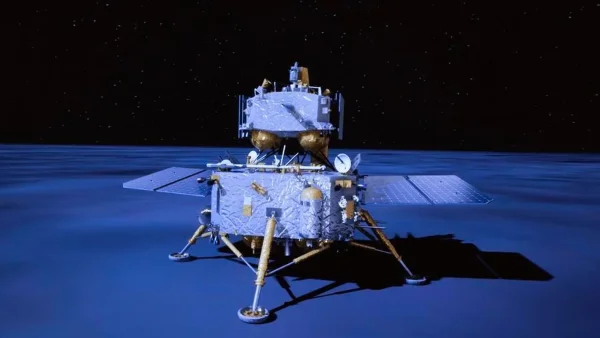
You can tell China is in a hurry with its next foray to the Moon. The China Manned Space Agency says that when Chang’e-7 goes up later this year, it will be making a thorough survey of the south pole. The priority is obvious: find the water ice and see if there is a good spot for a base down the line.
There is a sense of urgency to it. Should the south pole check out as viable, you can bet the decisions on an outpost will move along. This isn’t some routine flyby; it is a hard look at a part of the Moon they consider essential for being there for the long haul.
Why this mission matters
Beijing is zeroing in on the big questions at the south pole. According to officials, Chang’e-7 is going to be after water ice and a read on the local resources. In a way, it is as much about strategy as it is science, mashing up pure discovery with a practical site evaluation.
It is more than just putting numbers on a map. If they come back with a solid picture of what is there, it will dictate how they plan their infrastructure. It also tells them what they have to do in the coming missions to make a permanent stay possible.
How China plans to explore the south pole
The agency touts a well-rounded method that covers everything from above and below, with some roving and the occasional ‘hop’ from one place to another. Zhang Jingbo, the agency’s spokesperson, was quoted in state media as saying this is the way to cover more ground and not leave any blind spots.
They are after a full spectrum of information. From orbit you can size up the terrain and the light. On the surface you get up close with the conditions and materials. Put it all together and the planners have a better handle on whether a base is feasible.
Why the south pole is in focus
It is a tough, uncharted part of the Moon. We saw last year when India made history with Chandrayaan-3, landing its Pragyaan rover in the vicinity. It was a first, but it also put a fine point on the challenges of working in this corner of the lunar landscape.
Launch readiness and timeline
Things are already in motion. Back in April, the probe was moved to the launch site in Hainan to get ready. “Everything is on track,” Zhang put it.
We don’t have a firm date from the agency yet, but ‘later this year’ is the word. The way things are going, they seem to have the hardware and the people in place for when the time comes.
What this means for lunar competition
China has been on a roll. You only have to look at what Chang’e-6 did over the past year, bringing back the first samples from the far side of the Moon. That kind of return puts a new standard in place for robotic work out here.
Then there is the 2030 target for a crewed landing. The numbers from Chang’e-7 will be vital to that, telling them where to put the astronauts and what they will need. Every win like this makes the path to 2030 a little shorter.
Here is what to keep an eye on as we go:
– When the launch window opens up
– Word from Hainan on how the pre-launch is going
– Where they set their sights for the initial surveys
– Any hint of water ice in the early reports
The next steps
After the probe is off, it is all about the details. The agency has to show that this two-pronged approach can give them usable maps and figures, not just a few pictures.
Assuming the surveys come back with what they want, the planning for what is next will pick up speed. In the end, Chang’e-7 is a measure of how fast they can go from data to a decision on the ground at the south pole.