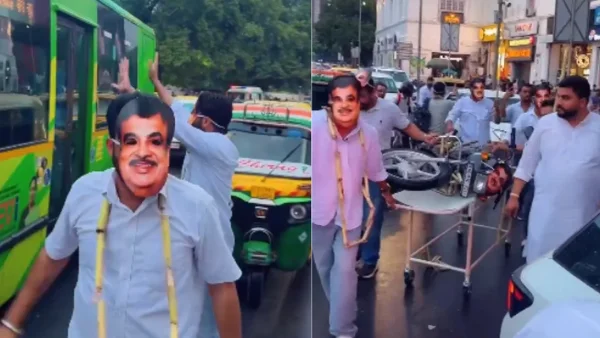
Protesters opposing the government’s ethanol-blending policy have found a creative way to make their message impossible to miss.
In a video circulating on social media, demonstrators are seen wearing masks resembling Union Road Transport and Highways Minister Nitin Gadkari, while a motorcycle is placed on a stretcher as though it were a patient being taken to hospital.
The theatrical display is intended to mock what protesters describe as the damaging consequences of E20 petrol, which contains 20% ethanol blended with petrol.
The unusual visual has quickly attracted attention online, with supporters describing it as a clever form of political protest.
Why a Motorcycle on a Stretcher?
The symbolism is straightforward.
For motorists protesting E20, the motorcycle lying on a stretcher represents a vehicle allegedly “sick” or damaged because of ethanol-blended fuel.
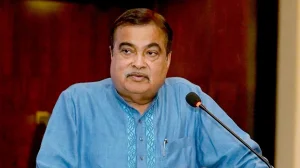
The Gadkari masks add a political layer to the performance, reflecting the fact that the minister has become one of the most recognisable faces associated with the public debate over ethanol and India’s fuel transition.
The protest therefore combines humour, satire and policy criticism in a single image.
What Is the E20 Controversy?
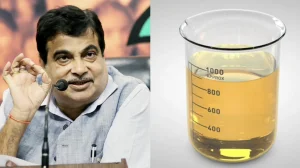
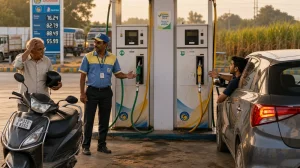
E20 petrol contains approximately 20% ethanol and 80% petrol.
India’s ethanol-blending programme has been promoted as a way to reduce dependence on imported crude oil, support farmers and lower emissions.
The government has strongly defended the policy.
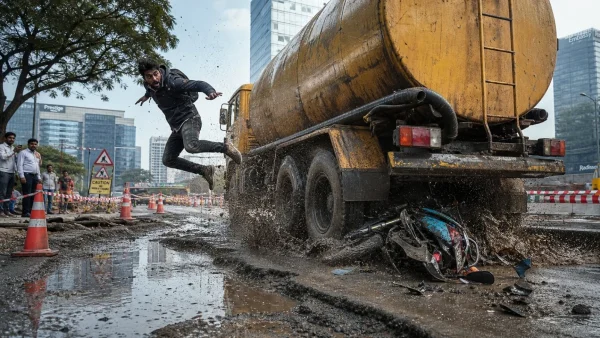
But vehicle owners, opposition parties and some consumer groups have raised concerns about fuel economy, compatibility with older vehicles and possible long-term effects on certain engines and components. Reuters reported in July that backlash against the mandatory E20 rollout had intensified, particularly among owners of older vehicles.
The debate has now moved well beyond automobile forums.
It has become a political issue.
Why Is Gadkari at the Centre of the Debate?
Gadkari has been one of the strongest advocates of alternative fuels, including ethanol.
He has argued that ethanol can help
India reduce fossil-fuel imports, lower pollution and create additional opportunities for farmers.
In a July interview, Gadkari rejected claims that E20 was damaging vehicles and said the campaign against ethanol was being driven by interests connected to the fossil-fuel import ecosystem.
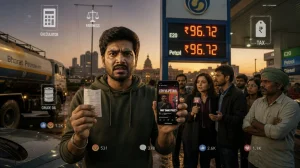
At the same time, Gadkari has become a major target of online criticism and memes surrounding the policy.
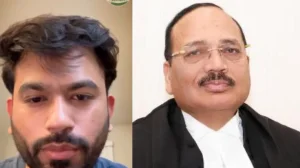
The controversy became serious enough for him to approach the Bombay High Court over allegedly defamatory and manipulated social-media content linking him personally to the E20 policy. The court allowed him to pursue a civil suit against social-media companies and unidentified individuals.
The Protest Movement Is Growing
The street performance is part of a broader campaign against mandatory ethanol blending.
In July, protests were organised in Delhi, including demonstrations at Jantar Mantar, with organisers demanding greater consumer choice over fuel blends. (India Today)
Some protesters have argued that motorists should have access to different fuel options depending on their vehicle’s compatibility.
Their preferred approach has generally been:
E20 for compatible vehicles + E10 for older vehicles + consumer choice where technically feasible.
The government, however, has continued to defend the broader ethanol-blending strategy.
Why the Protest Has Resonated Online
Political protests traditionally rely on speeches, placards and slogans.
This one relies on a visual joke.
A motorcycle lying on a stretcher immediately communicates the protesters’ allegation:
“Ethanol has made our vehicles sick.”
The Gadkari masks then turn the scene into political satire.
Whether someone agrees with the protesters or not, the message is easy to understand—and highly shareable.
That is precisely why such protest imagery often travels faster on social media than a conventional press statement.
But Does E20 Actually Damage Vehicles?
This is where the political theatre needs to be separated from the technical debate.
It would be inaccurate to conclude from a protest video that E20 necessarily damages every motorcycle or car.
Vehicle compatibility depends on the vehicle’s design, manufacturing year, fuel system and manufacturer’s specifications.
The government maintains that vehicles designed for E20 can safely use the fuel, while critics have raised concerns particularly about older vehicles.
The disagreement over fuel efficiency, compatibility and long-term vehicle impact remains one of the central issues in the E20 debate.
The Real Demand Behind the Humour
Behind the masks and the stretcher is a serious policy question:
Should consumers have a choice of fuel based on their vehicle? Critics argue that motorists who purchased vehicles before E20 became widespread should not bear the entire cost of the transition.
They want greater clarity regarding:
Compatibility of older vehicles
Changes in mileage
Long-term maintenance costs
Availability of alternative fuel blends
Responsibility for conversion costs
Consumer compensation, if proven vehicle damage occurs
These are questions that require technical data rather than political slogans.
Government’s Case Is Also Clear
The Centre’s argument is that ethanol offers strategic advantages.
Greater domestic ethanol use can potentially:
Reduce crude-oil imports
Improve energy security
Create demand for agricultural products
Support farmers
Reduce some emissions
Develop an indigenous alternative-fuel ecosystem
Gadkari has repeatedly argued that moving away from imported fossil fuels is in India’s national interest.
So the debate is not simply “ethanol good” versus “ethanol bad.”
It is about how quickly the transition should happen, who bears its costs and how consumers with older vehicles are protected.
From Meme to Political Movement
The unusual protest also demonstrates how the E20 controversy has evolved.
What began largely as an online discussion about mileage and vehicle compatibility has developed into street demonstrations, political campaigns and legal disputes.
The controversy has even resulted in a police case involving content creators over allegedly defamatory posts targeting Gadkari in connection with the ethanol debate.
That makes the motorcycle-on-a-stretcher protest more than just a funny photograph.
It is another sign that E20 has become a politically charged public issue.
Conclusion
A motorcycle lying on a stretcher, protesters wearing Gadkari masks and a message aimed at India’s ethanol policy may look like pure political comedy.
But the humour is carrying a serious question.
If India is moving rapidly toward E20, are all motorists being given enough information, choice and protection during the transition? The government says ethanol is essential for India’s energy security.
Critics say motorists should not be forced to absorb the costs and uncertainties of the transition.
And protesters have now turned that disagreement into street theatre.
One bike on a stretcher may be a joke—but the debate over what India’s motorists will pay for the E20 transition is very real.