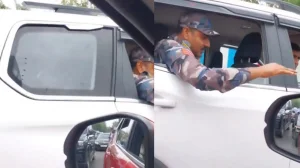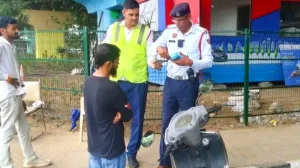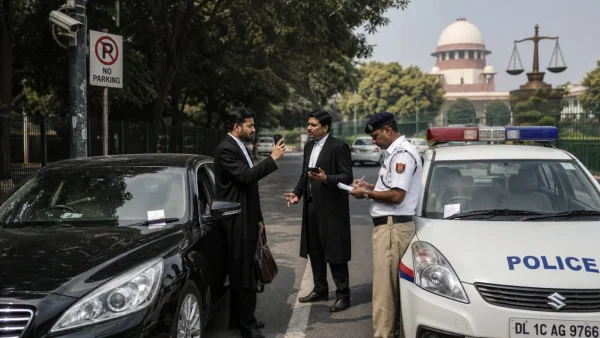
An incident reportedly involving lawyers and traffic police has triggered a familiar question: if traffic rules apply to ordinary citizens, should government and police vehicles be treated any differently? A traffic challan issued to a lawyer’s vehicle reportedly turned into an unusual confrontation after the lawyers allegedly responded by having a police vehicle challaned as well.
The incident, which is being discussed on social media, has sparked debate over whether traffic enforcement should be applied uniformly—regardless of whether the vehicle belongs to a private citizen, lawyer or police department.
The exact location, date and challan details of the incident should be independently verified before they are presented as established facts.
From One Challan to Another
According to the account circulating online, lawyers were travelling in a car when traffic police reportedly issued a challan for an alleged violation.
Rather than simply accepting the action, the lawyers allegedly examined the nearby police vehicle and claimed that it too was violating traffic regulations.
They then reportedly ensured that a challan was issued against the police vehicle.
What might ordinarily have been a routine traffic-enforcement matter consequently became a symbolic confrontation between two groups that regularly deal with the law in their professional lives.
“The Law Applies to Everyone”
The incident has prompted a strong reaction online, with many people arguing that police vehicles should not receive special treatment merely because they belong to law-enforcement agencies.
The underlying principle is straightforward:
A traffic rule does not become optional because the vehicle has a police logo on it. At the same time, not every police vehicle is necessarily subject to identical restrictions in every situation. Emergency duties, authorised exemptions and operational requirements can affect how certain traffic provisions apply.
Therefore, whether the police vehicle in this particular incident actually committed a violation would need to be established from the challan, CCTV footage and applicable traffic rules.
Why the Incident Has Struck a Nerve
For ordinary motorists, receiving a challan can be an unpleasant experience.
Traffic police routinely stop drivers for violations involving:
Wrong parking
No-parking zones
Signal violations
Helmet or seat-belt violations
Speeding
Wrong-side driving
Missing or invalid documents
The expectation from citizens is that enforcement will be consistent and impartial.
When a police vehicle is alleged to have committed a similar violation without consequences, it can create the perception of a double standard.
That perception itself can damage public confidence.
Police Are Enforcers—Not Exempt From the Law
The police have the responsibility of enforcing traffic regulations, but that responsibility does not automatically place individual officers or official vehicles above the law.
A similar principle has surfaced repeatedly in public debates involving lawyers and police. The relationship between the two groups has historically been contentious, with disputes sometimes escalating into serious confrontations. (Scroll.in)
The broader lesson from such disputes is that professional status should not determine whether rules are enforced.
But Retaliation Is Not the Answer Either
There is another side to the story.
If the lawyers deliberately sought a challan against a police vehicle simply as retaliation, that would also raise questions about the proper use of grievance mechanisms.
The appropriate principle should not be:
“You challaned us, so we will challan you.”
It should be:
“If you violated the law, the law should apply to you too.”
That distinction matters.
A traffic violation should be established on evidence—not used as a tool for settling scores.
What Should Happen in Such Cases?
If the police vehicle was genuinely violating traffic rules, the appropriate action is straightforward:
Record the violation.
Issue the challan according to the applicable law.
Preserve CCTV or photographic evidence where available.
Allow the concerned party to challenge the challan through the normal process.
Apply the same standards to private and government vehicles.
This would remove the perception of favouritism without turning traffic enforcement into a confrontation.
The Bigger Issue Is Public Trust
The real significance of the incident goes beyond one lawyer’s car or one police vehicle.
Citizens are more likely to respect traffic rules when they believe the same rules apply to everyone.
If an ordinary driver is punished for parking in a prohibited area, the public naturally expects a police vehicle parked in the same prohibited area to face the same consequences—unless there is a legitimate operational exemption.
Uniform enforcement creates respect for the law. Selective enforcement creates resentment. The viral incident should therefore be viewed as an opportunity to ask a simple but important question:
If police teach citizens to follow the law, shouldn’t police vehicles demonstrate the same discipline on the road? The answer should not depend on whether the vehicle carries a police badge, a lawyer’s sticker or an ordinary registration plate.
The road belongs to everyone. And, subject to lawful exemptions, so do the rules.