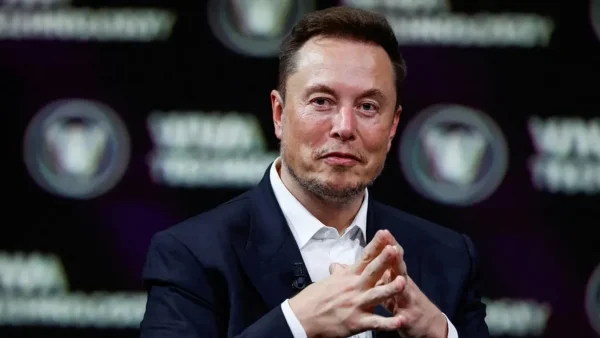
Elon Musk has announced another significant step in his long-running campaign to make X (formerly Twitter) more transparent, saying that government censorship or content-removal requirements will be made publicly visible through the platform’s open-source systems.
The announcement has quickly attracted attention because it could give users and independent researchers greater visibility into when governments seek to restrict content on X and how those requests affect what people can see online. (Reddit)
But there is an important distinction: making requests visible does not mean that every government request will automatically be rejected or that every moderation decision on X is controlled by governments.
What Exactly Is Changing?
X has already published substantial information about government and legal requests through its Transparency Center.
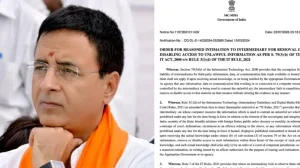
Its latest transparency reporting says governments and law-enforcement authorities can request content to be withheld when they believe it violates local law. X says it reviews such requests for legal sufficiency and can challenge requests that are defective, overly broad or appear to improperly restrict free expression. (Transparency)
X also says that, where legally permitted, users are notified when authorities seek removal or withholding of their content and may receive a copy of the request. (Help Center)
Musk’s latest announcement appears to push this philosophy further by making government intervention more visible through X’s open-source infrastructure.
Why Is This Significant?
The internet has long had a difficult problem: Who decides what citizens are allowed to see?
A government can issue a legal demand.
A platform can comply.
A post disappears.
The ordinary user may never know why it disappeared.
Greater disclosure could change that equation.
If government requests are publicly identifiable, journalists, researchers and users could potentially examine:
Which government made the request
What content was targeted
What legal justification was cited
Whether X complied
Whether content was withheld
Whether similar requests were made elsewhere
That creates a potentially important layer of accountability.
X Already Receives Thousands of Government Requests
This isn’t a theoretical issue.
X’s 2025 Transparency Report records 97,006 removal requests globally, with action taken on 79,438, an overall action rate of 81.89%. (Transparency)
The figures vary dramatically between countries.
For example, the report lists:
Japan: 69,186 removal requests
Turkey: 11,107
South Korea: 1,835
European Union: 3,831
These requests can involve different types of content and legal processes, so the numbers should not automatically be interpreted as equivalent instances of “political censorship.” (Transparency)
India Is Also a Major Requesting Country
India has historically been among the major sources of legal demands received by Twitter/X.
X’s transparency documentation says legal demands can include formal requests to remove content, while its country-specific reporting tracks government information requests and other legal processes. (Transparency)
That makes Musk’s announcement particularly relevant for Indian users.
If government intervention becomes easier to inspect publicly, journalists and citizens could potentially examine how often Indian authorities seek content restrictions and what happens to those requests.
But “Government Request” Does Not Automatically Mean “Censorship”
This is where the debate requires nuance.
Governments can legitimately ask platforms to remove content that violates laws—for example, material involving certain criminal activity, court-protected information or other unlawful content.
X itself says government requests are reviewed for legal sufficiency. (Transparency)
So the key question isn’t simply:
“Did a government request removal?”
The more important questions are:
What law was invoked?
Was the request legally valid?
Was it narrowly targeted?
Did X comply?
Was the user informed?
Was there an avenue to challenge it?
That is where transparency becomes meaningful.
Open Source Does Not Mean Everything Is Automatically Visible
There is another important clarification.
X’s recommendation algorithm has been open-sourced for years. In 2023, Twitter published source code covering significant portions of its recommendation system, while noting that some code would remain closed for safety, privacy and security reasons. (X Blog)
X currently says its recommendation algorithm is publicly available for scrutiny through its open-source repository. (Help Center)
Therefore, the phrase “government censorship requests are visible in the open-source algorithm” should not be interpreted as meaning that every confidential government communication is simply dumped into the source code.
There are still legal, privacy and security restrictions.
Musk’s Free-Speech Promise Faces Its Own Test
Musk has positioned X as a platform committed to free speech and transparency.
That makes the latest announcement politically and technologically significant.
But transparency must ultimately be measured by what users can actually verify, not simply by slogans.
There is also an important historical complication.
Independent reporting has previously found that X under Musk has complied with a substantial proportion of government removal requests, sometimes at higher rates than before his acquisition. (The Washington Post)
So the question isn’t whether Musk talks about free speech.
The question is whether users can now independently see and evaluate the decisions being made.
Could This Become a Powerful Accountability Tool?
Potentially, yes.
Imagine a government asks X to restrict 500 posts about a controversial issue.
Under a highly transparent system, researchers could potentially see:
Who requested it → what was targeted → under which law → what X did → whether the content remained restricted.
That could make it much harder for either governments or platforms to hide behind vague claims.
It could also allow researchers to compare countries.
If one government repeatedly requests political content to be removed while another rarely does, the difference becomes measurable.
But Transparency Must Work Both Ways
There is also a responsibility on X.
If the company publishes government requests, it should ideally provide enough context to prevent misleading interpretations.
A removal request isn’t proof that a government successfully censored something.
Likewise, X rejecting a request isn’t proof that the government had no legitimate legal basis.
Users need the full chain of events, not isolated screenshots.
The Bigger Battle: Who Controls the Digital Public Square?
The dispute goes beyond Elon Musk.
Social-media platforms have effectively become modern public squares.
Governments regulate them.
Companies operate them.
Algorithms determine visibility.
Users create the content.
And billions of people consume it.
That creates an extraordinary concentration of influence.
The more power platforms have over public discourse, the more important transparency becomes.
What Users Should Watch For
The most interesting question now is whether X’s latest move produces genuinely usable public information.
Users and researchers should look for:
Government-by-government request data
Individual content-removal demands where legally disclosable
The legal basis for requests
X’s response to each category of request
Geographic differences in content withholding
Changes in compliance rates
Whether affected users are notified
Whether requests involving political speech receive additional scrutiny
That information could provide a far more meaningful picture of online censorship than viral claims about censorship alone.
Final Word
Elon Musk’s latest announcement represents a potentially significant expansion of X’s transparency philosophy.
The company already publishes extensive government-request data and says it notifies users about legal requests where permitted. (Transparency)
Making government intervention even more visible could give journalists, researchers and ordinary users a better ability to examine who is asking platforms to restrict speech and how platforms respond.
But there is an important caveat:
Visibility is not the same as freedom from censorship. A government can still make a request.
A court can still issue an order.
X can still comply.
And laws can still require content to be withheld.
The real achievement would be creating a system where none of those actions happen invisibly.
Because ultimately, the most powerful form of digital accountability may not be simply saying “trust us.”
It may be giving the public enough information to check for themselves.