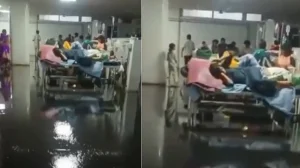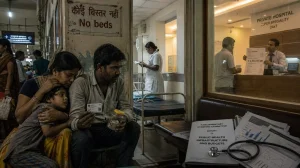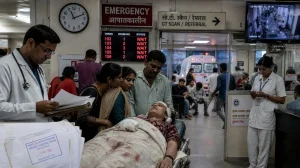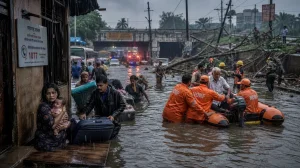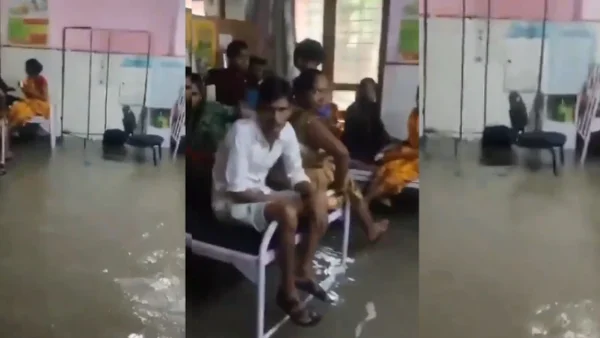
A government hospital in Raebareli, Uttar Pradesh, has reportedly been left severely waterlogged following rainfall, with visuals circulating online showing water accumulated across hospital premises.
The striking scene has prompted a familiar but serious question: if a hospital cannot keep its premises usable during rain, how can patients be expected to feel safe seeking treatment there?
Hospitals are supposed to provide a clean, accessible and hygienic environment for patients. Waterlogging can turn that basic requirement into a major challenge.
From Hospital to “Swimming Pool”
The visuals have drawn attention because the accumulated rainwater reportedly resembles a small pool inside or around the hospital premises.
The description may sound humorous, but the underlying problem is anything but funny.
Patients arriving for treatment may have to navigate standing water, while relatives and hospital staff can face difficulties moving between different sections of the facility.
For elderly patients, people with disabilities and those already suffering from illness, even relatively shallow waterlogging can create an additional safety hazard.
Why Waterlogging at a Hospital Is More Serious
Water accumulation isn’t merely an inconvenience at a healthcare facility.
It can contribute to:
Slippery surfaces and falls
Difficult access for ambulances
Problems transporting patients
Increased mosquito breeding
Poor sanitation
Contamination risks
Damage to electrical infrastructure
Disruption of emergency services
A hospital should arguably have stronger drainage and rainwater-management systems than an ordinary public building.
Where Is the Drainage System?
The biggest question for the administration is straightforward:
Why did rainwater accumulate to such an extent? Was the drainage system inadequate?
Were drains blocked?
Was the hospital campus poorly designed?
Was maintenance neglected?
Or was the rainfall unusually intense and beyond the capacity of existing infrastructure?
These questions can only be answered through an inspection by the relevant authorities.
Simply blaming “heavy rain” shouldn’t end the discussion if the same problem occurs repeatedly.
A Healthcare Problem That Becomes an Infrastructure Problem
Government hospitals already deal with overcrowding, shortages of equipment, staff pressures and limited resources in many locations.
When basic infrastructure also fails, the burden ultimately falls on patients.
A person visiting a hospital isn’t there for a picnic.
They may be:
Seeking emergency treatment
Accompanying a critically ill relative
Waiting for surgery
Bringing a child for treatment
Seeking diagnostic services
For such people, navigating a flooded hospital campus is more than an inconvenience.
It is another obstacle between a patient and healthcare.
The Administration Needs to Answer
If the circulating visuals accurately represent the current condition of the hospital, authorities should clarify:
Which government hospital in Raebareli is shown?
How much rainfall occurred before the waterlogging?
Was the drainage system functioning?
Were drains cleaned before the monsoon?
Has this happened previously?
Was hospital functioning affected?
Were emergency and ambulance services disrupted?
What immediate measures were taken to remove the water?
What permanent drainage improvements are planned?
Who is responsible for maintaining the premises?
These are basic administrative questions—not political ones.
The Bigger Picture: Healthcare Doesn’t Begin Inside the Ward
When governments discuss improving healthcare, the conversation often focuses on doctors, medicines, machines and new hospitals.
But healthcare infrastructure also includes the basics:
Clean corridors.
Functional toilets.
Reliable electricity.
Safe drinking water.
Proper drainage.
Accessible entrances.
Clean surroundings.
A hospital building that becomes waterlogged during rain reveals why these seemingly mundane issues matter.
Don’t Let the Viral Video Become Just Another Meme
The “government hospital swimming pool” imagery is undoubtedly striking and may generate jokes online.
But after the memes disappear, the underlying infrastructure problem will remain if nothing changes.
The government should treat such incidents as an opportunity for corrective action rather than merely a public-relations problem.
A proper drainage audit, monsoon preparedness plan and regular maintenance schedule could prevent the same scene from returning.
Final Word
A government hospital should be one of the safest places for a citizen during a health emergency—not another place where they have to worry about waterlogged floors and flooded access routes.
If the Raebareli visuals accurately reflect the hospital’s condition, the administration owes patients more than an explanation.
It owes them a functioning facility.
Because a hospital turning into a swimming pool might make for a viral headline.
But for the patient trying to reach the emergency ward, it’s no joke at all.