The Mobile Recharge Bill That Says More About India Than It Should There was a time when a mobile phone could be kept alive with a tiny recharge.
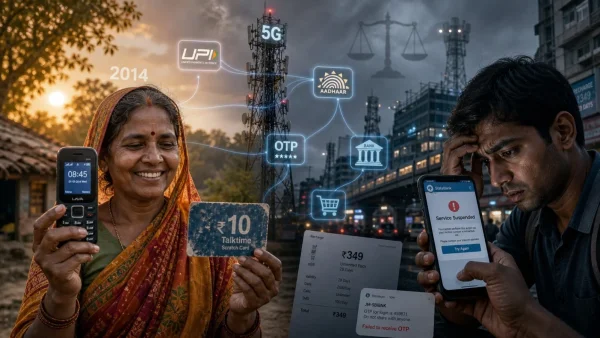
For many users, ₹10 could be enough to keep talking or maintain basic connectivity. Fast-forward to 2025, and consumers increasingly faced plans costing hundreds of rupees, with some operators requiring a paid recharge to retain active services.
The comparison circulating online is stark:
2014: ₹10
2025: ₹349
At face value, that’s a jump of 3,390%.
But there is an important catch: these aren’t necessarily equivalent plans or services, so calling the entire difference a “3,390% tariff hike” would be misleading. Telecom plans have changed dramatically, with bundled data, voice, SMS and other benefits replacing the older tariff structure.
And yet, the underlying consumer question remains extremely relevant:
Why has the cost of simply remaining connected increased so sharply?
₹349 Isn’t Just About Making Phone Calls Anymore
For millions of Indians, a mobile number has become much more than a communication tool.
It is connected to:
Bank accounts
UPI
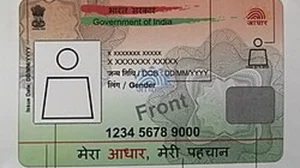
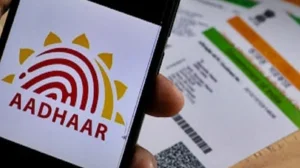
Aadhaar-linked services
OTP authentication
Insurance
Government services
Employment applications
Online shopping
Social-media accounts
That changes the meaning of a “minimum recharge”.
For someone who doesn’t use much mobile data, paying hundreds of rupees simply to ensure that the number remains active can feel less like buying a service and more like paying a recurring access fee to one’s own digital identity.
No Recharge, No OTP? That’s the Real Concern
The most uncomfortable part of the debate isn’t whether a telecom company charges ₹199, ₹299 or ₹349.
It is what happens when a person doesn’t recharge.
If incoming services are suspended or a number eventually becomes inactive, the consequences can extend beyond missed calls.
Imagine someone trying to:
log into their bank account.
receive an OTP.
complete a UPI transaction.
recover an online account.
Suddenly, a telecom connection isn’t merely a commercial product.
It is infrastructure for participating in modern life. That makes affordability and continuity legitimate public-policy questions.
But Are Telecom Companies Really “Looting” Consumers?
This is where the argument needs some nuance.
Calling the entire telecom industry a “loot” without examining the economics oversimplifies the issue.
Indian telecom companies have spent enormous amounts on:
4G and 5G networks;
spectrum;
towers;
fibre infrastructure;
maintenance;
technology upgrades;
employee costs;
regulatory fees.
The industry also went through a brutal period of price competition, particularly after Reliance Jio’s entry triggered a massive restructuring of the market.
Several operators exited or consolidated, leaving India with a much smaller number of major players.
That creates a different concern:
Competition.
When Three Giants Dominate, Consumers Have Fewer Choices
India’s telecom market is now dominated by a handful of major operators, including Reliance Jio, Bharti Airtel and Vodafone Idea, alongside smaller players in limited segments.
That concentration matters.
In a highly competitive market, companies have strong incentives to keep prices attractive.
In a concentrated market, the ability to raise tariffs can become greater—particularly when consumers have substantial switching costs.
And switching isn’t always easy.
People have to consider:
network coverage;
family plans;
number portability;
existing subscriptions;
work contacts;
bank and government registrations.
The phone number itself has become an economic asset.
The ₹349 Question
The more useful question isn’t:
“Why isn’t recharge still ₹10?”
Technology, inflation and network investment make that comparison incomplete.
The better question is:
Should consumers have access to a genuinely affordable basic-connectivity plan? Someone who barely uses mobile data shouldn’t necessarily have to purchase a large data bundle just to retain essential connectivity.
There is a legitimate policy debate around whether telecom operators should provide low-cost, long-validity plans for essential voice/SMS connectivity.
And What About Ambani, Birla and Mittal?
Public anger often gets directed personally at the major telecom owners.
But the issue shouldn’t become a personality contest.
If tariffs are rising, regulators should examine:
market competition;
tariff transparency;
minimum recharge requirements;
validity rules;
service suspension policies;
consumer switching costs;
availability of basic plans.
If the market is competitive and companies are pricing within regulatory rules, consumers may dislike the prices—but that doesn’t automatically make the pricing illegal or corrupt.
The regulator’s job is precisely to ensure that market power doesn’t become consumer exploitation.
The Digital India Paradox
There is an interesting contradiction here.
India has aggressively digitised everyday life.
Banking is digital.
Payments are digital.
Government services are digital.
Identity verification is digital.
Tickets are digital.
Healthcare and insurance increasingly rely on mobile authentication.
But the infrastructure required to access all of this remains a paid private service.
That creates a policy question worth asking:
Can a country become increasingly digital while basic digital connectivity becomes unaffordable for some citizens?
What Should the Government and TRAI Examine?
Instead of simply attacking telecom companies, policymakers could ask for greater transparency and consumer protection.
1. A genuinely basic plan
Consumers should have an affordable option for essential voice and SMS services.
2. Longer validity
Low-use customers shouldn’t be forced into frequent recharges.
3. Transparent tariff comparisons
Consumers should be able to easily understand what they’re paying for.
4. Protection for essential services
Rules could be examined around continued access to critical authentication services where appropriate.
5. Stronger competition
The government and regulator should ensure that market concentration doesn’t translate into unreasonable consumer power.
The Real “Acche Din?” Question
The nostalgia for the ₹10 recharge isn’t really about ₹10.
It represents something larger.
Consumers remember a time when basic connectivity felt cheap and accessible.
Today, the mobile phone has become essential to economic and social life, while the cost of maintaining that connection has risen substantially.
So perhaps the right question isn’t:
“Why can’t recharge still cost ₹10?”
It’s: “If a mobile number is now essential for banking, payments, identity and everyday life, shouldn’t basic connectivity remain affordable?” That is a question worth asking without turning it into an unsupported accusation against individual business groups.
Because in Digital India, being disconnected isn’t simply an inconvenience anymore.