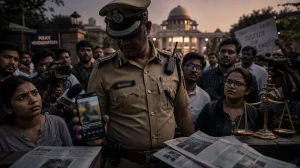
A late-night incident in Gurugram involving a retired Army officer has sparked questions about police conduct, the use of detention powers and how authorities treat citizens after an initial suspicion appears to be disproved.
According to the account circulating online, Major Hemendra Singh, a retired Army officer who reportedly became disabled while serving against terrorists in Jammu and Kashmir, was stopped by traffic police on suspicion of driving under the influence of alcohol.
An alcohol test was reportedly conducted.
The reported result was normal. Yet, according to the account, the situation allegedly continued for hours, with the retired Major, his wife and daughter remaining at the roadside until around 1:30 a.m.
The incident has since triggered anger and questions about whether the police response was proportionate.
From Suspicion to a Night on the Road
Police officers have an obvious responsibility to prevent drunk driving.
Stopping a vehicle when officers reasonably suspect intoxicated driving is not, by itself, improper.
In fact, breath testing is an important road-safety tool.
The controversy begins with what allegedly happened after the test reportedly failed to establish intoxication.
According to the account, the family remained at the location for hours despite the reported normal result.
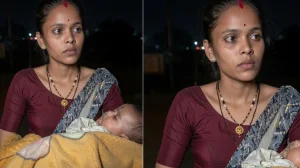
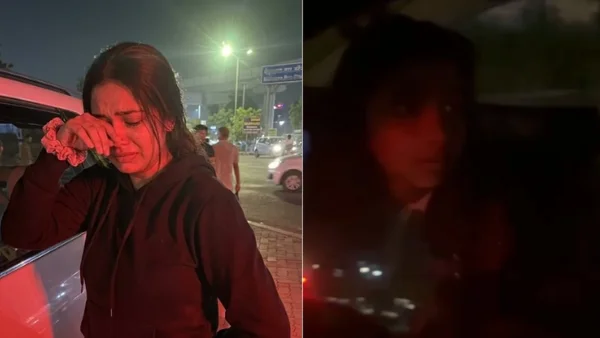
The retired officer’s wife was allegedly left standing by the roadside in distress, while their daughter remained inside the vehicle.
If these circumstances are accurately described, the episode raises a basic question:
Once the initial suspicion was not supported by the test, what justified keeping the family there for so long?
A Soldier Who Served the Country
The account has attracted particular emotional attention because of Major Hemendra Singh’s reported military background.
He is described as a retired Major who became disabled while fighting terrorists in Jammu and Kashmir.
His military service does not place him above the law.
But it does make the alleged treatment especially difficult for many people to watch.
A former soldier should receive the same legal treatment as every other citizen—but also the same dignity, courtesy and due process that the law requires for everyone.
Respect for veterans should not be a slogan reserved for ceremonies.
The Wife and Daughter Were Also There
The most disturbing element of the account is arguably the family’s experience.
The reported scene is stark:
A wife allegedly crying beside the road.
A daughter reportedly sitting inside the car.
A retired, disabled Army officer allegedly waiting for hours.
And this was reportedly happening late at night.
Even when police action is legally justified, authorities have a responsibility to consider the safety and welfare of family members who are not themselves accused of an offence.
If the detention or delay was unnecessary after the test result, the incident deserves serious scrutiny.
Why Did the Major Call Dial-112 Himself?
According to the account, Major Singh eventually called Dial-112, Haryana’s emergency response service, seeking assistance.
That detail raises an uncomfortable question:
If a citizen believes he is being treated improperly by police officers, whom is he supposed to call? The answer should be clear: there must be an independent and accessible mechanism for citizens to seek help when dealing with law-enforcement personnel.
A police emergency system should not merely respond to crimes committed by civilians.
It should also provide a route for citizens to report police misconduct or an immediate breakdown in procedure.
The Most Serious Allegation: Officers Leaving the Scene
The account further claims that a Dial-112 response team was on its way when the traffic police personnel allegedly left the scene.
If independently established, that would be a significant development.
Police officers should not ordinarily avoid accountability simply because another police team is arriving.
But this part of the account needs verification through official records, CCTV footage, dispatch logs and statements from the officers involved.
The facts should be established before anyone is declared guilty of misconduct.
Was There a Legal Basis to Keep Them There?
This is the central question investigators should answer.
The police should explain:
Why was Major Singh stopped?
What exactly did the breathalyser test show?
Was a second test conducted?
Was a medical examination requested?
Was any offence formally recorded?
Was the Major arrested or merely stopped for verification?
Why did the interaction allegedly continue until 1:30 a.m.?
Were his wife and daughter legally required to remain there?
Was a senior officer informed?
What happened when Dial-112 was contacted?
These questions can be answered through records rather than social-media arguments.
Traffic Enforcement Must Not Become Punishment by Delay
There is a broader issue here.
A police officer doesn’t necessarily need to physically assault someone to misuse authority.
Sometimes the misuse of power can take a much quieter form:
unnecessary delay.
Repeated questioning.
Humiliation.
Refusal to explain the procedure.
Keeping people waiting without clear justification.
For an ordinary citizen, hours spent on the roadside can itself become a form of punishment—even when no offence is ultimately established.
Suspicion can justify investigation. It cannot automatically justify indefinite inconvenience.
Police Need Discretion—But Discretion Needs Limits
Traffic police need discretion to stop vehicles and investigate suspected violations.
Without that authority, road-safety laws would be impossible to enforce.
But discretion becomes dangerous when it isn’t accompanied by:
Documentation
Supervision
Clear procedures
Accountability
Body-camera or CCTV evidence where available
Accessible complaint mechanisms
The more power an officer has over a citizen, the more important the safeguards become.
What Should Haryana Police Do?
If the allegations are accurate, the appropriate response should not simply be another verbal assurance.
The department should conduct a time-bound inquiry.
That inquiry should examine:
CCTV footage
Traffic cameras and nearby surveillance could establish what happened.
Dial-112 records
The emergency call, dispatch time and response details should be reviewed.
Breathalyser records
The actual test result should be verified.
Officer statements
Every officer involved should provide an account.
Family’s statement
The Major, his wife and daughter should be given an opportunity to explain their experience.
If misconduct is established, appropriate disciplinary action should follow.
A Test of Police Accountability
This incident should not become a simplistic story about “police versus Army.”
The law applies equally to soldiers, civilians, politicians and police officers.
The real issue is much more important:
Can a police officer exercise authority without abusing it? And when a citizen alleges that authority was abused, will the police investigate themselves honestly?
That is where public trust is either built or destroyed.
Final Word
The reported Gurugram incident presents a deeply troubling picture: a retired, disabled Army officer allegedly stopped on suspicion of drunk driving, a reportedly normal alcohol test, hours spent on the roadside with his wife and daughter, and an eventual call to Dial-112 for assistance.
Those are serious claims.
But they should be investigated rather than assumed to be proven.
If the police had a legitimate legal reason to continue the proceedings, they should explain it.
If officers exceeded their authority, the department should acknowledge it and act.
Because wearing a uniform gives an officer authority—not unlimited power.
And perhaps the simplest principle is also the most important:
If the test is normal, the investigation must have a lawful reason to continue. Citizens should never have to wonder whether calling the police for help means they might need another police team to protect them from the first one.