The Ayushman Bharat scheme was launched in 2018 with an ambitious promise: eligible families would receive access to cashless hospitalisation for specified treatments under the government-backed health coverage programme.
The scheme was promoted extensively, including through popular television programming, and the Ayushman card became a symbol of the government’s promise to make expensive medical treatment accessible to economically vulnerable families.
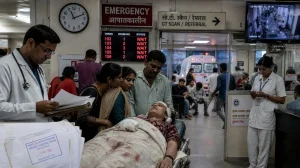
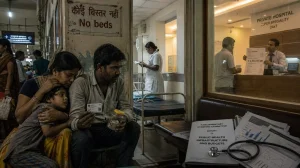
But for some beneficiaries, the experience at the hospital can look very different.
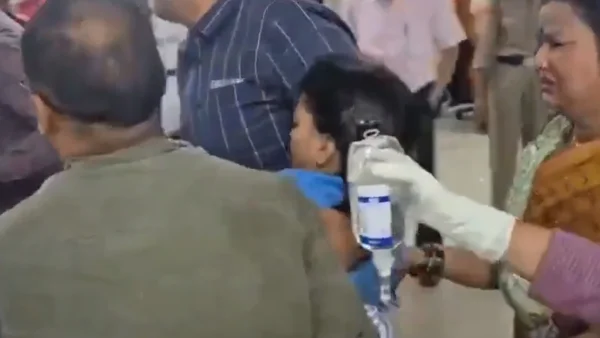
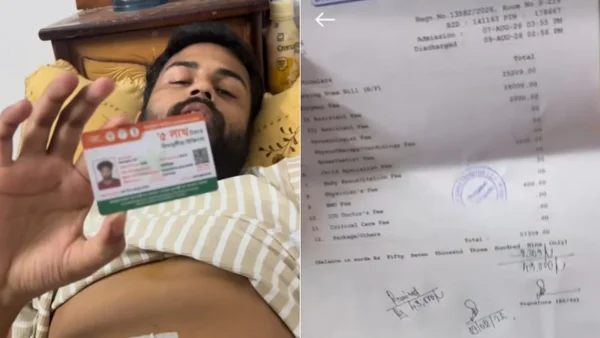
A recent account circulating online describes a patient who underwent two surgeries but was reportedly unable to use his Ayushman card. According to the account, the hospital proceeded with treatment on a self-payment basis, leaving the patient with a bill of approximately ₹57,000.
If accurately described, the episode raises a crucial question:
What is the value of a health card if a patient cannot access its benefits when treatment is actually needed?
The Card Is Not the Treatment
For a patient standing outside an operating theatre, a government health scheme is ultimately judged by one thing:
Does it work when I need it?
A card can be successfully issued.
A beneficiary can appear in the government’s database.
A hospital can theoretically be empanelled.
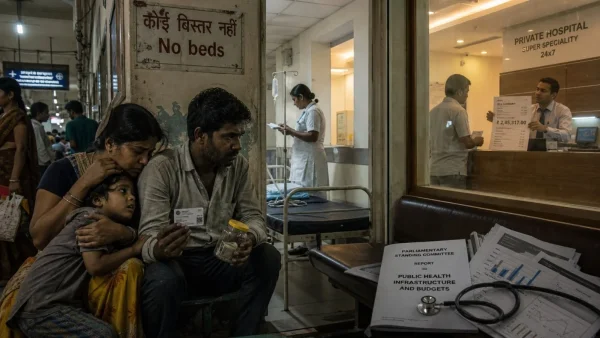
Yet if authorisation is delayed, eligibility cannot be verified, a particular procedure isn’t covered, or the hospital cannot process the claim, the patient may still have to arrange money immediately.
And medical emergencies don't wait for paperwork.
₹57,000 Is Not a Small Amount for an Ordinary Family
The reported ₹57,000 bill illustrates why access problems can become financially devastating.
For a middle-class or lower-income household, an unexpected medical bill of tens of thousands of rupees can mean:
Borrowing money
Breaking savings
Using credit cards
Taking loans
Delaying other household expenses
The whole purpose of publicly funded health insurance is to prevent a medical emergency from becoming a financial emergency.
If an eligible patient is forced to pay because the scheme cannot be activated in time, the system has failed at precisely the moment it matters most.
But One Patient’s Experience Doesn’t Prove the Entire Scheme Doesn’t Work
This distinction is important.
An individual experience can expose a genuine problem, but it cannot by itself establish that Ayushman Bharat universally fails.
Millions of beneficiaries have reportedly received treatment under government health-insurance programmes.
There can also be legitimate reasons why a particular claim is rejected or delayed, including:
The treatment not being covered under the applicable package
Hospital eligibility or empanelment issues
Documentation problems
Identity or beneficiary-verification issues
Pre-authorisation requirements
Technical problems
Disputes over package eligibility
Therefore, the right response isn’t to dismiss the patient’s experience—or declare the entire programme useless.
The right response is to investigate why the card failed in that particular case.
The Seven-Day Problem
The account also describes another family experience in Chandigarh, where an Ayushman card allegedly did not work for seven days during two surgeries, with the family repeatedly completing formalities.
This raises an especially important issue:
How quickly should a government health benefit be activated during hospitalisation? A patient may be able to wait seven days for an administrative service.
A patient waiting for surgery may not.
Healthcare systems need to distinguish between routine bureaucracy and time-sensitive medical care.
Why Private Health Insurance May Feel More Reliable
The account says that private health insurance ultimately provided the necessary support when the government card did not.
This highlights an important difference.
Private insurers generally have dedicated claims-management systems, hospital desks and pre-authorisation processes.
Government schemes operate at a much larger scale and involve government databases, hospitals, administrators and technology platforms.
That scale can create complexity.
The solution isn’t necessarily to replace government coverage with private insurance.
Instead, the government needs to ensure that public insurance works with the reliability citizens expect from a financial protection programme.
The Hospital’s Role Also Needs Examination
Hospitals cannot automatically be blamed whenever a government insurance claim fails.
But when a beneficiary is denied cashless treatment, the hospital should be able to clearly explain:
Why the claim was rejected.
Whether the procedure was covered.
Whether pre-authorisation was requested.
What documentation was missing.
Whether an appeal or escalation mechanism existed.
Why the patient had to pay personally.
A patient shouldn’t be left wondering whether the rejection happened because of a genuine eligibility issue or administrative unwillingness to process the claim.
The Government’s Responsibility Goes Beyond Issuing Cards
Issuing millions of cards creates impressive statistics.
But cards issued are not the same thing as healthcare delivered.
The more meaningful indicators are:
How many eligible patients actually received cashless treatment?
How many claims were rejected?
Why were they rejected?
How long did authorisation take?
How many beneficiaries had to pay out of pocket?
How many complaints were resolved?
These are the numbers citizens need to see.
The Ayushman Bharat Test Should Be Simple
Imagine a family arrives at an empanelled hospital with an eligible patient.
The family shouldn’t have to understand the entire government health-insurance architecture.
They should be able to present their identification and Ayushman card and receive a clear answer:
“Your treatment is covered, and here is what you need to do.”
If the treatment isn’t covered, the hospital should explain that immediately.
If there’s a technical problem, there should be a rapid escalation mechanism.
The patient should never become the middleman between the hospital and the government.
What Should Be Fixed?
The government could strengthen the system through several measures.
1. Faster authorisation
Time-sensitive procedures need rapid claim verification.
2. Hospital help desks
Beneficiaries should have trained personnel available to resolve scheme-related problems.
3. Transparent rejection reasons
Every rejected claim should have a clear, recorded explanation.
4. Stronger grievance mechanisms
Patients shouldn’t have to spend days navigating multiple offices to challenge a rejection.
5. Public claim data
Regular publication of approval, rejection and settlement statistics would improve accountability.
6. Penalties for wrongful denial
If an empanelled hospital deliberately refuses legitimate cashless treatment, there should be consequences.
The Bigger Healthcare Problem: Insurance Is Not Enough
The Ayushman experience also exposes a larger problem in India’s healthcare system.
Insurance—government or private—can protect patients from medical bills.
But it cannot solve every healthcare problem.
Patients also need:
Adequate public hospitals
Sufficient hospital beds
Qualified doctors
Affordable medicines
Diagnostic facilities
Efficient emergency services
Transparent pricing
A health card is only one component of a functioning healthcare system.
From Television Promotion to Hospital Reality
The contrast between the grand promotion of Ayushman Bharat and a patient allegedly paying ₹57,000 after being unable to use the card is bound to attract public attention.
But the real test of any welfare programme isn’t its launch ceremony.
It isn’t the number of cards printed.
It isn’t how prominently it appears in advertisements or television programmes.
The real test happens when a frightened family stands at a hospital billing counter. That’s when a government promise becomes either a functioning service—or another piece of paperwork.
Final Word
The reported ₹57,000 out-of-pocket payment and the separate account of a seven-day struggle to activate Ayushman benefits deserve investigation.
They should not automatically be used to conclude that the entire Ayushman Bharat programme is ineffective. But neither should individual beneficiaries’ experiences be dismissed as isolated complaints.
If an eligible patient is genuinely denied a benefit they are entitled to, the system needs to know why.
Because healthcare schemes are ultimately not about cards, databases or publicity.
They are about people.
And when someone is lying in a hospital waiting for surgery, the question isn’t whether the government has issued them a card.