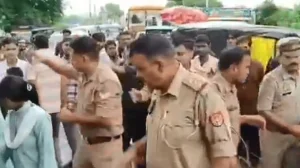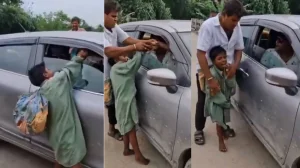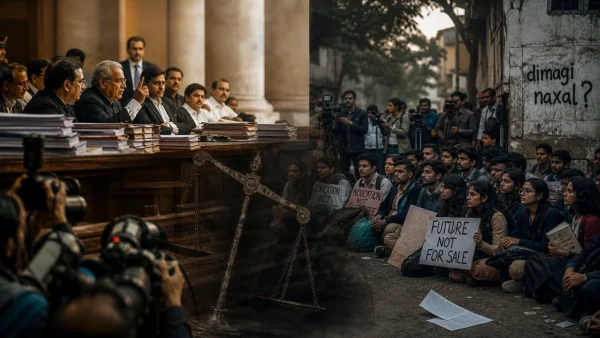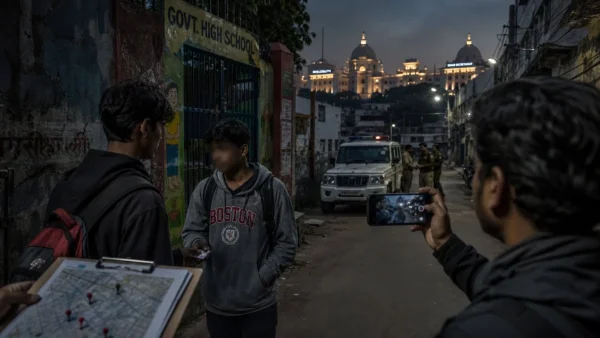
A video circulating on social media has sparked serious questions about the alleged availability of drugs in Patna, Bihar’s capital.
The footage, shared by an independent journalist, reportedly claims that intoxicating substances can be obtained with relative ease in parts of the city and raises concerns about young people being exposed to the drug trade.
The allegations, if verified, would raise an uncomfortable question for the Bihar administration:
How accessible are drugs in the very city where the state’s top political and administrative machinery is headquartered?
A Viral Video, But Serious Questions
The video has generated strong reactions online, particularly because of claims that children and young people could potentially come into contact with the drug market.
However, it is important to distinguish between what the video alleges and what has been independently established.
A social-media video by itself does not prove the scale of drug availability across Patna or Bihar.
Those claims need to be investigated through:
Police records
Narcotics seizures
Arrest data
Forensic reports
Statements from residents
Verified information about the locations shown
Action taken against alleged suppliers
If the allegations are found to be genuine, however, they represent a significant public-safety concern.
Why Patna Matters
Patna isn’t an ordinary district headquarters.
It is the capital of Bihar.
The state government, senior police officials, major administrative departments and enforcement agencies operate from the city.
That makes allegations of widespread drug availability particularly serious.
If illegal drugs are allegedly reaching young people in the state capital, the question naturally follows:
What is happening in smaller towns and districts where enforcement resources may be more limited? That question should not be answered through political rhetoric.
It should be answered through data.
The Children Are the Most Vulnerable
The most worrying aspect of the allegation isn’t simply that drugs may be available.
It is the possibility that children and teenagers could be exposed to them.
Young people are particularly vulnerable to addiction, peer pressure and exploitation by drug networks.
A drug market that operates near schools, residential areas or places frequented by minors can have consequences far beyond individual users.
It can affect:
Families.
Education.
Mental health.
Crime levels.
Public safety.
And eventually, the state’s workforce and social fabric.
What Has the Government Done?
Bihar has strict laws governing narcotic substances, and enforcement agencies regularly conduct seizures and arrests under the Narcotic Drugs and Psychotropic Substances Act.
The state government and police have also periodically announced crackdowns against drug trafficking and substance abuse.
But seizures alone don’t tell the complete story.
The real test is whether enforcement is disrupting the supply chain.
If one dealer is arrested and another immediately replaces them, the problem hasn’t been solved.
Authorities need to identify:
Who supplies the drugs?
Where do they enter Bihar?
Who finances the network?
Who distributes them locally?
Which areas are emerging as hotspots?
Are minors being deliberately targeted?
How many cases involve organised trafficking?
How many repeat offenders are involved?
The Bigger Question: Enforcement or Image Management?
This is where the political controversy enters.
Governments routinely highlight successful policing operations as evidence of good governance.
That’s fair.
But good governance cannot simply mean announcing seizures after drugs have already reached the streets.
Good governance means preventing the supply chain from reaching vulnerable communities in the first place.
If the video’s allegations are false or exaggerated, the government should say so and provide evidence.
If they are true, the government should investigate and act.
Either way, silence isn’t enough.
Don’t Turn a Serious Issue Into Just Another Political Fight
Calling the issue proof of the failure of an entire government based solely on one viral video would be premature.
At the same time, dismissing the video simply because it is politically uncomfortable would be equally irresponsible.
The correct response is investigation.
Verify the claims.
Identify the locations.
Test the substances.
Trace the suppliers.
Protect minors.
Publish the enforcement results.
That is how a serious drug problem should be addressed.
What Patna Needs Now
If authorities want to reassure the public, they should consider releasing updated information on drug-related enforcement in Patna, including:
Number of drug-trafficking cases registered
Quantity of narcotics seized
Number of arrests
Number of repeat offenders
Cases involving minors
Hotspots identified by police
Action against major suppliers
Rehabilitation and de-addiction measures
Transparency would do more to restore public confidence than political counter-attacks.
If drugs really are as easy to obtain as the viral video claims, the question isn’t about one journalist or one video. It is about how an illegal supply chain could allegedly operate under the nose of the administration in Bihar’s capital.
And if the video is wrong, there is an equally simple solution:
Investigate it. Establish the facts. Publish the findings.
Because when the issue involves children and drugs, political slogans should be the last thing standing between the public and the truth.
Good governance isn’t proved by saying that a problem doesn’t exist.
It is proved by showing the public exactly how you are stopping it.