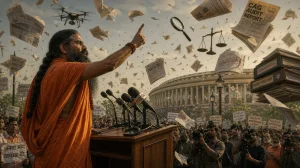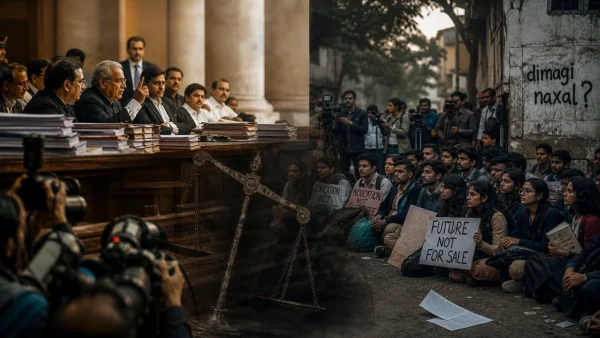
A newspaper report shared on social media has triggered a sharp debate over political accountability and the way dissenting young protesters are labelled.
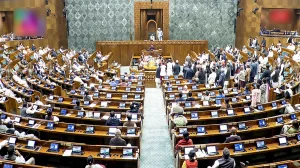
According to the report, a submission before the Supreme Court highlighted serious criminal cases against chief ministers in 14 of India’s 28 states at the time of the report. The same report said that several other sitting politicians, including MPs and MLAs, faced criminal cases.
The figures make for uncomfortable reading.
And they raise an even more uncomfortable question:
If elected politicians facing serious criminal allegations can continue to occupy positions of power, why should young citizens protesting against government policies be so quickly portrayed as threats to the nation?
Criminal Cases at the Top, Labels at the Bottom?
The Political Accountability Question
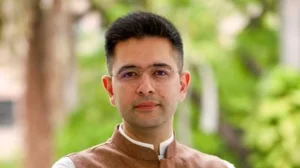
The report cited cases involving chief ministers including A Revanth Reddy, Mamata Banerjee, Pinarayi Vijayan, Hemant Soren, Devendra Fadnavis and others, while also noting criminal cases against a number of MPs and MLAs.
Importantly, the existence of a criminal case does not mean that a person is guilty. Every accused person is entitled to due process and the presumption of innocence unless convicted by a competent court.
That distinction is crucial.
But the broader democratic question remains valid:
Should the existence of allegations against politicians automatically disqualify them from public life, or should citizens be allowed to demand accountability through democratic and legal processes?
And Then Come the Protesters
When Students Raise Their Voices, Why Does the Language Suddenly Change?
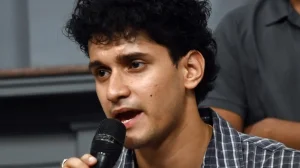
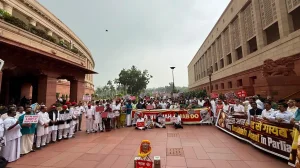
Young people protesting against examination irregularities, paper leaks or government decisions are exercising a form of democratic participation—provided their actions remain peaceful and lawful.
Yet political discourse can sometimes turn extraordinarily hostile toward protesters, with critics or supporters using labels such as “anti-national,” “urban Naxal” or “dimagi Naxal” against young people.
Such labels can end the conversation before it even begins.
Instead of asking:
“What are these students demanding?”
the debate becomes:
“Who are these students?”
And that is where democracy risks losing something important.
The Irony Is Hard to Miss
Politicians Get Legal Proceedings. Protesters Get Political Labels?
Imagine two scenarios.
A politician faces criminal allegations.
The democratic and legal system says:
Investigate. Charge. Try. Appeal. Follow due process.
Now imagine a group of students demanding answers over examination irregularities.
The response should similarly be:
Listen. Verify. Negotiate. Investigate the allegations. Follow the law if offences are committed.
But if peaceful protesters are instead reduced to derogatory labels, the issue stops being about what they are saying and becomes about discrediting who is saying it.
That is a dangerous shortcut.
The “Dimagi Naxal” Debate
A Label Cannot Become a Substitute for Evidence
Calling protesters “dimagi Naxals” may work as a political slogan, but it does not establish that they are involved in extremism or unlawful activity.
If someone has committed an offence, the appropriate response is evidence, investigation and law—not a label.
And if a protest is peaceful, the government should be able to answer the protesters’ demands without treating dissent itself as suspicious.
Democracy is supposed to be strong enough to hear uncomfortable questions.
What About the Young People?
They Are Not Just Protesters—They Are Citizens
Students protesting about exams are not merely creating a disturbance.
They are often young people whose careers, years of preparation and future opportunities depend on the examination system working fairly.
A paper leak or examination irregularity can mean months or years of preparation being thrown into uncertainty.
Their anger therefore deserves to be understood before it is condemned.
That does not mean every protest action is automatically justified.
It means the government’s first response should be to address the grievance and establish the facts.
The Bigger Question Is About Standards
Should Accountability Have One Standard for Everyone?
The real issue isn’t whether politicians with criminal cases should automatically resign.
Nor is it whether every protester should be automatically defended.
The principle should be much simpler:
The same respect for due process should apply to everyone. A politician deserves the presumption of innocence.
So does a protester accused of wrongdoing.
A politician can be investigated.
So can a protester.
A politician can be held accountable if found guilty.
So can a protester.
What should not happen is one standard for those in power and another for those questioning power.
A Democracy Cannot Be Selective About Whose Conduct Deserves Scrutiny
The newspaper report about criminal cases involving sitting politicians and the political rhetoric surrounding student protesters belong to different legal contexts—but putting them side by side raises a legitimate question about democratic standards.
If allegations against powerful politicians require evidence, investigation and due process, allegations against young protesters should require the same.
You don’t have to agree with every protest.
You don’t have to support every political leader.
But perhaps the most democratic response to a young person asking uncomfortable questions is not to invent a label for them.
It is to answer the question. Because “Dimagi Naxal” is not an argument.
And neither a political position nor a protest should be judged by a slogan when the facts can be examined instead.