A claim circulating on social media that “Adani has taken my land without my permission” has reignited a long-running controversy over land acquisition, tribal rights and the proposed Dhirauli coal mine in Singrauli, Madhya Pradesh, linked to Adani Group interests.
The issue is serious—but the viral description needs an important fact-check.
There is substantial evidence of a land-acquisition and displacement dispute involving local residents, and affected villagers have alleged coercion and inadequate compensation. However, available government records show that the project has proceeded through a formal land-acquisition process under the Right to Fair Compensation and Transparency in Land Acquisition, Rehabilitation and Resettlement Act, 2013 (LARR Act).
So the most accurate description is not simply “Adani stole the land.”
It is:
Tribal and local residents are challenging the manner, compensation and consequences of land acquisition for an Adani-linked coal project, while the government says the acquisition is being carried out under the law.
What Is the Dhirauli Project?
The controversy centres on the Dhirauli coal block in Singrauli district, allocated to Stratatech Mineral Resources Pvt Ltd, a company associated with the Adani Group.
Government records show that the project involves land in villages including Aamdand, Amraikhoh, Belwar, Basi Berdah and Sirshwah.
The Union Coal Ministry told Parliament that the company had applied for acquisition of 554.01 hectares of private land under the 2013 land-acquisition law. The Singrauli administration subsequently issued the required declarations and began the acquisition and rehabilitation process.
The district administration’s own website currently lists the statutory notifications, awards, calculation sheets, public notices and rehabilitation documents for the Dhirauli project.
That is important because it establishes that this is not a case where the government has no documented acquisition process at all.
But Why Are Villagers Protesting?
Because Having a Legal Process Does Not Automatically End the Dispute Residents and tribal families affected by the project have repeatedly alleged that the acquisition has not adequately protected their interests.
In recent reporting, villagers from Basi Berdaha said that the project threatens their ancestral land and livelihoods and alleged that the company and authorities were using pressure and questionable documentation to facilitate the project.
One villager, Sonmati, told National Herald that her family had lived in the area for generations and alleged that an Adani-linked company was attempting to take their land for the coal project. These are allegations by residents, not findings established by a court.
The dispute has also moved into politics.
₹368 Crore Compensation Dispute in the MP Assembly
In February 2026, the Madhya Pradesh Assembly witnessed a major confrontation over the Dhirauli land issue.
Congress leaders alleged that tribal families were being under-compensated and that some people who were allegedly not eligible had received compensation.
The Opposition demanded an investigation and staged a walkout.
The state government rejected the allegations and said compensation was being provided according to the applicable policy, while also saying that action would be taken against anyone found responsible for irregularities. (The Statesman)
This is an important distinction.
The government has not admitted that Adani illegally took villagers’ land. Instead, its position has been that the acquisition and compensation process is governed by law and policy.
So Did the Government Simply Hand Over People’s Land to Adani?
The Reality Is More Complicated
Official records show that the land acquisition involves the state’s statutory machinery, not simply a private company walking onto someone’s property and declaring it its own.
In fact, the Coal Ministry told Parliament in 2023 that acquisition for coal mines is carried out by the allottee according to the applicable laws, rules and procedures of the concerned state government. For Dhirauli, the Singrauli Collector had issued the relevant acquisition declarations under the LARR Act.
Coal Ministry records also show that by October 2024, the project allottee reported paying approximately ₹400 crore to the Singrauli Collector for private land. (Ministry of Coal)
That doesn’t mean every affected family necessarily agrees with the compensation.
It means the dispute is fundamentally about whether the legal process, compensation and rehabilitation are fair and properly implemented.
What About Tribal Consent?
This is one of the most sensitive parts of the controversy.
The Dhirauli region has a substantial tribal population, and questions have been raised over the application of protections applicable to Scheduled Areas and tribal communities.
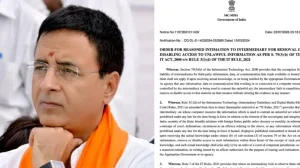
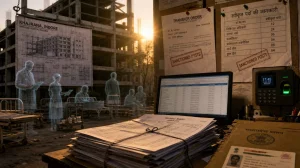
In July 2026, Congress leaders alleged that Gram Sabha approvals had been forged, including claims that thumb impressions of deceased villagers were used in documents connected with environmental and forest clearances.
The Congress has demanded a court-monitored CBI investigation.
These are extremely serious allegations—but, again, they remain allegations unless established through an investigation or judicial finding.
The Environmental Battle Has Also Reached the Supreme Court
The land dispute is only one part of the story.
The proposed mine involves substantial forest diversion and environmental concerns.
In May 2026, the Supreme Court declined to interfere with the forest clearance for the Dhirauli project. The petition had challenged the diversion of approximately 1,397.54 hectares of forest land and raised concerns including the potential felling of around six lakh trees and the area’s ecological significance.
The Supreme Court’s decision does not mean that every allegation surrounding the project was declared false.
It means the court declined to interfere with the relevant forest-clearance decision in that litigation.
What Has the Government Done So Far?
There is a paper trail. The government and district administration have:
initiated acquisition proceedings under the 2013 LARR Act;
issued statutory land-acquisition notifications;
prepared compensation awards and calculation sheets;
initiated rehabilitation and resettlement procedures;
published public notices and documents for affected villages;
deposited compensation with the district administration for disbursal;
processed forest and environmental clearances;
and responded politically to allegations of irregularities in the MP Assembly.
Government records also show that in an earlier response relating to affected families, the project side reported depositing compensation with the district Collector for disbursal to affected families.
But Here Is Where the Government Needs to Do More
Documents on a Website Are Not Enough If a Villager Says His Land Was Taken Without Consent
If a person genuinely claims:
“This is my land. I never consented to giving it up.”
the answer cannot simply be another government notification.
The administration should publicly establish:
Whose land was acquired?
Under which legal provision?
What compensation was calculated?
How was the market value determined?
Who received the money?
Were all eligible families included?
What rehabilitation package was offered?
Were Gram Sabha procedures followed wherever legally required?
Were any documents signed on behalf of deceased or ineligible persons?
And most importantly:
If there were irregularities, who will be held responsible?
The “Adani Is Looting Poor People” Claim: Fact Check
Verdict: Misleading as a blanket statement, but based on a genuine and documented land conflict. There is credible evidence that local and tribal residents have been fighting over land acquisition, compensation, displacement and environmental impacts connected to the Dhirauli project.
However, available official records show that the project has been subject to a formal statutory acquisition process, rather than land simply being taken informally by a private company.
There are also serious allegations of irregularities—including recent allegations concerning Gram Sabha documents—but these should not be presented as established facts until independently investigated.
The Human Question Behind the Legal Paperwork
For a corporation, land can appear as hectares, compensation figures and project maps.
For a family, the same land can mean:
A house.
A farm.
A livelihood.
An ancestral connection.
A place where generations were born.
That is why land acquisition is never merely a financial transaction.
Even when acquisition is legally authorised, the government has a responsibility to ensure that affected families are treated fairly, compensated properly and rehabilitated with dignity.
The real question isn’t simply “Adani took the land.” The real question is: did the government ensure that every inch of land was acquired lawfully, every rupee of compensation reached the rightful family, and every tribal right was respected?
If the government’s process is clean, open the files and show the public.
If compensation was unfair, correct it.
If officials made mistakes, fix them.
And if anyone forged documents or unlawfully dispossessed villagers, prosecute those responsible—regardless of whether they work for the government or a powerful corporation.
Because development cannot mean that the person who owns the land becomes the only person without a voice in deciding its future. A coal mine can generate electricity and revenue. But no project should be allowed to generate its profits by leaving the people who gave up their land to carry the permanent cost.