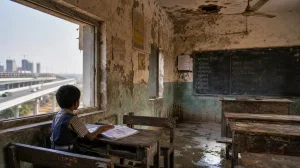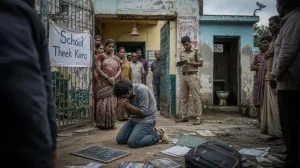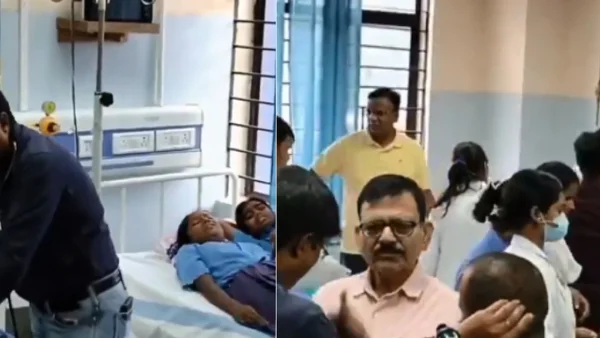
What happens when a school has broken infrastructure, inadequate facilities and children trying to study in conditions that should embarrass any education system?
Ideally, the administration should investigate.
Officials should visit the school.
Repairs should be ordered.
Teachers and parents should be heard.
And the children should get the facilities they deserve.
But a recent controversy surrounding videos of government schools has triggered a very different debate.
Instead of focusing primarily on what the footage allegedly shows, the attention has shifted towards another question:
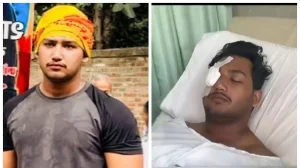
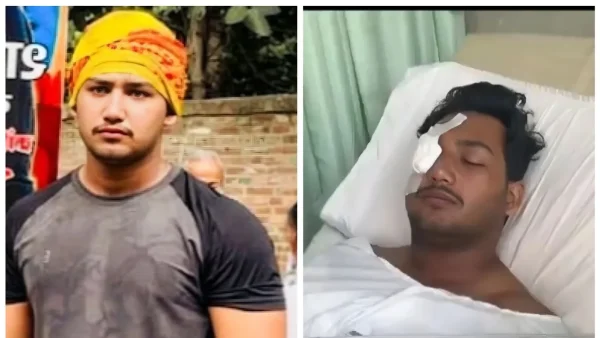
Who gave Abhijeet permission to enter the schools and record it? And that question has exposed something much deeper about the way public criticism is sometimes treated.
When the Camera Becomes the Problem
If a school is functioning properly, an inspection should not be frightening.
If classrooms are adequate, toilets are clean, teachers are present and students have the facilities they need, a camera documenting those conditions should hardly be a political emergency.
But when the first reaction to an embarrassing video is to question the person holding the camera, rather than the conditions captured by it, the priorities begin to look inverted.
The debate should begin with the children.
Not the videographer.
Not the government.
Not the opposition.
The children.
What About the Missing Basics?
Government schools are not supposed to be luxury institutions.
Nobody expects every classroom to look like a private international school.
But there are certain things that should never be considered optional:
Safe classrooms
Functional toilets
Clean drinking water
Adequate seating
Basic sanitation
Qualified and sufficient teachers
Safe buildings
A learning environment where children can study with dignity
If any of these are missing, the first institutional response should be to fix the problem.
Not to complain that someone filmed it.
The Permission Question Is Still Legitimate—But It Shouldn’t Become a Distraction
There is a legitimate administrative issue here.
Schools are sensitive environments. Entry into educational institutions can reasonably be regulated, particularly when children are being filmed. Privacy, consent, security and safeguarding requirements matter.
So asking whether someone had permission to enter or record is not automatically wrong.
But that question cannot become a substitute for addressing the underlying conditions.
Two questions can exist simultaneously:
Was the filming authorised and conducted appropriately? And:
Were the conditions shown in the footage acceptable for children? The first question concerns procedure.
The second concerns the actual quality of education and public infrastructure.
A serious administration should be capable of answering both.
Don’t Shoot the Messenger—Verify the Message
There is also a sensible middle ground.
A viral video is not automatically proof that every allegation surrounding it is true.
Authorities should verify:
When was the footage recorded?
Which school was shown?
Were the images representative?
Were facilities temporarily unavailable because of repairs?
Were teachers absent legitimately or unlawfully?
Was the school already scheduled for renovation?
Were children filmed with appropriate safeguards?
If the video is misleading, officials should provide evidence and correct the record.
But if the video is accurate, the response should be even simpler:
“We have seen the problem. Here is what we are doing about it.” That is how accountable governance works.
The Dangerous Political Reflex
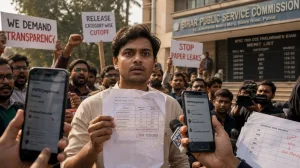
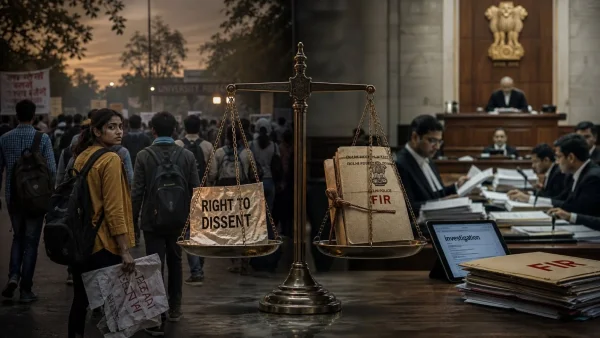
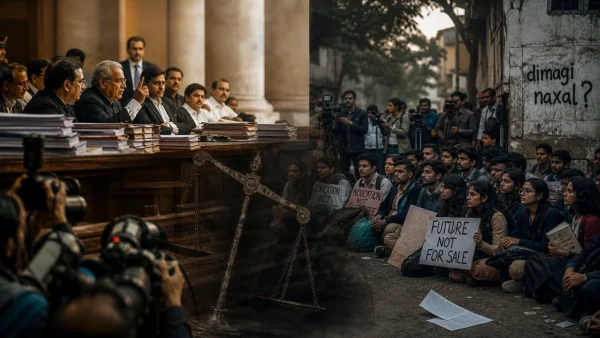
The bigger concern arises when every criticism of government infrastructure is automatically treated as an attack on the government itself.
A school is a public institution.
Its condition should not belong to any political party.
If a government school has a broken toilet, the toilet isn’t BJP or Congress.
If children don’t have desks, the desks aren’t ideological.
If teachers are missing, teacher vacancies aren’t partisan.
These are administrative problems.
And administrative problems require administrative solutions.
Children Shouldn’t Become Political Collateral
Imagine being a child studying in a classroom without basic facilities.
You don’t care which political party runs the state.
You don’t care which minister inaugurated the education scheme.
You don’t care which spokesperson won the television debate.
You care about having a classroom where you can actually study.
That’s why the debate should remain focused on outcomes.
Are children learning?
Are schools safe?
Are teachers present?
Are toilets functional?
Is public money producing functioning infrastructure?
Those are the questions that matter.
The Irony of Public Accountability
Governments spend public money on schools.
Therefore, citizens have every legitimate reason to ask what those schools look like.
And when someone documents public infrastructure, the appropriate institutional response should not automatically be hostility.
In fact, uncomfortable documentation can sometimes be useful.
A poor classroom photographed today can become a repaired classroom tomorrow—if someone in authority chooses to act on what the camera revealed.
A Better Response From the Government
Instead of turning the controversy into a fight over Abhijeet, authorities could release a simple school-by-school status report:
School inspected → problem identified → department responsible → repair ordered → deadline → work completed.
That would end the argument much faster than political accusations.
Because ultimately, the strongest answer to an embarrassing school video isn’t a press conference.
It’s a repaired school.
There is something profoundly backwards when the sight of a broken toilet produces less outrage than the person who filmed the broken toilet.
When children are studying without adequate facilities, the government’s biggest problem should be the condition of the school—not the embarrassment caused by showing it.
Yes, rules about entering schools and filming children should be respected.
But once those questions are addressed, the central issue remains:
Why was the problem there in the first place?
Because children don’t need political defenders protecting the government’s image.
They need classrooms, teachers, toilets, desks, water and dignity.
And if exposing a neglected school is considered more offensive than neglecting the school itself, then perhaps the real scandal isn’t the camera.
It’s what the camera found.