The phone call sounded completely ordinary.
A customer wanted to reserve a table at an upscale Mumbai restaurant.
Then the manager heard the name on the booking.
Tukaram Mundhe.
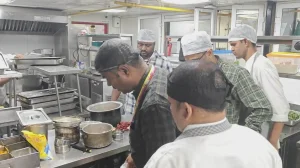
According to an anecdote Mundhe himself has recounted in an interview, the atmosphere inside the restaurant reportedly changed immediately. The manager allegedly began checking everything—from the cleanliness of the storeroom and refrigerator temperatures to expiry dates and food supplies.
People were apparently making calls to their contacts too.
There was just one problem.
Mundhe hadn’t actually made the reservation.
A friend subsequently contacted him to ask whether he had booked the table.
Mundhe reportedly replied that he hadn’t—but it happened to be his son’s birthday, so perhaps his son had made the booking for friends.
The story perfectly captures something that has become synonymous with the officer’s public image:
The fear of the inspection before the inspection even happens.
Why Does One Name Make Restaurants Nervous?
Mundhe’s reputation was built over years of highly visible administrative action.
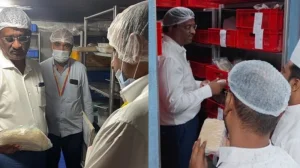
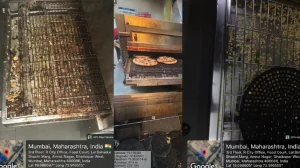
During his tenure as Commissioner of Maharashtra’s Food and Drug Administration (FDA), the department carried out an intensive enforcement drive against violations involving food safety, adulteration and licensing.
Reports have cited more than 1,100 raids and inspections and around 165 licence suspensions within his first three months in the post.
The numbers turned his tenure into a talking point.
For food businesses, the message was straightforward:
Don’t wait for the inspector to arrive. Get your house in order before he does.
Fake Paneer, Adulteration and the Food-Safety Crackdown
One of the most visible areas of the crackdown involved adulterated and substandard food products, including paneer.
The FDA’s actions reflected a wider concern about food adulteration, particularly products being sold as dairy items without meeting prescribed standards.
The issue matters because paneer is consumed widely across restaurants, hotels and households, and poor-quality or adulterated products can create significant public-health risks.
Mundhe’s enforcement-first approach turned what is normally bureaucratic work—sampling, inspections, licensing and compliance—into something far more visible to the public.
Even the High Court Canteen Wasn’t Off Limits
Perhaps the detail that best explains his reputation is that government institutions themselves were not necessarily treated as automatic safe zones.
The FDA inspection drive reportedly extended to the Bombay High Court canteen, reinforcing the perception that the department’s enforcement wasn’t supposed to depend on how powerful or prestigious an establishment was.
That approach carries a simple philosophy:
Food safety doesn’t become less important because the customer is important.
And Then Bollywood Entered the Picture
The latest controversy has taken Mundhe from restaurants and food suppliers into the world of celebrity advertising.
The Maharashtra FDA issued notices to Bollywood actors Shah Rukh Khan, Ajay Devgn and Tiger Shroff in connection with their appearances in advertisements for Vimal Elaichi.
The notices reportedly sought explanations regarding the promotion and the obligations of celebrities endorsing products.
The issue is particularly sensitive because advertisements involving surrogate or related products can raise questions about whether consumers are effectively being exposed to the promotion of tobacco products.
The actors have faced public criticism over their association with such campaigns before.
Mundhe’s intervention has once again put the regulator in the spotlight.
From Food Inspector to ‘Real-Life Singham’
Social media has now given Mundhe a nickname that says almost everything about his public image:
“Real-life Singham.” The comparison is obviously cinematic.
But there is an interesting reason why it resonates.
In an environment where people often complain that powerful businesses can escape scrutiny, an officer known for walking into establishments, checking compliance and issuing notices creates a very different impression of bureaucracy.
The appeal isn’t necessarily about the officer personally.
It’s about the idea of an official who doesn’t appear intimidated by the name on the door.
But Enforcement Must Also Be Backed by Due Process
There is an important distinction between being a tough regulator and being an arbitrary regulator.
Food businesses have rights too.
Every raid, licence suspension, notice or enforcement action must ultimately be supported by:
evidence;
statutory authority;
proper sampling;
laboratory testing where required;
documented violations;
and an opportunity to respond under the applicable law.
That is what turns a headline-grabbing raid into legitimate regulation.
The strongest regulator isn’t simply the one who conducts the most raids.
It is the one whose actions stand up to scrutiny afterward.
The Bigger Lesson
The restaurant story may be amusing.
A manager hearing a name and suddenly checking the fridge, freezer and expiry dates sounds almost like a scene from a film.
But underneath the anecdote is a serious point.
Food safety regulations only work when businesses believe that non-compliance can actually have consequences.
If an establishment knows an inspection is possible at any time, the incentive changes.
The refrigerator gets cleaned.
The expired products get removed.
The licence gets renewed.
The food samples meet standards.
And perhaps most importantly, the consumer gets a safer meal.
The most powerful thing about Tukaram Mundhe’s reputation may not be the number of raids he conducted. It’s the fact that some businesses apparently start checking themselves the moment they hear his name.
That’s when regulation begins to work before the inspector even walks through the door.
And whether the officer is checking a roadside food outlet, a luxury restaurant, a government canteen or questioning a celebrity advertisement, the principle should remain the same:
The bigger the name, the greater the scrutiny—not the smaller the rules.
Because a food regulator’s job isn’t to impress the powerful.
It’s to make sure the powerful, the famous and the ordinary are all standing on the same side of the rulebook.