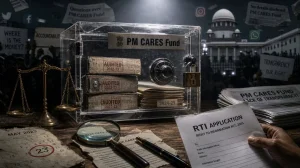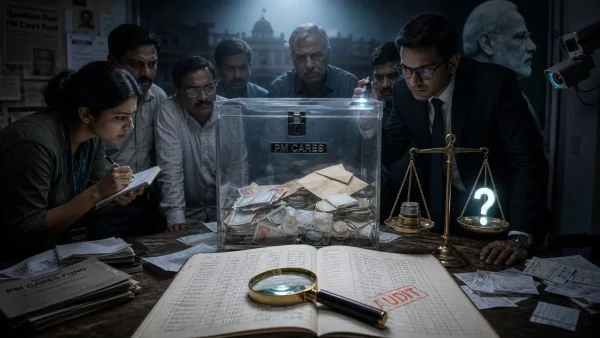
The PM CARES Fund was created during the COVID-19 pandemic with the stated objective of responding to emergencies and providing relief during crises. Since then, however, the fund has repeatedly been at the centre of debate over its structure, transparency, accountability and use of the Prime Minister’s name and office.
The latest criticism raises a broader question:
When public money is collected in the name of national leadership, how much transparency should the public be entitled to demand?
Why the Name Matters
Public Trust Is Built Into the Fund’s Identity
The use of the Prime Minister’s name and the acronym PM CARES gives the fund an unmistakable association with the highest political office in the country.
That association can inspire public confidence and encourage donations.
But it also creates a responsibility.
When citizens, companies and organisations contribute money believing they are supporting a national emergency-response mechanism, they should be able to understand how the money is governed, where it goes and what safeguards exist against misuse.
Criticism of the fund’s nomenclature therefore isn’t merely about semantics.
It is about the relationship between political authority, public confidence and financial accountability.
The Controversy Over Transparency
Why Critics Keep Asking Questions
PM CARES has faced criticism because of its legal and governance structure and questions surrounding disclosure of information.
The fund has argued that it is a public charitable trust rather than a government fund, while critics have questioned why an initiative so closely associated with the Prime Minister’s office should operate with a structure different from conventional government funds.
This distinction matters because the public wants to know:
Who ultimately oversees the fund?
What auditing mechanisms apply?
How are major expenditures approved?
What information about donations and spending is publicly available?
What safeguards prevent conflicts of interest?
What independent oversight exists?
These are legitimate governance questions regardless of which political party is in power.
The Ram Temple Comparison Needs Caution
Allegations Cannot Be Treated as Established Facts
The argument linking PM CARES to alleged financial irregularities involving the Ram Temple is politically charged.
If there are allegations of wrongdoing concerning the Ram Temple Trust or individuals associated with it, those allegations must be established through evidence, investigations or judicial findings before they can be described as proven misuse or misappropriation.
A controversy surrounding one institution also cannot automatically establish wrongdoing in another.
However, the comparison does raise a legitimate principle:
People are more likely to trust institutions when allegations involving public or religious funds are investigated transparently and independently.
That principle should apply universally—not selectively.
**The Real Question: Who Watches the Money?**
Trust Should Never Replace Oversight
Whenever large sums of money are collected in the name of public welfare, emergency relief or national causes, transparency becomes essential.
Even if there is no evidence of financial wrongdoing, robust disclosure can strengthen confidence.
Conversely, secrecy or ambiguity can create suspicion even where no misconduct has occurred.
The strongest defence against allegations is therefore not simply:
“Trust us.”
It is:
“Here are the records. Here is the audit. Here is how the money was spent.”
**Politics Shouldn’t Decide the Standard**
The Same Rule Should Apply to Everyone
Whether it is PM CARES, a government welfare programme, a religious trust, a political organisation or a private charitable institution, the principle should remain consistent:
Money collected in the public interest deserves strong accountability.
Supporters should not dismiss every question as political.
Critics should not treat every allegation as established fact.
The public deserves something better than both extremes:
Evidence, transparency and independent scrutiny.
**The Bigger Issue Is Public Confidence**
The controversy ultimately isn’t just about one fund or one political leader.
It is about whether citizens believe that institutions handling large amounts of money are accountable to them.
If people are asked to donate during a national emergency, they should not have to rely solely on political loyalty or personal faith to trust the process.
They should have verifiable information.
A Fund Named After the Prime Minister Doesn’t Just Carry a Name—It Carries the Weight of Public Trust. That is precisely why scrutiny should not be treated as an attack.
If the fund’s administration and expenditure are entirely proper, greater transparency can only strengthen its credibility.
And if allegations concerning any institution—whether PM CARES, a religious trust or a government programme—are made, they should be tested through evidence rather than political rhetoric.
Public trust should never mean “don’t ask questions.”
It should mean: ask every question—and make sure there is enough transparency for the answers to be believed.***