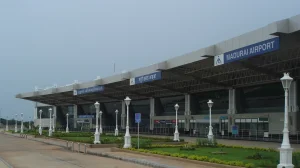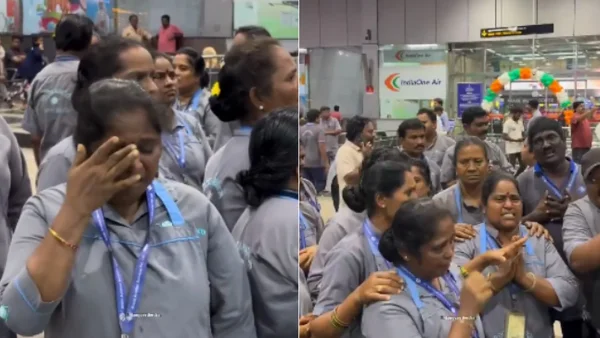
An era has come to an end in Visakhapatnam’s aviation history.
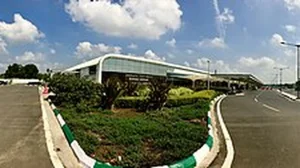
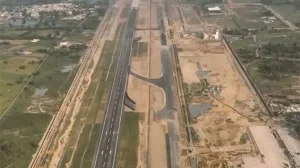
On August 16, 2026, the last scheduled commercial operations departed from the old Visakhapatnam airport, with civilian flight operations shifting to the newly developed Alluri Sitarama Raju International Airport at Bhogapuram from August 17. The new airport, operated by GMR’s airport subsidiary, is more than 50 km from the city and has been built to provide greater capacity and expanded connectivity. (The Times of India)
The transition is being presented as a major step forward for Andhra Pradesh’s aviation infrastructure.
But behind the new terminal, modern facilities and bigger runways lies another story:
What happens to the people who kept the old airport running for years?
From an Old Airport to a New Aviation Hub
A New Chapter for Visakhapatnam. The Bhogapuram airport has been developed as a greenfield international airport to serve Visakhapatnam and surrounding regions.
GMR says the airport’s first phase has a planned capacity of 6 million passengers annually, with infrastructure designed for future expansion, international connectivity and cargo operations. (GMR Group)
The new facility represents the kind of modern aviation infrastructure that a growing city like Visakhapatnam has increasingly needed.
But modernization also brings disruption.
And the people affected by that transition cannot simply be treated as part of yesterday’s infrastructure.
The Workers Who Became the Question
Hundreds of Contractual Employees Face Uncertainty. Reports ahead of the transition highlighted concerns about the future of hundreds of contractual workers involved in services at the old airport.
Their work has included housekeeping, passenger assistance, support for persons with reduced mobility, DigiYatra assistance, civil and electrical maintenance, plumbing, IT, transport, ground handling and commercial services. (Construction World)
The concern is not simply about changing buildings.
It is about livelihoods.
A worker who has spent years serving passengers at the old airport may not automatically have a job waiting at the new facility.
The 'New Airport, New Workforce’ Debate
Does Modernisation Have to Mean Replacing Experience?
The new airport naturally requires trained personnel and new operational systems.
Companies are also entitled to recruit according to their requirements.
But the transition raises an important policy question:
Could experienced workers from the old facility have been given a structured pathway to employment at the new airport?
Experience in airport operations is not something that can be built overnight.
Workers who understand passenger assistance, airport procedures, ground operations and local requirements already possess valuable institutional knowledge.
For them, the arrival of a new airport should ideally mean a new workplace—not the end of a career.
A 70-Year Legacy Meets a Brand-New Terminal
The Building May Be Old. The People Are Not Disposable. The old Visakhapatnam airport’s civilian operations have now been replaced by the new Bhogapuram facility.
The transition follows the government’s decision to shift scheduled commercial operations away from the existing civil enclave, which is located within a naval airfield. The old facility is expected to remain closed to scheduled commercial operations for decades under the current arrangement. (Hindustan Times)
For passengers, the change may mean better facilities.
For the region, it may mean greater connectivity.
But for workers, the transition can feel very different.
Infrastructure can be replaced. Livelihoods cannot be switched off with a runway.
The Bigger Question
Can Development Include the People Who Built the Old System? India’s infrastructure story is increasingly one of new airports, expressways, metro systems and modern urban facilities.
That progress is necessary.
But development should not be measured only by concrete, glass and passenger numbers.
It should also be measured by how responsibly people are treated during the transition.
If hundreds of workers face uncertainty because an old facility has closed, authorities and operators should explore retraining, recruitment preferences, relocation support and other mechanisms that allow experienced employees to compete fairly for opportunities at the new airport.
Online Debate: Progress vs Livelihoods
The transition has prompted a wider sentiment that modernisation should not automatically mean discarding experienced workers.
Some of the questions being raised are:
“If the airport moved, why couldn’t the experienced workers move with it?”
“Does a modern terminal really need a completely new workforce?”
“Development should create opportunities, not erase livelihoods.”
These are public sentiments and should not be treated as evidence that every former airport employee has lost employment.
A New Airport Should Mean a New Beginning—Not an End for the People Who Served the Old One
Bhogapuram marks an important new chapter for Visakhapatnam’s aviation future. Bigger capacity, modern infrastructure and improved connectivity can bring enormous benefits to the region. (GMR Group)
But there is another measure of progress that deserves equal attention.
When an old airport closes, the runway may become silent—but the workers who spent years serving passengers still have families, bills, skills and futures.
A city can celebrate a spectacular new terminal while still asking a simple question:
Can we build world-class infrastructure without leaving the people who built the old system behind? Because true development isn’t simply about replacing old buildings with new ones.
It’s about making sure the people don’t become obsolete along with them.