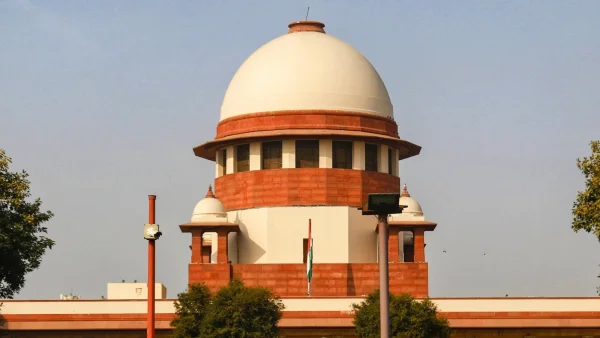
Very soon, you will be able to make one call when it matters most. On May 28, 2026, the top court ruled that trauma care is part of your right to life and set a hard deadline for all states and UTs to fold their various helplines into 112, with no room for the kind of delays that have been fatal in the past.
Why this ruling matters
Take 2024: 1.77 lakh people were killed on our roads, more than anywhere else. In many of these cases, the court found, it was the lag in getting to an emergency room that did in. When you’ve been in a crash, how fast you are treated is what makes the difference between life and death.
So by tacking trauma care onto Article 21, the bench is making sure you have a right to that help. A single, familiar number is meant to clear up any muddle at the scene and put you in an ambulance in no time.
One nation, one emergency number
You won’t be calling 100, 101, 108, 102, 1033 or 1091 for much longer. All of them have to be in 112 in three months’ time. To make sure they are on top of it, the court has called for monthly check-ins and wants the minutes put up on the relevant portals.
Justices J K Maheshwari and A S Chandurkar have given the green light for the Health and Road Transport ministries to put out a standard protocol for medical rescue in the same period. After that, the onus is on the states and UTs to put it into practice within another three months.
Ending hesitation for Good Samaritans
Too often, a would-be helper stands down because of the trouble with the police or courts. The court sees this as a system problem and has ordered every state to have a working grievance redressal system for Good Samaritans in place in three months so people don’t have to think twice before lending a hand.
You have to know about it, of course. The Centre and the states are to put together some heavy-hitting, multi-lingual media drives in the next month to put 112, the protections in Section 134A of the Motor Vehicles Act, and the new grievance and cashless schemes in front of the public.
Fixing ambulances and training
The court has had enough of the inaccessibility and non-compliance in the current ambulance setup. Whether it’s a public or private vehicle, if it is registered, it has to be up to the AIS-125 mark. And we want to see GPS or a location tracker on them, tied in with 112 in real time.
We can’t just take your word for it. Every three months or so, states will have to run some hard-nosed audits on response times, the gear, the quality of care and the results, then file a report with the union authority we have in mind.
Then there is the person behind the wheel. States are to get on board with the EMT curriculum from the National Commission for Allied and Healthcare Professions and make sure their training and certification is in line with it.
Data, cashless care, and accountability
We want to be able to learn from what happens. The Union Health Ministry has eight weeks to come up with a format for a trauma registry. From there, each state and UT has four months to have one in place for all their facilities and link it up.
And let’s not have money get in the way of treatment. For those states still to come around to the 2025 PM RAHAT scheme, you have three months to make it work so a hospital can take in a victim and see to them without asking for payment first.
What changes in the next three months
This is what you can look for from the government in the short term:
– 112 to be the only number for emergencies
– A Good Samaritan system that actually works
– No more excuses on AIS-125 for any ambulance
– Real-time tracking of where your ambulance is via 112
– Some serious auditing of how well you are being looked after
– PM RAHAT in force where it hasn’t been yet
How the case reached the court
It all comes from a petition by the SaveLIFE Foundation for a uniform way of handling trauma across the country. The bench’s view is that with a solid framework and some common sense in first aid, you can stop the deaths that are entirely within our power to prevent, provided the Centre and the states are on the same page.
We have the matter back on the docket in four months to see how things are going. But for anyone who has been through the wringer after an accident, the court is putting it plainly: the state is here to make sure you get the help you need, quickly and without any of the usual fear.