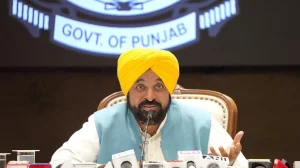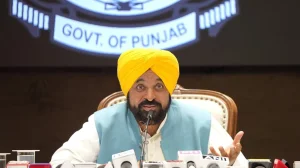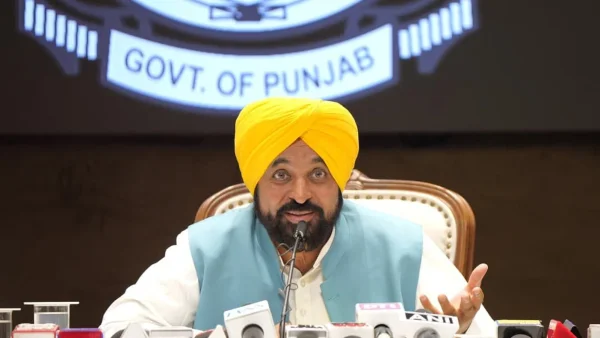
It is a sharp turn in what has been a low-grade tussle between the religious and political in Punjab. On Monday, the Akal Takht made it clear: Bhagwant Mann is ‘Guru Dokhi’ and ‘Panth Virodhi’. They want the community to disengage from him and have put out a word for every Sikh MLA and Cabinet minister to show up before the top Sikh authority on the 29th of the month.
A rare censure at Sikhism’s highest seat
You can say it was a decree handed down by the five high priests of the Akal Takht in the Golden Temple in Amritsar. It comes in the wake of a video they claim put the chief minister in a bad light and riled up Sikh sensibilities.
“We are making this call to the community to shun Mann,” said acting jathedar Giani Kuldeep Singh after sitting down with the various Sikh bodies. He also confirmed the summons for the lawmakers.
At the heart of the dispute
You can trace this back to the new anti-sacrilege law. On paper, the Act is tough – life in prison and a fine of as much as Rs 25 lakh for any sacrilege to the Guru Granth Sahib. But the way it is set up has put the clergy on edge.
There was a letter on May 11 that put a finger on the problem: the part where the SGPC is to be put in charge of a digital register of all saroops. To the Takht, that means the Guru, the granthis, the pathis, the gurdwara committees and the sewadars are being put under a legal regime run by the state.
The clergy have been very specific about what they want to see done:
– Shun ties with Bhagwant Mann
– All Sikh MLAs and Cabinet to appear on June 29
– Government had 15 days to make amends to the clauses
How the law advanced, and when the rift widened
The Bill to change the 2008 Act was put through the Vidhan Sabha without a hitch on April 13. The Governor, Gulab Chand Kataria, put his assent to it on the 17th and the state made it official on the 20th.
Things came to a head on May 8. After the Speaker, Kultar Singh Sandhwan, tried to put across the government’s side of things, the Akal Takht flatly turned the law down. They then gave a hard 15-day deadline to take out the parts they found objectionable and an intrusion into Panthic business.
The government didn’t budge, the clergy will tell you. So this Monday’s statement is the result of that, and of the CM’s unwillingness to let go of the legislation.
Political stakes and the road to June 29
This is a broad brush. By telling the Panth to cut off the CM and hailing in the MLAs and ministers, the Takht has the ruling class in a corner come the 29th.
For Giani Kuldeep Singh, it is about the dignity of the Akal Takht and putting a stop to the state’s inroads into how religion is run.
Government’s stand and community impact
Bhagwant Mann has been firm: the law is not going anywhere. That puts him at odds with the clergy and with a lot of unease in the community about having their sacred institutions put under a microscope.
For some of the Sikh groups, the digital registry is the whole point of contention. They see it as a way for the state to get a hold on the scripture and those who serve it, blurring the line where civil power should end and spiritual matters begin.
Now we are in a race against time. When the legislators and ministers are called in on June 29, it will be a test of where they stand – with the Takht or with the government. Whatever happens could well set the tone for church and state in Punjab and decide the future of this law.