The National Company Law Tribunal’s approval of a repayment plan for Subhash Chandra, founder of the Essel Group and Zee, has reignited a long-running debate over India’s Insolvency and Bankruptcy Code (IBC): when a large borrower or guarantor enters insolvency, how much money do lenders actually recover?
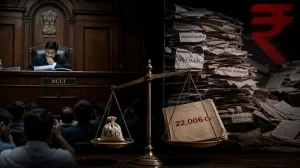
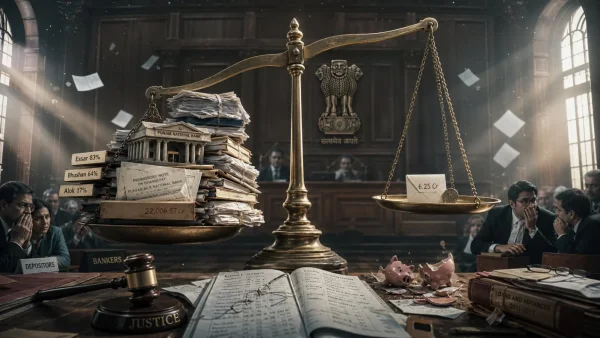
In Chandra’s case, admitted creditor claims were approximately ₹22,006.57 crore, while the approved plan provides about ₹6.25 crore to creditors and ₹25 lakh towards the insolvency process. That amounts to recovery of only around 0.03% of the admitted claims.
However, the headline figure requires context.
The proceedings concern Chandra’s personal insolvency as a guarantor for debts associated with companies linked to the Essel Group. They are not equivalent to saying that Chandra personally borrowed ₹22,000 crore and is now simply being allowed to repay ₹6.5 crore.
Nevertheless, the scale of the proposed recovery is extraordinary—and it invites comparison with some of India’s largest corporate insolvency cases.
What does the IBC actually do?
The Insolvency and Bankruptcy Code was introduced to create a time-bound framework for dealing with financial distress.
Instead of allowing creditors to pursue years of separate recovery proceedings, the IBC brings creditors together under a formal insolvency process.
In a corporate insolvency case, the Committee of Creditors (CoC) evaluates resolution proposals. If the statutory voting threshold is achieved and the tribunal approves the plan, creditors are generally bound by the approved resolution.
The system is therefore not designed to guarantee that creditors recover 100% of what they claim.
Its objective is to determine whether a viable resolution can produce a better outcome than liquidation.
That is why an IBC “haircut” does not automatically mean that money has been illegally waived.
The real question is whether the recovery represents the best reasonably achievable outcome under the circumstances.
Some Major IBC Cases: What Did Banks Recover?
Data compiled by the Insolvency and Bankruptcy Board of India (IBBI) and analyses of approved resolution plans show enormous differences between cases.
The following examples illustrate the range.
1. Essar Steel — One of the Biggest Recoveries
Admitted financial-creditor claims: approximately ₹49,473 crore
Amount realised under resolution: approximately ₹41,018 crore
Recovery: about 82.9%
Essar Steel became one of the landmark cases under the IBC.
The company eventually went to ArcelorMittal, and creditors recovered a substantially larger proportion of their admitted claims than in many other large insolvency cases.
IBBI data records approximately ₹41,018 crore realised against ₹49,473 crore of financial-creditor claims.
The case demonstrated that the IBC could sometimes deliver recoveries far above what liquidation might have produced.
2. Bhushan Steel — Around 63.5% Recovery
Admitted financial-creditor claims: approximately ₹56,022 crore
Amount realised: approximately ₹35,571 crore
Recovery: about 63.5%
Bhushan Steel was another major insolvency case.
The resolution plan involving Tata Steel/Bamnipal Steel resulted in creditors receiving approximately ₹35,571 crore against admitted financial claims of ₹56,022 crore.
Compared with many other IBC cases, this represented a substantial recovery.
But it still meant that creditors did not recover the entire amount of their admitted claims.
3. Electrosteel Steels — Around 40% Recovery
Admitted financial-creditor claims: approximately ₹13,175 crore
Amount realised: approximately ₹5,320 crore
Recovery: about 40.4%
Electrosteel Steels was resolved through a plan involving Vedanta.
IBBI’s data records recovery of approximately ₹5,320 crore against admitted financial-creditor claims of ₹13,175 crore.
The recovery was considerably lower than Essar Steel or Bhushan Steel but still significantly higher than many distressed cases.
4. Monnet Ispat — Around 26% Recovery
Admitted financial-creditor claims: approximately ₹11,015 crore
Amount realised: approximately ₹2,892 crore
Recovery: about 26.3%
Monnet Ispat & Energy was resolved through a consortium involving JSW and AION Investments.
Creditors recovered approximately ₹2,892 crore against ₹11,015 crore of admitted financial claims.
This translated into a haircut of roughly three-quarters of the admitted financial claims.
5. Alok Industries — Around 17% Recovery
Admitted financial-creditor claims: approximately ₹29,523 crore
Amount realised: approximately ₹5,052 crore
Recovery: about 17.1%
Alok Industries represents another example of the enormous variation in IBC outcomes.
Creditors received approximately ₹5,052 crore against admitted financial claims of ₹29,523 crore.
The resolution involved Reliance Industries and JM Financial Asset Reconstruction Company.
In percentage terms, the recovery was only around one-sixth of the admitted financial claims.
And Then There Is the Subhash Chandra Case
The numbers in the Chandra case are dramatically different.
Admitted claims: ₹22,006.57 crore
Payment to creditors: approximately ₹6.25 crore
Process costs: approximately ₹25 lakh
Recovery: approximately 0.03%
Implied haircut: approximately 99.97%.
The plan was supported by creditors representing approximately 80.81% of the voting share, allowing it to cross the statutory threshold despite opposition from several lenders.
Among those opposing the plan were institutions including HDFC Bank and LIC Housing Finance.
The tribunal’s reasoning included the assessment of Chandra’s personal assets and the possibility that creditors could receive less through bankruptcy than through the approved plan.
That is a critical part of understanding the decision.
Why Can Such a Huge Haircut Happen?
The IBC does not operate on the principle that every rupee of admitted claims must be recovered.
Suppose a debtor’s total liabilities are ₹1,000 crore but the debtor has very few recoverable assets.
A resolution plan offering ₹100 crore might appear extremely low compared with the debt.
But if liquidation would produce only ₹50 crore, creditors could rationally prefer the ₹100-crore resolution.
That is the economic logic behind a haircut.
The controversy arises when the recovery becomes exceptionally small.
In the Chandra case, the difference between ₹22,006 crore and ₹6.25 crore is so extreme that it has prompted lenders to consider legal challenges.
The Data Shows Something Important
IBC outcomes are not uniform.
Some large cases have generated recoveries exceeding 60–80% of admitted financial claims.
Others have produced recoveries below 20%.
And some cases have produced extraordinarily low recoveries.
An analysis published by The Indian Express of 20 resolution plans among major bank-defaulter cases found that financial creditors had admitted claims of approximately ₹2.25 lakh crore, while the corresponding resolution plans provided about ₹82,961 crore—a recovery of approximately 36.84%.
The analysis also found that in 10 of those cases, realisation was below 30%.
This illustrates why simply saying “IBC gives huge haircuts” is incomplete.
The outcome depends heavily on:
The value of the debtor’s assets
The company’s ability to continue operating
The number and quality of resolution bidders
The liquidation value
The structure of secured loans
Litigation surrounding the company
Guarantees and collateral
The time taken to complete the process
The financial condition of the business when insolvency begins
Haircut Does Not Always Mean Bank Loss in the Same Way
Another important distinction is between admitted claims and the actual amount that a creditor originally disbursed.
An admitted claim can include principal, interest and other contractual dues.
Furthermore, lenders may have already recognised provisions or losses before the IBC resolution.
Therefore, comparing a resolution payment directly with the original loan amount can produce a misleading picture.
The correct comparison depends on what exactly is being measured.
That is why IBC statistics should ideally report:
Original exposure → admitted claim → liquidation value → resolution value → actual realisation → time taken.
The Bigger Question: Who Bears the Cost?
This is where the public debate becomes more serious.
Banks ultimately manage money belonging to depositors, shareholders and other stakeholders.
When a large corporate account produces a substantial haircut, the question is not merely whether the IBC process followed the law.
It is also whether the credit was originally sanctioned prudently.
If a company borrows thousands of crores and later becomes insolvent, there are two separate questions:
Why did the business fail? And:
Why was so much money lent in the first place?
Recovery after insolvency is only one part of the story.
The quality of lending decisions, collateral assessment, risk management and monitoring before default also deserve scrutiny. What the IBC Was Supposed to Change Before the IBC, India’s banking system faced years of delays in recovering stressed loans.
Cases could remain stuck in courts for long periods while the value of distressed companies deteriorated.
The IBC was designed to change that equation.
Its central philosophy is essentially:
Preserve value where possible, resolve quickly, and avoid endless litigation.
That has produced some major successes.
But the system continues to face challenges involving delays, litigation, liquidation and low recoveries in some cases.
The Subhash Chandra episode adds another question to the debate:
How low can a recovery go before the public begins questioning whether the insolvency system is protecting creditors adequately?
The Debate Is Bigger Than One Businessman
The controversy surrounding Subhash Chandra should therefore not be reduced to a political argument about one individual.
The more important issue is the functioning of India’s insolvency architecture.
If a resolution produces a high recovery, creditors benefit.
If a distressed company is sold to a new owner and jobs and productive assets are preserved, the economy can benefit.
But when recoveries become extremely small, regulators, lenders and policymakers must be able to explain why that outcome represented the best available option.
In Chandra’s case, the tribunal has approved the plan, but opposition from lenders means the legal controversy may continue.
The Bottom Line
The IBC has produced both remarkable recoveries and extremely large haircuts.
Essar Steel: roughly 83% recovery.
Bhushan Steel: roughly 64%.
Electrosteel: roughly 40%.
Monnet Ispat: roughly 26%.
Alok Industries: roughly 17%.
And in the Subhash Chandra personal insolvency case, the approved plan represents recovery of only around 0.03% of the ₹22,006.57-crore admitted claims.
The figures tell us one thing clearly:
There is no single “IBC haircut.” Every case depends on its facts, assets, creditors and resolution options. But when the gap between admitted claims and recovery becomes extraordinarily large, the public is entitled to ask difficult questions.
Was the outcome genuinely the best possible recovery?
Were creditors adequately protected?
Could more have been recovered?
And perhaps most importantly:
Who should ultimately bear the cost when thousands of crores of lending result in only a fraction being recovered? Those questions go far beyond one insolvency case. They go to the heart of how India’s banking and corporate-credit system works.