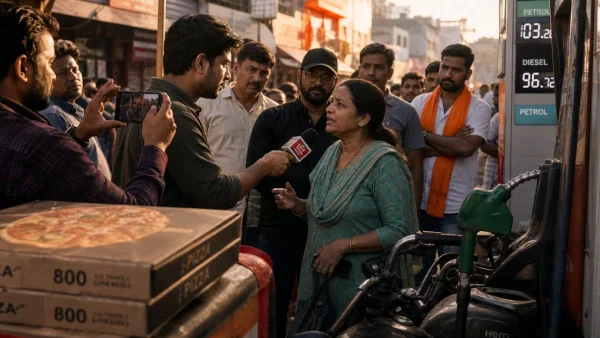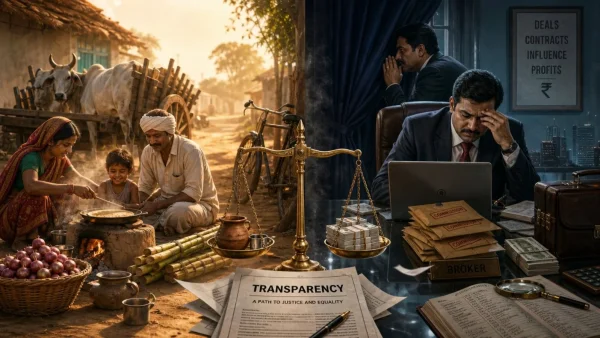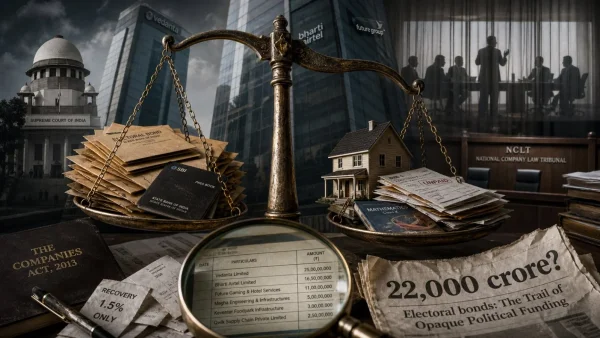
Two seemingly different issues—political funding and corporate debt—have become part of the same larger public debate: who ultimately benefits from India’s economic and regulatory system?
The controversy over Electoral Bonds raised questions about transparency in political funding. More recently, the National Company Law Tribunal’s approval of a repayment plan involving Subhash Chandra, founder of the Essel Group and Zee, has triggered another debate over how India’s insolvency system deals with large financial claims.
But the facts require careful examination.
Electoral Bonds Were Struck Down by the Supreme Court
In February 2024, the Supreme Court of India unanimously struck down the Electoral Bond scheme.
The court held that voters have a right to information about political funding and that the scheme’s mechanism allowing anonymous political donations violated that constitutional right.
The court also directed the State Bank of India to stop issuing Electoral Bonds and disclose information relating to bonds purchased and redeemed. The judgment became one of India’s most significant rulings concerning political-finance transparency.
The Supreme Court’s decision does not, by itself, establish that every donation made through Electoral Bonds was corrupt or illegal.
What it established was that the anonymity built into the scheme was constitutionally problematic, particularly because political contributions can be relevant to citizens’ right to information.
Then Came the Insolvency Debate
The latest controversy concerns Subhash Chandra’s personal insolvency proceedings.
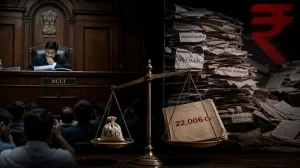
The NCLT approved a plan under which approximately ₹6.25 crore would go to creditors and ₹25 lakh would cover insolvency-process costs, against admitted claims of approximately ₹22,006.57 crore in Chandra’s personal insolvency process. On the face of those figures, the recovery from his personal estate is approximately 0.03%.
That has understandably produced headlines about a 99.97% haircut.
But there is an important qualification.
The ₹22,006-crore figure does not mean that Subhash Chandra personally borrowed ₹22,006 crore.
The claims relate to his position as a personal guarantor for debts associated with Essel/Zee-linked companies. The principal corporate borrowers remain liable for their obligations, and the approved arrangement reportedly includes approximately ₹1,494 crore in payments by those borrowing companies.
That distinction is essential.
Why Did the NCLT Approve Such a Small Personal Payment?
The tribunal considered whether creditors would actually receive more by forcing Chandra into bankruptcy.
The resolution professional’s assessment reportedly indicated that Chandra’s personal assets were substantially below the amount claimed by creditors.
Under the IBC framework, the tribunal does not simply substitute its own commercial judgment for that of the creditors. In this case, creditors holding approximately 80.81% of the voting share supported the plan, allowing it to cross the statutory threshold.
Several lenders, including HDFC Bank and LIC Housing Finance, opposed the proposal and are reportedly preparing to challenge the ruling.
Therefore, describing the development simply as “the government forgave ₹22,000 crore” would be misleading.
The government did not itself issue a blanket waiver of Chandra’s personal debt.
Rather, the NCLT approved a resolution plan under the Insolvency and Bankruptcy Code, after the required creditor voting process.
But the Public Question Is Still Legitimate
Even with those qualifications, the controversy raises an important question:
Why can an ordinary borrower face severe consequences for relatively small defaults while complex corporate insolvency proceedings can result in enormous reductions in recoverable claims? The answer lies partly in the structure of the financial system.
Large corporate loans often involve collateral, guarantees, multiple companies, restructuring arrangements and insolvency proceedings.
A home loan or small personal loan is fundamentally different.
But the perception of unequal treatment can become politically explosive when the numbers reach thousands of crores.
For the average citizen, the contrast appears stark:
One missed EMI can trigger penalties, collection calls and damage to a credit history.
Meanwhile, a large corporate insolvency case can involve years of litigation, negotiations, resolution plans and substantial haircuts.
The legal mechanisms are different—but the question of fairness and accountability remains legitimate.
Does a Haircut Mean the Money Was “Looted”?
Not necessarily.
A haircut means creditors recover less than the amount of their admitted claims.
Under the IBC, that can happen because the alternative—liquidating the company or pursuing a debtor’s assets—could produce an even lower recovery.
The Insolvency and Bankruptcy Board of India itself publishes extensive data on resolution plans and liquidation outcomes, reflecting that recoveries vary substantially from case to case.
The important question is therefore:
Was the recovery approved in a particular case the best outcome reasonably available to creditors?
If the answer is yes, a haircut can be an economically rational outcome.
If creditors believe that more could have been recovered, they have the right to challenge the process.
That is precisely why the reported decision by HDFC Bank and LIC Housing Finance to contest the NCLT order is significant.
Where Does the “Modani” Allegation Come In?
The term “Modani” is a political expression used by critics to suggest a close relationship between Prime Minister Narendra Modi’s government and businessman Gautam Adani.
However, it should not be presented as an established legal fact that the Modi government and the Adani Group constitute a corrupt “nexus” or that public money has been deliberately transferred to a particular business group without specific evidence.
There have been numerous political controversies and allegations concerning the relationship between the government and large corporate groups.
But allegations of corruption require evidence of a specific transaction, decision, financial benefit or abuse of official power.
Political criticism is legitimate.
It should not, however, be confused with a judicial finding.
The Bigger Issue: Concentration of Economic Power
The broader concern goes beyond one businessman or one political party.
India’s economy has increasingly produced extremely large corporations with significant interests across infrastructure, ports, airports, energy, media, finance and other sectors.
That makes transparency particularly important.
When government policies affect industries dominated by a small number of large companies, citizens have a legitimate interest in knowing:
Who benefits from the policy?
Who receives government contracts?
How are loans evaluated?
What happens when large borrowers default?
How much do banks recover?
Who bears the losses?
Are political donations transparent?
Are regulators independent?
Are conflicts of interest properly disclosed?
These questions apply regardless of which party is in power.
Electoral Bonds and Insolvency Are Different Issues
It is important not to merge the two controversies into one legal claim.
The Electoral Bond case concerned political funding and citizens’ constitutional right to information.
The Subhash Chandra case concerns insolvency proceedings, creditor claims and the application of the IBC.
There is no evidence that the two cases are legally connected.
But politically, both contribute to a broader public conversation about transparency and accountability.
One asks:
Who finances political parties?
The other asks:
When large borrowers become financially distressed, who ultimately bears the loss?
Both questions concern the public’s ability to understand how powerful institutions operate.
Fear and Economic Anxiety
Political rhetoric frequently uses issues of religion, identity and security to mobilise voters.
Critics argue that excessive focus on communal fears can distract citizens from economic questions such as employment, inflation, public services, taxation, banking losses and corporate accountability.
That is a political argument rather than an independently established fact.
But it raises a question worth debating:
Can a democracy simultaneously protect citizens’ social security, economic interests and constitutional rights while holding powerful institutions accountable? That is ultimately bigger than the politics of any single election.
What Citizens Should Demand
Instead of relying solely on political slogans, citizens can demand measurable transparency.
For large corporate insolvency cases, that means publishing:
Original loan exposure → admitted claims → collateral value → liquidation value → resolution offer → amount actually recovered → time taken.
For political funding, it means transparent disclosure of:
Donor → amount → recipient → date → legal mechanism.
And for government contracts:
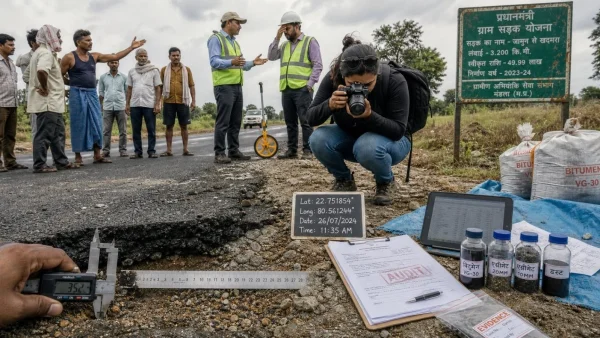
Tender → bidders → winning company → contract value → performance → payments → audit findings.
Transparency turns political accusations into verifiable public information.
The Real Test of the System
The Subhash Chandra case should not automatically be described as proof that the government “forgave ₹22,000 crore.”
The NCLT’s order concerns Chandra’s personal insolvency as a guarantor, while the principal borrowing companies continue to have obligations.
Likewise, the Electoral Bond judgment does not establish that every political donation made through the scheme represented corruption.
But both developments raise a larger democratic question:
When enormous amounts of money and political power are involved, how much transparency should citizens be entitled to? That question deserves an answer that goes beyond party politics.
Because whether the issue is political donations, bank loans, corporate insolvency or government contracts, the principle is the same:
Public institutions must be transparent, powerful actors must be accountable, and ordinary citizens should not be expected to simply trust the system without being allowed to examine how it works.