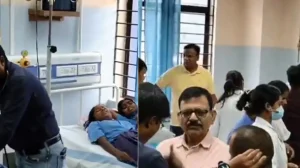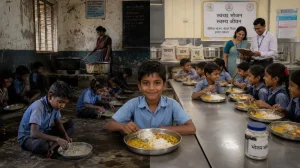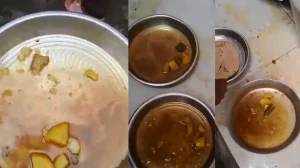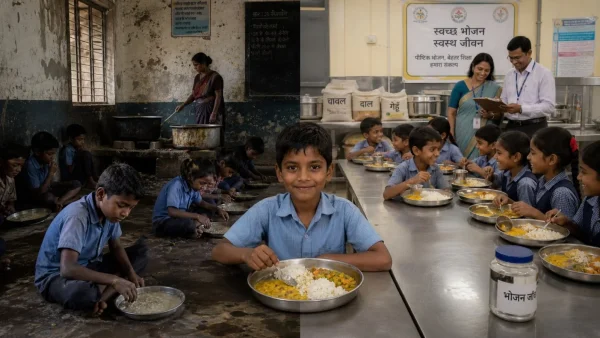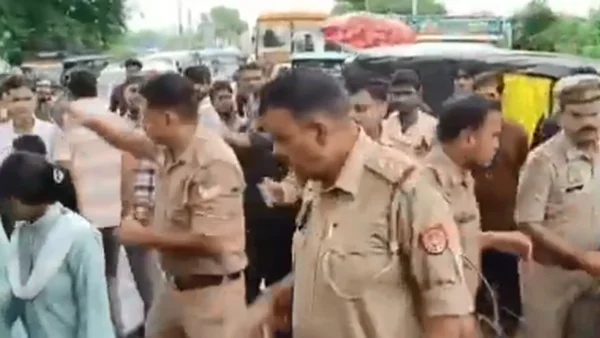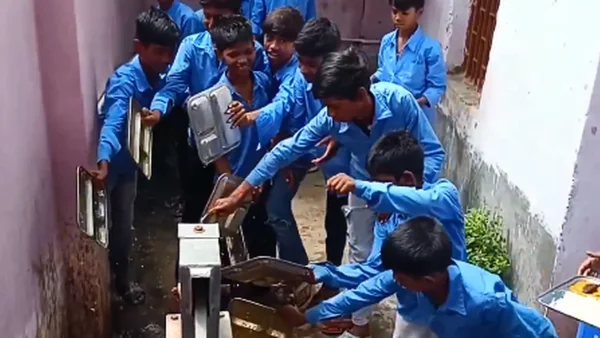
The reported discovery of worms in mid-day meals served across several government schools in Bihar’s Arwal district has triggered concern among parents, teachers and officials. The incident reportedly affected around 75 government schools, where children allegedly found worms or insects in vegetables served with their lunch.
The immediate reaction was understandable: children reportedly threw away the food rather than eat it, while teachers and school authorities halted distribution in affected locations.
But the incident raises a larger question that goes beyond one contaminated meal:
How did food that was meant to be checked and distributed safely reach dozens of schools in the first place?
From Kitchen to Classroom
Under the PM POSHAN programme, school meals are intended to provide children with essential nutrition while also encouraging attendance and reducing classroom hunger.
The food supplied to schools passes through several stages—procurement of ingredients, storage, cooking, transportation and finally distribution.
A failure at any one of these stages can compromise the meal.
If the reports from Arwal are confirmed, authorities will therefore need to establish where the contamination occurred rather than simply identifying the last person who handled the food.
Was the problem caused by:
Poor-quality vegetables?
Improper storage?
Inadequate washing of ingredients?
Contamination during cooking?
Unsanitary transportation?
Failure to inspect food before distribution?
These questions require a proper investigation and, ideally, examination of food samples and records.
Children Refused to Take the Risk
The most disturbing aspect of the episode is the reaction of the children themselves.
According to reports, students noticed worms in their plates soon after the meal was served. The children then reportedly discarded the food.
That reaction highlights an uncomfortable reality.
A child receiving a government-sponsored meal should not have to become the final quality-control inspector.
The system should detect unsafe food before it reaches a classroom.
Why the Number of Schools Matters
If contamination was genuinely observed across approximately 75 schools, the matter cannot simply be dismissed as an isolated kitchen mistake.
It potentially points to a common supply or distribution chain.
That makes the role of the agency supplying the meals particularly important.
Authorities need to determine whether the same ingredients, cooked food or batch were distributed to multiple schools.
If so, the investigation should identify exactly how many meals were prepared from the affected batch and whether any children consumed the food before distribution was stopped.
Officials Face a Test of Accountability
The district administration has reportedly ordered an inquiry and indicated that action would be taken if negligence by the supplying agency is established.
That is an important first step.
But an inquiry should not end with a statement that “action will be taken.”
The public deserves to know:
What went wrong?
Who was responsible for checking the food?
Were inspections carried out?
Were previous complaints recorded?
Was the supplier complying with food-safety requirements?
What corrective measures will prevent a repeat?
A Fine or Suspension Alone May Not Be Enough
If negligence is established, penalties may be necessary.
But punishment after contamination is only one part of the solution.
Authorities also need preventive safeguards.
These could include:
Pre-distribution inspection
Meals should be checked before they leave the central kitchen or supplier.
Random food sampling
Independent samples can help detect contamination that visual inspection misses.
Stronger storage controls
Ingredients need appropriate storage conditions to prevent infestation and spoilage.
Surprise inspections
Suppliers should not know when officials will inspect their facilities.
Batch tracking
Authorities should be able to identify which schools received food from a particular batch.
Immediate reporting mechanisms
Teachers should have a clear process for stopping distribution when something appears unsafe.
A Reminder of Why Food Safety Cannot Be Treated Casually
Bihar has previously witnessed the devastating consequences of failures involving school meals.
In 2013, contaminated mid-day food in Saran district resulted in the deaths of 23 children. That tragedy remains one of the darkest chapters in India’s school-meal programme.
The current Arwal incident is not comparable in scale or outcome—there have been no reported deaths associated with this episode—but the underlying lesson remains relevant:
Food served to children requires an exceptionally high standard of care. Children should never be the ones discovering that a meal is unsafe.
The Real Question Is What Happens Tomorrow
News cycles move quickly.
Today there is outrage.
Tomorrow there may be an inquiry.
A few days later, the headlines may disappear.
But the children will still return to the same schools—and someone will again place a plate of food in front of them.
That is where the administration’s response will truly be tested.
Will the next meal be safer because the system has learned from this incident? Or will the episode simply end with an inspection, a press statement and a temporary suspension?
The reported worms in the children’s meals are disturbing.
But the bigger warning is even more serious:
A food-safety system should protect children before contamination reaches their plates—not investigate only after they discover it themselves.