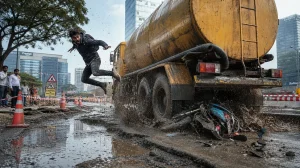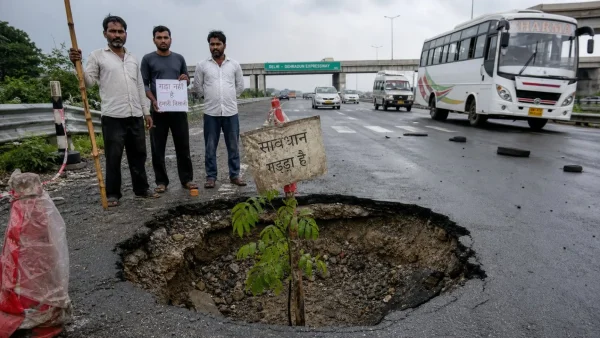
A striking scene reported from the Delhi–Dehradun Expressway near Chutmalpur, Saharanpur, has triggered fresh questions over road construction and maintenance.
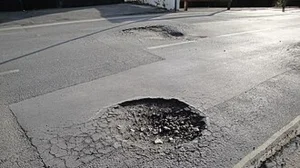
A large damaged section of the road has reportedly developed into a crater-like depression. In a sarcastic response to the condition, locals were seen planting trees inside the damaged portion, turning a road-safety hazard into an unusual makeshift plantation site.
The imagery has rapidly drawn attention because of its symbolism: when a road develops a crater large enough to accommodate a tree, residents are asking whether authorities are maintaining an expressway built to provide faster and safer connectivity.
From Expressway to “Plantation Site”
The Delhi–Dehradun Expressway is a major infrastructure project intended to significantly improve connectivity between Delhi and Dehradun and reduce travel time.
The project was developed in multiple packages and included extensive elevated and greenfield sections. The National Highways Authority of India (NHAI) has described the corridor as an important connectivity project for the region.
That makes reports of serious surface damage particularly noteworthy.
An expressway is expected to meet considerably higher standards of road quality and safety than an ordinary local road. Large potholes or craters can become particularly dangerous because vehicles travel at significantly higher speeds.
Why the Chutmalpur Damage Matters
The location is significant because Chutmalpur is an important junction connecting routes toward Saharanpur, Dehradun and nearby areas.
Heavy traffic—including cars, buses, commercial vehicles and trucks—uses the surrounding network.
A large depression in the carriageway can create several risks:
Sudden loss of vehicle control
Damage to tyres and suspension
Motorcycle accidents
Vehicle collisions while attempting to avoid the damaged section
Water accumulation during rain
Further deterioration of the road surface
For two-wheelers, the danger can be even greater because a hidden or water-filled pothole can destabilise the vehicle almost instantly.
The Irony Behind the Tree
The locals’ response is what has made the incident particularly striking.
Instead of simply standing beside the damaged road and complaining, residents reportedly planted trees in the crater.
It is clearly a symbolic gesture rather than an actual road-repair solution.
But the message is difficult to miss:
If authorities are not filling the crater, perhaps nature should take over the space. The act has turned an infrastructure complaint into a piece of visual satire.
A Road Built for Speed Needs Maintenance Built for Safety
Expressways are designed around speed.
That means even relatively small defects can become dangerous when vehicles are travelling at high speeds.
A pothole on a slow-moving neighbourhood road is a nuisance.
A deep crater on a high-speed corridor can become a serious accident hazard.
That is why road maintenance cannot be treated as cosmetic work.
Authorities need systems for:
inspection → identification → temporary safety measures → permanent repair → quality verification.
Who Is Responsible for the Damage?
A viral video alone cannot establish why the road deteriorated or who is legally responsible.
Possible causes could include:
Poor-quality construction or materials
Water seepage
Drainage failure
Heavy vehicle loading
Utility or civil works
Monsoon-related damage
Inadequate maintenance
Defects in the underlying pavement
A proper technical inspection would be required to establish the cause.
The important question is therefore not simply who should be blamed, but whether the responsible road authority has inspected the site and initiated corrective action.
The Bigger Infrastructure Question
India has invested heavily in highways and expressways over the past decade.
The Delhi–Dehradun corridor is part of that larger push to build faster road connections between major cities.
But infrastructure development has two parts:
Building the road—and keeping the road safe. The second part receives considerably less attention because it is less visible.
An inauguration creates headlines.
A repaired pothole rarely does.
Yet for commuters, maintenance is what determines whether infrastructure actually works.
What Should Authorities Do?
The damaged section should ideally undergo an immediate safety assessment.
Authorities should:
Inspect the damaged pavement and identify the cause.
Install warning signs and barriers if the defect poses an immediate hazard.
Repair the damaged section using appropriate engineering standards.
Check drainage and water accumulation around the location.
Inspect nearby stretches for similar defects.
Verify the quality of the repair after completion.
If the road is still under a construction or maintenance contract, the applicable contractor and maintenance obligations should also be examined.
A Crater Has Become a Political Punchline
The locals’ tree-planting stunt may be humorous, but the underlying issue is serious.
People pay taxes, tolls and fuel levies with the expectation that public infrastructure will be safe and functional.
When a newly developed or major expressway develops a large crater, citizens naturally ask:
Where is the maintenance system?
Who inspected the road last?
How long was the damage known about?
Why wasn’t it repaired before residents turned it into a plantation?
Conclusion
The image of a tree growing from a damaged section of the Delhi–Dehradun Expressway is amusing on the surface.
But underneath the humour is a serious public-safety message.
An expressway should be a symbol of modern infrastructure—not a place where citizens have to improvise their own warning signs. The locals may have planted a tree in the crater as satire.
The authorities now have a simpler job:
Remove the hazard, repair the road and make sure the next “plantation” doesn’t become an accident site.