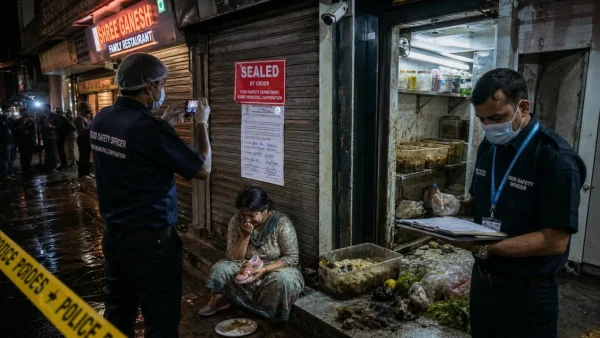
A five-year-old girl’s death following a suspected food-poisoning incident in Surat has triggered a major food-safety response, putting the city’s restaurants and the Gujarat government’s enforcement machinery under renewed scrutiny.
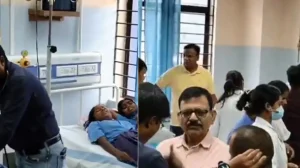
The tragedy reportedly involved a family of five who consumed paneer and kaju dishes purchased from a restaurant in the Varachha area. The child died, while other family members fell seriously ill. A subsequent inspection reportedly found spoiled food at the restaurant, which was shut by authorities.
The incident has now led to a much wider question:
Why does the system appear to become aggressive only after somebody gets seriously sick—or dies?
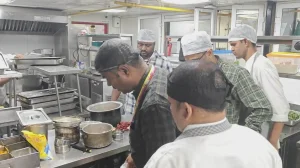
330 Restaurants Checked—208 With Hygiene Issues
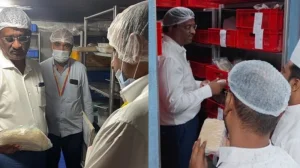
According to the figures being circulated following the post-tragedy inspection drive, 330 restaurants were inspected within 24 hours, with 208 reportedly found with hygiene-related deficiencies.
If those figures are accurate, that means roughly 63% of the establishments inspected had some form of hygiene-related issue.
That number is striking.
It does not, however, mean that 63% of the restaurants were serving poisonous or contaminated food. “Hygiene-related issue” can cover a broad range of violations, and each establishment would need to be assessed according to the specific findings.
Nevertheless, such a high proportion would raise an important regulatory question:
Were these problems visible only after the tragedy, or could routine inspections have identified them earlier?
The Tragedy That Triggered the Crackdown
The immediate trigger was the death of a five-year-old girl after a family reportedly consumed food from a restaurant in Surat’s Varachha area.
Reports said several members of the family became ill, with the child eventually losing her life. Authorities subsequently inspected the restaurant and reportedly found spoiled food before taking action against the establishment.
Gujarat Health Minister Praful Pansheriya reportedly spoke with the affected family and directed officials to take necessary action, including sealing the restaurant pending the relevant findings and reports.
The incident has therefore moved beyond an isolated restaurant complaint.
It has become a test of Gujarat’s broader food-safety enforcement system.
The ₹4.7 Lakh Question
The reported inspection drive also resulted in fines totalling approximately ₹4,70,500.
But the bigger question isn’t simply:
“How much money was collected?” It is:
“What happens after the fine is paid?” A penalty can punish a violation.
It doesn’t necessarily prevent the violation from happening again.
If a restaurant pays a fine today and returns to the same unhygienic practices tomorrow, the consumer remains at risk.
That is why enforcement needs to go beyond fines.
It should include, where legally warranted:
Corrective-action notices
Follow-up inspections
Licence suspension
Licence cancellation for serious or repeated violations
Food sampling and laboratory testing
Prosecution in appropriate cases
Closure where an immediate public-health risk exists
Is There a Monitoring Gap?
This is perhaps the most uncomfortable question raised by the numbers.
If inspections conducted after a serious incident discover widespread hygiene deficiencies, citizens are entitled to ask:
How frequently were these establishments inspected before the incident?
Were previous violations recorded?
Were improvement notices issued?
Did restaurants comply with them?
Were follow-up inspections conducted?
How many food-safety officers are available for Surat’s large and rapidly growing food-service industry?
These are questions that cannot be answered merely through a one-day raid.
They require examination of inspection records.
Gujarat Already Has a Larger Enforcement Challenge
The Surat episode comes against a broader backdrop.
Government data reported in July showed that Gujarat analysed 68,356 food samples between 2021-22 and 2025-26, of which 4,437 were found non-conforming—about 6.5%. During the same period, authorities initiated 4,617 civil penalty cases, while only 259 criminal convictions were recorded.
These figures do not mean that every non-conforming sample represents dangerous food, nor do they directly measure restaurant hygiene.
But they demonstrate that food-safety violations are not a marginal issue.
More importantly, the gap between regulatory cases and successful criminal convictions raises questions about how effectively violations translate into final accountability.
The Problem Is Bigger Than Restaurants
Food safety doesn’t begin when a plate reaches a customer’s table.
It starts much earlier.
Raw materials → storage → refrigeration → preparation → cooking → packaging → transportation → serving
A failure at any stage can potentially create a health risk.
For restaurants, this means basic controls matter enormously:
Proper refrigeration
Safe water
Clean kitchens
Pest control
Separation of raw and cooked food
Proper waste disposal
Safe storage
Valid food licences
Staff hygiene
Appropriate food temperatures
Monitoring of expiry dates
A restaurant can look beautiful from the dining area while having serious problems in its kitchen.
That is precisely why physical inspections matter.
“No Fear of FSSAI” Is the Wrong Standard
The criticism that restaurants seem to have “no fear” of food regulators reflects public frustration.
But the objective of food-safety regulation shouldn’t be to create fear.
It should be to create compliance.
A restaurant owner should follow food-safety rules because:
the rules are enforced consistently, violations are detected, and repeat violations have predictable consequences.
That is more effective than occasional high-profile raids.
The Role of FSSAI
The Food Safety and Standards Authority of India (FSSAI) establishes the national regulatory framework under the Food Safety and Standards Act, while enforcement is carried out by state and local authorities within the regulatory system.
As of June 2026, Gujarat had more than 13,000 central food licences, 76,000 state licences and 2.25 lakh registrations listed under the food-safety framework. (Press Information Bureau)
That scale makes continuous monitoring challenging.
But it also makes risk-based inspection essential.
Restaurants with previous violations, high-risk food preparation, repeated complaints or poor inspection records should arguably receive greater scrutiny than establishments with consistently clean records.
The Child’s Death Should Not Become Just Another Headline
This is the most important part of the story.
A five-year-old child is dead.
The investigation must establish the exact cause of death and whether contaminated food was responsible.
It is important not to declare a restaurant legally responsible for the death until the medical, laboratory and investigative evidence establishes that connection.
But if food contamination is ultimately confirmed, the consequences must go beyond a headline and a fine.
There must be accountability. And if regulatory lapses contributed to the incident, those too deserve examination.
What Should Gujarat Do Now?
Instead of limiting the response to a post-tragedy inspection drive, authorities could use the episode to strengthen the system permanently.
1. Publish inspection data
Citizens should be able to see how many restaurants were inspected and what violations were found.
2. Track repeat offenders
A restaurant repeatedly violating hygiene standards should face escalating action.
3. Increase surprise inspections
Routine scheduled inspections can allow businesses time to prepare temporarily.
4. Strengthen laboratory capacity
Food samples must be tested quickly when contamination is suspected.
5. Make complaint systems effective
Consumers should be able to file complaints and track their status.
6. Publish enforcement outcomes
Not just the number of raids—but how many licences were suspended, how many cases prosecuted and how many violations were corrected.
7. Focus on prevention
The goal should be to identify dangerous practices before someone becomes a patient.
The Real Test Begins After the Cameras Leave
A large inspection drive creates headlines.
But food safety is ultimately about what happens after the inspectors leave.
Does the restaurant clean its kitchen?
Does it fix refrigeration?
Does it remove spoiled stock?
Does it implement pest control?
Does the regulator return for a follow-up inspection?
Does the licence remain suspended until compliance is demonstrated?
That is where enforcement becomes meaningful.
Conclusion: Surat Doesn’t Need a One-Day Raid—It Needs a System
The reported 330 inspections and 208 hygiene-related findings are significant, if the figures are confirmed by official records.
But they should not become merely another statistic.
The five-year-old girl’s death has exposed something much more fundamental:
Food safety cannot be an emergency response. It has to be everyday governance. Restaurants should not wait for a child to die before their kitchens are inspected.
Consumers should not have to repeatedly post videos on social media before authorities respond.
And fines should not become a cost of doing business.
The question for Gujarat’s health authorities is therefore not simply, “How many restaurants did you raid?” It is:
“How many unsafe restaurants did you identify before they could hurt someone?” That is the number that would truly measure whether the food-safety system is working.