Actress Shweta Tiwari has drawn attention to an alleged food-safety incident after claiming that a live cockroach was found with a Red Bull delivery ordered through Swiggy Instamart.
In a video shared on social media, Tiwari reportedly showed the cockroach crawling on a sofa and appealed directly to Maharashtra Food and Drug Administration (FDA) Commissioner Tukaram Mundhe, asking him to intervene.
Her appeal quickly became part of the story itself.
“Sir, where are you? Please pay a little attention here too.”The incident has sparked questions about hygiene standards in India’s rapidly expanding quick-commerce sector—and why consumers increasingly see the FDA Commissioner as the person to call when food-safety concerns arise.
What Exactly Happened?
According to reports, Tiwari ordered Red Bull through Swiggy Instamart.
After the delivery arrived, she allegedly discovered a live cockroach inside the packaging associated with the order.
She then recorded a video, showing the insect and expressing her disbelief.
Rather than treating the matter as an ordinary customer-service complaint, she addressed Tukaram Mundhe directly and asked him to look into the issue.
The video subsequently gained attention online.
Important caveat: The claim that the cockroach arrived with the delivery has not, based on the available reports, been independently established. Determining where and when contamination occurred would require an investigation of the delivery and storage chain.
Why Did She Tag Tukaram Mundhe?
The answer lies in Mundhe’s growing reputation as a strict food-safety regulator.
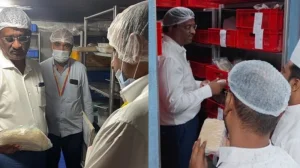
Mundhe took charge as Maharashtra FDA Commissioner in May 2026 and subsequently launched extensive inspections of restaurants, food businesses, warehouses and other establishments.
According to Maharashtra FDA figures reported by The Indian Express, more than 3,000 establishments were inspected during the initial phase of his tenure, with numerous licences suspended and large quantities of allegedly unsafe food seized. (President of India)
His enforcement drive has made his name increasingly associated with food-safety complaints.
So when a celebrity allegedly encountered a serious hygiene problem, the natural social-media reaction was:
“Tag Tukaram Mundhe.”
The Quick-Commerce Food-Safety Question
The incident also highlights a problem that goes beyond one delivery.
Quick-commerce platforms have transformed how Indians purchase groceries, beverages and packaged food.
A customer may place an order in seconds and receive it within minutes.
But behind that convenience is a complex chain:
Manufacturer → distributor → warehouse/dark store → picker → packer → delivery partner → consumer
A contamination problem can potentially occur at any stage.
That raises several questions:
Was the product properly stored?
Was the warehouse free of pests?
Were food products stored separately from waste?
Were pest-control inspections conducted regularly?
Was the outer packaging damaged?
Were storage areas cleaned adequately?
Who was responsible for quality control before dispatch?
FDA Already Has Quick-Commerce on Its Radar
The controversy comes at a time when Maharashtra’s food regulator has been paying increasing attention to online grocery and quick-commerce warehouses.
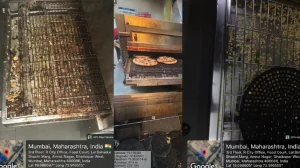
Reuters reported that Maharashtra FDA inspected establishments associated with Blinkit, Swiggy Instamart and Zepto, with inspections uncovering alleged sanitation issues at some locations. The reported violations included cockroach infestation and rodent droppings at certain warehouses.
That makes the Tiwari episode particularly relevant.
If a pest-control problem exists at a warehouse, it isn’t merely a cleanliness issue.
It can become a food-safety issue.
Mundhe’s Reputation Has Been Built on Aggressive Enforcement
The FDA Commissioner’s recent actions have generated considerable public attention.
Restaurants and food businesses have faced inspections, seizures and licence suspensions.
The action has also reportedly extended to major brands rather than being restricted to small establishments.
That has created a perception that:
Big brand or small shop—the regulator will act if food-safety rules are violated. This perception helps explain why consumers are now publicly tagging Mundhe when they encounter alleged food-safety violations.
But Tough Action Must Also Be Accurate Action
There is another side to the story.
Aggressive enforcement can generate confidence, but regulatory power must be exercised carefully.
A recent Bombay High Court matter involving the Maharashtra FDA resulted in an order directing the department to pay compensation to a Pune sweet shop after questions arose over the suspension of its licence and subsequent compliance findings.
That episode highlights an important principle:
Food businesses must comply with safety rules—but regulators must also follow due process and base punitive action on solid evidence. The goal should not simply be maximum raids.
It should be maximum food safety with minimum arbitrary enforcement.
What Should Happen in the Tiwari Case?
If the complaint is formally investigated, authorities should establish the source of the alleged contamination.
That could involve:
1. Identifying the fulfilment centre
Which Instamart facility processed the order?
2. Checking CCTV footage
Was there any evidence of pest activity around the storage or packing area?
3. Examining pest-control records
When was the facility last inspected or treated?
4. Checking storage conditions
Were food and beverage products stored correctly?
5. Examining the packaging
Was there evidence that the packaging had been opened or damaged?
6. Tracing the delivery
Was the product contaminated before dispatch or during transportation?
7. Taking regulatory action if violations are established
Any action should follow the applicable food-safety regulations and evidence.
Celebrity Complaint or Consumer Rights Issue?
Because Tiwari is a well-known actress, her video can reach millions of people.
But that should not make the issue more important than similar complaints from ordinary consumers.
A food-safety regulator should be equally accessible to:
a celebrity ordering from a luxury home
and
a family buying groceries for the week.
Food safety cannot become a VIP service. If the complaint is genuine, the appropriate response should be based on the evidence—not the identity of the complainant.
The Bigger Question: Who Is Checking the Invisible Warehouse?
Consumers see the final delivery bag.
They don’t see the warehouse.
They don’t know when it was cleaned.
They don’t know whether pest-control treatment was carried out.
They don’t know how products were stored overnight.
And they usually have no idea who inspected the facility last.
That information gap is precisely why regulatory oversight matters.
The faster the delivery becomes, the faster the safety checks need to become. Convenience cannot come at the cost of hygiene.
Why the “Tukaram Mundhe Effect”
Matters Perhaps the most interesting part of the episode isn’t the alleged cockroach itself.
It is what the public reaction says about trust in regulation.
When people begin tagging a particular official whenever something goes wrong, it suggests they believe that person will listen.
That’s a positive sign—but it also creates a danger.
A system cannot depend on one officer’s personal reputation. Maharashtra needs a food-safety system in which consumers can file complaints, receive responses, track investigations and see enforcement outcomes regardless of who happens to occupy the Commissioner’s chair.
The institution must become stronger than the individual.
Conclusion
The Shweta Tiwari incident has raised a very ordinary but important consumer question:
How can an alleged pest-contamination incident make it through a modern food-delivery chain and reach someone’s home? Whether the cockroach was actually present in the product’s delivery chain—and exactly where the contamination occurred—remains a matter for verification.
But the episode has already highlighted a larger issue.
India’s quick-commerce industry is growing at extraordinary speed. Food-safety regulation has to keep pace.
And if consumers are now turning to Tukaram Mundhe with messages such as “Sir, where are you?”, perhaps the most important achievement would be to build a system where the answer is no longer dependent on one officer.
The real goal should be simple: customers shouldn’t have to go viral to get basic food-safety standards enforced.