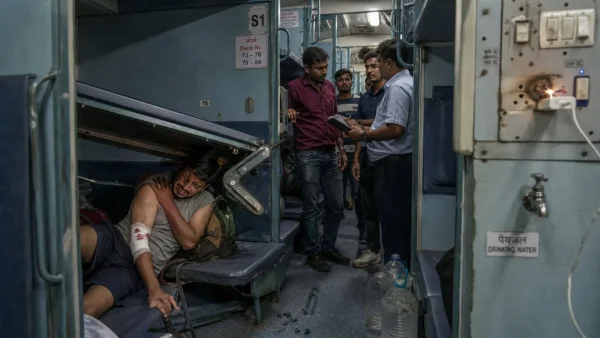
Questions over passenger safety and basic onboard facilities have been raised after a complaint from a passenger travelling on Train No. 15657, Coach S1, Seat 78.
According to the complaint, the middle berth suddenly broke and fell onto the lower berth, reportedly injuring the passenger seated below. The incident has raised concerns about the condition and maintenance of berth fittings inside the coach.
The passenger alleges that despite complaints being made, no appropriate action had been taken at the time of reporting.
One Coach, Multiple Problems
The complaint does not concern the berth alone.
Passengers have reportedly also been facing a water shortage inside the coach, while several charging sockets are allegedly not functioning.
Together, the reported problems raise questions about whether routine maintenance and safety checks were properly carried out before the train began its journey.
A berth is not merely a passenger convenience. When a mechanical fitting breaks unexpectedly and falls onto another passenger, it can potentially cause serious injury.
Why a Broken Berth Is a Serious Safety Issue
Middle berths are regularly raised and lowered by passengers. Their hinges, locking mechanisms and supporting components therefore need to remain secure.
A sudden collapse could result in:
Head or neck injuries
Cuts and bruises
Fractures
Damage to passengers’ belongings
Panic among passengers
Further injuries if the berth falls while someone is climbing or sleeping
The reported incident therefore warrants more than a routine complaint closure.
An inspection of the berth mechanism and other similar fittings in the coach would help determine whether the problem was an isolated failure or indicative of a broader maintenance issue.
Water and Charging Facilities Also Under Question
The reported water problem adds another layer to the complaint.
Access to adequate water is a basic requirement on a long-distance train, particularly in sleeper and AC coaches carrying passengers for several hours.
Similarly, charging sockets have become an important passenger facility, especially on long journeys.
While a faulty socket may appear to be a minor inconvenience compared with a broken berth, defective electrical fittings can also raise safety concerns if there are signs of loose wiring, overheating or damaged components.
What Should Railway Authorities Do?
The immediate priority should be to address the reported passenger’s safety rather than treating the matter solely as a service complaint.
Railway personnel should:
Inspect the damaged middle berth immediately.
Record the incident and assess the passenger’s injuries.
Check other berth fittings in Coach S1 for similar defects.
Restore the coach’s water supply.
Inspect and repair faulty charging sockets.
Document the maintenance failure and identify responsibility.
Ensure corrective action before the coach continues regular service.
If the berth failed because of a maintenance or manufacturing defect, the relevant records should also be examined.
Passenger Safety Must Come Before Convenience
Railway passengers expect basic facilities to function—but more importantly, they expect the equipment around them to be safe.
A berth falling unexpectedly is fundamentally different from a broken reading light or a non-functioning charging point.
The reported incident therefore raises a broader question:
Are safety-critical fittings being inspected frequently enough before coaches are put into service? If a passenger has to report a broken berth only after it has already injured someone, the preventive maintenance system deserves scrutiny.
PNR Details Should Be Handled Carefully
The complaint provided a PNR number, but publishing a complete PNR publicly is generally unnecessary because it can contain or help reveal travel-related information.
For a public news report, it is safer to redact the PNR and retain the full number only for communication with the railway authorities.
The train and coach details are sufficient to describe the reported incident.
Conclusion
The complaint concerning Train No. 15657, Coach S1 describes more than an uncomfortable journey.
A reportedly broken middle berth that fell onto a passenger, combined with water-supply problems and faulty charging points, raises legitimate concerns about coach maintenance, passenger safety and grievance redressal.
The allegations should be independently verified by the railway authorities, including inspection of the damaged berth and relevant maintenance records.
Passengers should not have to discover maintenance failures the hard way. A berth should remain securely in place.
Water should be available.
Electrical facilities should function safely.
And when a passenger reports a potentially dangerous defect, the response should be immediate—not after an accident has already happened.